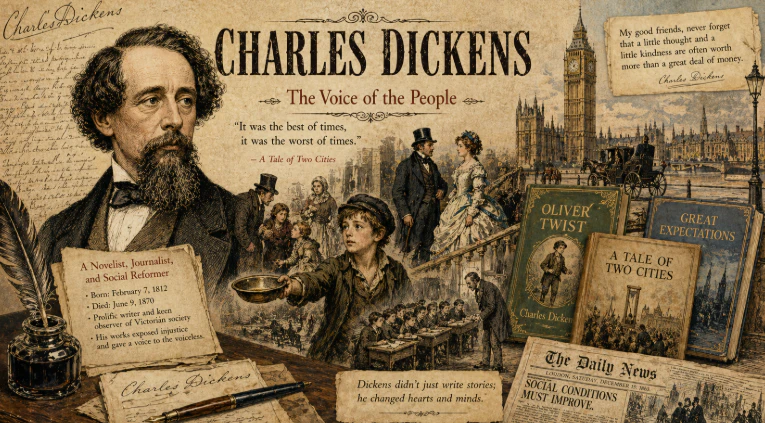
在工業革命改變世界的年代,貧富差距與社會問題日益嚴重,查爾斯·狄更斯以筆為武器,描繪底層人民的困境與希望,讓文學成為揭露現實與喚醒良知的重要力量。
During a time of rapid industrial change, Charles Dickens captured the hardships and resilience of ordinary people, using storytelling as a powerful lens to expose injustice and inspire empathy across all levels of society.
中文
查爾斯·狄更斯(Charles Dickens)是十九世紀英國最具影響力的小說家之一,他的作品深刻描繪了維多利亞時代的社會現實與人性掙扎,成為文學史上不可忽視的重要聲音。他出生於一個經濟並不穩定的家庭,童年時父親因債務入獄,使他不得不早早進入工廠工作,這段經歷對他日後的創作產生了深遠影響,也讓他對貧困與社會不公有著極為敏銳的觀察與同情。他的代表作如《孤雛淚》、《遠大前程》與《雙城記》,不僅塑造了眾多鮮明角色,也展現了人性中的善與惡、希望與絕望之間的拉鋸。他擅長以細膩筆觸刻畫人物性格,無論是純真無助的孤兒,還是冷酷自私的權貴,都在他的筆下變得立體而真實。他的敘事風格充滿戲劇張力與情感張力,既能引人發笑,也能令人落淚,讓讀者在故事中產生深刻共鳴。狄更斯同時也是連載小說的先驅,他的作品常以分期形式發表,吸引大量讀者持續關注,這種形式也使他能夠根據讀者反應調整故事發展,使作品更貼近大眾情感。他的文字不僅娛樂大眾,更帶有強烈的社會批判意識,揭露童工制度、貧民窟生活與法律制度的不公,促使社會開始反思並推動改革。他的作品中常帶有溫暖的人道主義精神,即使在最黑暗的情境中,也能看到人性中的光亮與希望。狄更斯不僅是一位小說家,更是一位社會觀察者與改革的倡導者,他透過文字讓無聲者發聲,使文學成為改變世界的一種力量。即使跨越時代,他的作品依然具有強烈的現實意義與感染力,持續影響著後世的讀者與創作者。
English Version
Charles Dickens stands as one of the defining literary voices of the nineteenth century, renowned for his vivid portrayals of Victorian society and its many contradictions. Growing up in financial instability, with his father imprisoned for debt, Dickens experienced hardship at a young age, working in a factory and witnessing firsthand the struggles of the working class. These early experiences shaped his lifelong commitment to highlighting social inequality and human suffering. His novels, including Oliver Twist, Great Expectations, and A Tale of Two Cities, are filled with unforgettable characters who embody both vulnerability and resilience. Dickens had a remarkable ability to blend humor with tragedy, crafting narratives that entertain while also provoking reflection on deeper moral and social issues. His characters often represent broader societal forces, from innocence exploited by corrupt systems to individuals striving for redemption in unforgiving environments. As a pioneer of serialized fiction, Dickens published his stories in installments, creating anticipation and engagement among readers while allowing his narratives to evolve alongside public response. This dynamic approach made his work accessible and widely popular, bridging the gap between literature and everyday life. Beyond storytelling, Dickens used his platform to critique injustices such as child labor, poverty, and bureaucratic inefficiency, encouraging readers to confront uncomfortable truths about their society. Yet, even amid bleak circumstances, his writing consistently affirms the possibility of compassion, transformation, and hope. His legacy endures not only through his literary achievements but also through his enduring influence on how stories can reflect and shape the human condition.