
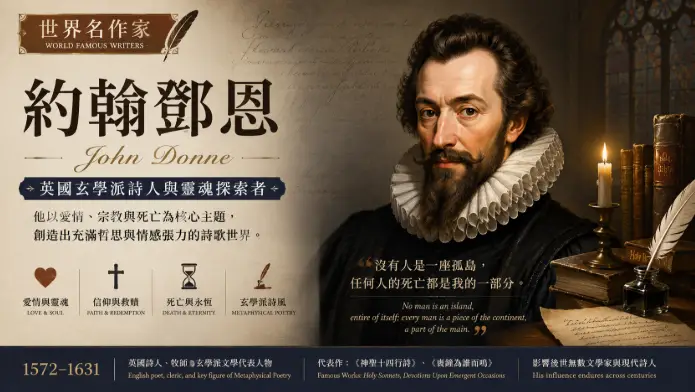
約翰鄧恩是英國文學史上最具思想深度的詩人之一,他以愛情、宗教與死亡為核心主題,創造出充滿哲思與情感張力的詩歌世界。他的作品融合理性與激情,影響後世無數文學家與現代詩人。
John Donne remains one of the most intellectually powerful voices in English literature. Through themes of love, faith, mortality, and human longing, he shaped a poetic style filled with emotional intensity and philosophical reflection. His innovative language and dramatic imagery transformed poetry and left a lasting influence on generations of writers.
中文
約翰鄧恩生於1572年的倫敦,成長於一個宗教局勢動盪的時代。英格蘭當時正經歷宗教改革與政治衝突,社會氣氛充滿不安,而這種矛盾與掙扎,也深深影響了他日後的創作風格。他年輕時曾在牛津與劍橋求學,但因宗教信仰問題未能正式取得學位。青年時期的鄧恩熱情奔放,追求愛情與冒險,也曾參與海上遠征,見識不同世界。他早年的詩作多圍繞愛情、慾望與人生短暫,文字充滿機智與挑戰傳統的氣息,展現出與當時詩人截然不同的語言風格。他擅長把看似毫無關聯的事物放在一起比較,例如把愛情比喻成圓規、星辰或地圖,形成獨特而深刻的思想聯想,因此後世將他歸類為「玄學派詩人」。他的愛情詩既浪漫又帶有哲學意味,不只是描述感情,更深入探討靈魂與人性的連結。鄧恩的人生並非一直順遂,他曾秘密與安妮莫爾結婚,卻因此失去仕途與經濟來源,生活陷入困境。長年的貧困與家庭壓力,使他的思想逐漸轉向宗教與生命意義的探索。後來他成為英國國教牧師,並逐步以宗教講道與神學文章聞名。他晚年的作品充滿對死亡、罪惡與永恆的思考,其中《喪鐘為誰而鳴》中的名句「沒有人是一座孤島」更成為流傳世界的經典思想。他認為人類彼此相連,任何人的死亡都會影響整個世界。這種對生命共同性的理解,使他的作品即使跨越數百年,依然能觸動現代讀者。約翰鄧恩的詩歌風格極具個人特色,他不追求華麗辭藻,而是透過強烈情感、理性辯證與複雜意象來呈現內心世界。他的文字有時像辯論,有時像告白,也像靈魂深處的自我對話。他成功把愛情、信仰與哲學融合成一種全新的文學形式,對後來的英美現代詩產生深遠影響。直到今日,他仍被視為英國文學中最重要的思想型詩人之一,其作品不只是文學,更像對生命本質的深層提問。
English Version
Born in London in 1572, John Donne grew up during a turbulent age marked by religious conflict and political uncertainty. England was struggling through the aftershocks of the Reformation, and the tension between faith, authority, and personal belief would shape Donne’s inner world for the rest of his life. As a young man, he studied at Oxford and Cambridge, yet his Catholic background prevented him from earning a formal degree. In his early years, Donne lived passionately and fearlessly. He traveled, joined naval expeditions, pursued romance, and immersed himself in the excitement of the wider world. His youthful poetry reflected this restless spirit, blending wit, sensuality, and daring ideas that challenged the literary conventions of his time. Unlike traditional poets who relied on elegance alone, Donne filled his writing with surprising intellectual comparisons. He connected love with astronomy, geometry, navigation, and theology, creating startling metaphors that forced readers to think deeply. This distinctive approach later defined what became known as metaphysical poetry. His love poems were never simply romantic expressions; they explored emotional intimacy, spiritual connection, and the mysterious bond between body and soul. Despite his brilliance, Donne’s personal life was marked by hardship. His secret marriage to Anne More damaged his career and led to financial struggles that lasted for years. The burden of supporting a growing family gradually transformed his outlook on life. Over time, his attention shifted away from worldly ambition toward spiritual reflection and religious devotion. Eventually, Donne became a respected Anglican cleric and celebrated preacher. His later writings carried a profound awareness of mortality, guilt, redemption, and eternity. Among his most enduring works is the meditation containing the famous line “No man is an island,” a statement that continues to resonate across cultures and generations. Donne believed that humanity is deeply interconnected, and that every loss affects the whole of society. This vision of shared human experience gave his writing a timeless emotional power. What makes John Donne remarkable is the way he united intellect and emotion in the same breath. His poetry can feel like a philosophical argument, a passionate confession, or a spiritual struggle unfolding in real time. Rather than separating reason from feeling, he allowed them to strengthen one another. Through this fusion of thought, faith, and emotion, Donne reshaped English poetry and influenced countless modern writers. Even centuries later, his work still feels alive because it confronts universal questions about love, death, faith, and what it truly means to be human.