威廉布萊克是英國文學與藝術史上最獨特的人物之一,他同時是詩人、畫家與版畫藝術家。布萊克以充滿象徵與幻想的作品描寫純真、壓迫、宗教與人性,創造出結合詩歌與藝術的神秘世界,深深影響後世文化。
William Blake remains one of the most visionary figures in English literature and art. As both poet and painter, he created imaginative works filled with symbolism, spirituality, innocence, rebellion, and human emotion. His fusion of poetry and visual art produced a dreamlike creative universe that continues to inspire readers, artists, and thinkers around the world.
中文
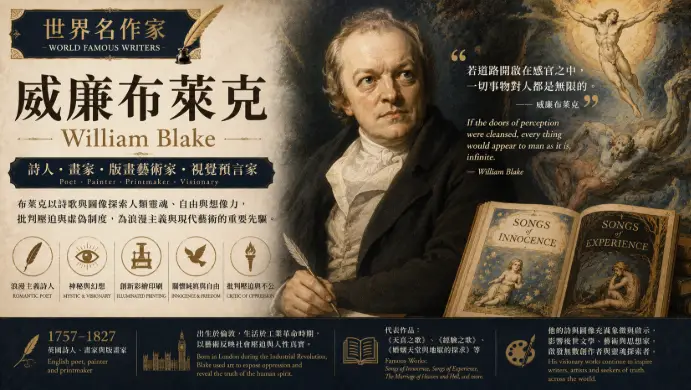
威廉布萊克於1757年出生於英國倫敦,從小便展現對藝術與想像力的強烈熱情。他並未接受傳統高等教育,而是很早進入版畫學徒訓練,學習雕刻與繪畫技術。這段經歷讓他日後能親自設計與印刷自己的作品,形成極具個人風格的藝術形式。布萊克生活於英國工業革命與社會急速變化的年代,城市貧富差距擴大、童工問題與宗教壓迫逐漸浮現,而這些現象也深深影響他的創作。他認為人類社會過度被制度、權力與虛偽道德束縛,因此透過詩歌與藝術批判壓迫與失去自由的世界。布萊克與一般浪漫主義詩人不同,他的作品充滿神秘宗教象徵、幻想人物與超現實畫面,彷彿來自夢境與幻覺。他曾聲稱能看見天使與異象,並相信藝術能讓人接觸更高層次的精神世界。這種強烈想像力使他的作品在當時顯得極為前衛,也讓不少 contemporaries 難以理解。然而後世逐漸認識到他驚人的創造力與思想深度。布萊克最著名的作品包括《天真之歌》與《經驗之歌》,兩部作品以對比方式呈現純真與現實、希望與壓迫之間的衝突。其中〈老虎〉與〈羔羊〉等詩篇,更成為英語文學中最經典的象徵詩之一。他透過孩童、動物與宗教意象探討人性善惡與社會不公,文字表面簡潔卻蘊含深刻哲學意味。《天真之歌》描寫純潔、自然與兒童視角,而《經驗之歌》則揭露工業社會中的痛苦、貧窮與精神壓抑。布萊克相信人類必須保有想像力與自由靈魂,才能對抗冰冷現實與制度化思想。他不只是詩人,更是結合文字與繪畫的藝術革命者。他親手繪製作品插圖,把詩句與圖像融合成完整藝術品,開創極具特色的「彩繪印刷」形式。這種創作方式使他的作品既像詩集,也像神秘畫冊,展現前所未有的藝術風格。雖然布萊克生前並未獲得廣泛名聲,生活也長期貧困,但他始終堅持創作與思想自由。到了十九世紀後期與現代文學時代,人們重新發現他的價值,認為他不只是浪漫主義詩人,更是現代藝術與象徵主義的重要先驅。他的作品影響了葉芝、艾倫金斯堡等眾多文學與藝術人物,也對音樂、電影與流行文化產生深遠影響。威廉布萊克最終於1827年在倫敦去世,但他的幻想世界與詩歌精神卻持續流傳。他以獨特視角探索人類靈魂、自由與想像力,成為英國文學史上最神秘也最具創造力的藝術家之一。
English Version
William Blake was born in London in 1757 and grew up in a world rapidly transformed by industrialization, political unrest, and shifting social values. From childhood, he displayed extraordinary imagination and artistic sensitivity. Rather than following a traditional academic path, Blake entered an apprenticeship in engraving at an early age, mastering the technical skills that later allowed him to print and illustrate his own books. This unusual independence gave him complete creative control and helped shape the unique artistic identity that would define his legacy. Blake witnessed the harsh realities of the Industrial Revolution firsthand. Expanding factories, child labor, poverty, and rigid social systems convinced him that modern society was crushing the human spirit. Through poetry and visual art, he challenged authority, criticized oppression, and defended the power of imagination against mechanical thinking and institutional control. Unlike many writers of his era, Blake approached literature through visionary symbolism and spiritual mythology. He claimed to experience mystical visions throughout his life, speaking of angels, prophetic figures, and supernatural revelations as if they were part of everyday reality. These experiences deeply influenced his art, filling it with dreamlike imagery and symbolic characters that blended religion, philosophy, and personal mythology. During his lifetime, many people viewed him as eccentric or incomprehensible, yet later generations recognized him as one of the most original creative minds in English culture. Among Blake’s greatest achievements are Songs of Innocence and Songs of Experience, two interconnected collections exploring the contrast between purity and corruption, hope and suffering, freedom and oppression. Through deceptively simple poems such as The Lamb and The Tyger, Blake examined the mysteries of creation, innocence, fear, and the dual nature of humanity. His poetry often used children, animals, and biblical symbolism to reveal deeper truths about society and the human soul. Songs of Innocence presented the world through wonder and spiritual openness, while Songs of Experience exposed cruelty, exploitation, and emotional loss beneath civilized society. Blake believed imagination was not merely artistic fantasy but a sacred force capable of liberating humanity from fear and conformity. What made him especially remarkable was his fusion of poetry and visual art. He invented an innovative illuminated printing technique that combined handwritten text with richly colored illustrations, transforming each work into a complete artistic experience. His books resembled mystical manuscripts filled with symbolic paintings, decorative borders, and visionary imagery unlike anything produced in his time. Although Blake struggled financially and remained largely unrecognized during his life, he never abandoned his artistic ideals or spiritual independence. In later centuries, critics and artists began to see him as a prophetic figure whose ideas anticipated modern symbolism, surrealism, and visionary art. Writers such as W. B. Yeats and Allen Ginsberg admired his fearless imagination and philosophical depth, while musicians, filmmakers, and contemporary artists continue drawing inspiration from his work today. William Blake died in London in 1827, but his influence only grew stronger after his death. His poetry and artwork remain powerful because they speak to timeless human questions about freedom, creativity, innocence, oppression, and the limitless potential of imagination. Blake transformed literature into a spiritual and visual experience, securing his place as one of the most extraordinary artists in the history of English culture.