
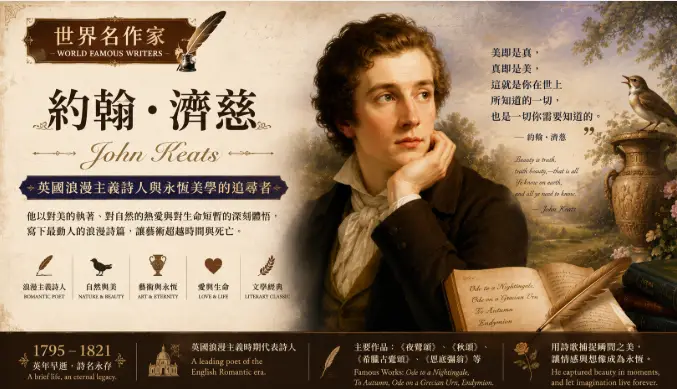
約翰‧濟慈是英國浪漫主義時代最耀眼的詩人之一,他以短暫生命創作出充滿感性與哲思的詩篇。濟慈的作品圍繞愛情、美、死亡與永恆,文字細膩優雅,成為世界文學中最動人的浪漫詩歌代表。
John Keats remains one of the most celebrated voices of the Romantic era. Though his life was tragically brief, his poetry captured beauty, longing, mortality, and imagination with extraordinary emotional depth. His lyrical language and timeless reflections transformed him into a lasting symbol of artistic passion and poetic immortality.
中文
約翰‧濟慈於1795年出生於英國倫敦,成長於一個並不富裕的家庭。年幼時父親因意外離世,母親後來也因疾病去世,接連失去至親的經歷讓他很早便感受到生命的脆弱與無常。這些悲傷與孤獨逐漸形成他對死亡、美與人生短暫性的深層思考,也成為他日後詩歌的重要核心。年輕時的濟慈原本學習醫學,曾在醫院接受外科訓練,但他對文學與詩歌的熱情遠遠超過對醫術的興趣。最終他選擇放棄穩定職業,全心投入創作,即使面對經濟壓力與外界批評,仍堅持追求詩人的理想。濟慈生活的年代正值英國浪漫主義文學興盛時期,他深受自然、藝術與古典神話吸引,作品中經常描寫花朵、夜鶯、星空與希臘神話意象,營造出夢幻而感性的文學世界。他相信「美即是真,真即是美」,認為人類能透過藝術與想像超越現實痛苦,接近永恆與靈魂深處的感受。這種對美的執著,使他的詩歌充滿細膩感官描寫與濃厚情感。他最著名的作品包括《夜鶯頌》《秋頌》《希臘古甕頌》等,被譽為英語詩歌中最優美的經典之一。在《夜鶯頌》中,他透過夜鶯歌聲思考生命短暫與藝術永恆;《秋頌》則以成熟而平靜的語調描寫季節更替與人生循環;《希臘古甕頌》則探索藝術如何保存時間與情感,使美超越死亡。濟慈的文字充滿音樂感與畫面感,他擅長利用柔和節奏與濃烈意象,把情感轉化成近乎夢境般的閱讀體驗。然而濟慈的人生並不順遂,他長期受到文學評論攻擊,加上經濟困難與肺病折磨,身體狀況逐漸惡化。他深愛的女子芬妮布朗成為他情感世界的重要支柱,但疾病讓他無法實現理想中的幸福生活。1820年,他為了療養前往義大利羅馬,希望溫暖氣候能改善病情,但最終仍於1821年病逝,年僅二十五歲。濟慈生前並未獲得巨大名聲,真正的文學價值是在死後才逐漸受到世界肯定。後世認為他是英國浪漫主義最純粹、最具感性力量的詩人之一。他的作品不只是描寫愛情與自然,更深入探討生命短暫、青春流逝與人類對永恆之美的渴望。直到今天,約翰‧濟慈仍被視為世界詩歌史上最動人的名字之一,他以短暫人生留下永恆詩句,成為浪漫主義精神最經典的象徵。
English Version
John Keats was born in London in 1795 and spent much of his youth surrounded by hardship and personal loss. His father died in an accident when Keats was still a child, and his mother later succumbed to illness, leaving him with an early awareness of grief and mortality. These painful experiences deeply influenced his imagination and shaped the emotional intensity that would later define his poetry. Although he trained in medicine and studied surgery with serious dedication, Keats gradually realized that poetry held a stronger claim on his spirit than any professional career. He abandoned the security of medicine to devote himself entirely to literature, despite financial uncertainty and harsh criticism from influential reviewers. Keats emerged during the height of the Romantic movement in England, an era that celebrated emotion, imagination, nature, and artistic freedom. Unlike poets focused on politics or social reform, Keats turned inward, searching for beauty and transcendence through sensory experience and artistic vision. His poetry became filled with rich imagery drawn from flowers, seasons, ancient mythology, music, and dreams. He believed that beauty possessed a truth beyond logic, a force capable of offering temporary escape from suffering and human limitation. This philosophy gave rise to some of the most admired poems in the English language. In works such as Ode to a Nightingale, Ode on a Grecian Urn, and To Autumn, Keats explored the relationship between mortality and permanence. The song of the nightingale represented art untouched by death, while the ancient urn symbolized beauty frozen beyond time. In To Autumn, he transformed an ordinary season into a meditation on maturity, change, and the quiet acceptance of life’s passing. His poetic language carried extraordinary musicality, combining vivid emotional expression with delicate rhythm and atmosphere. Reading Keats often feels like entering a dream where beauty and sorrow exist side by side. Yet behind the elegance of his poetry stood a life marked by suffering. Keats battled tuberculosis, the same disease that claimed members of his family, and his declining health haunted him during his final years. His deep love for Fanny Brawne brought both joy and heartbreak, as illness prevented the future they hoped to share. Seeking recovery, he traveled to Rome in 1820, believing the warmer climate might save him. Instead, his condition worsened, and he died there in 1821 at only twenty-five years old. During his lifetime, Keats never experienced the full recognition he deserved. Only after his death did critics and readers begin to understand the brilliance of his work. Today he is regarded as one of the greatest Romantic poets, admired for the emotional richness, lyrical beauty, and philosophical depth of his writing. His poetry continues to resonate because it speaks to universal human desires: the longing for beauty, the fear of mortality, and the hope that art can preserve moments of meaning beyond the limits of time. John Keats transformed a brief and fragile life into a legacy of enduring poetic beauty that still moves readers across the world.