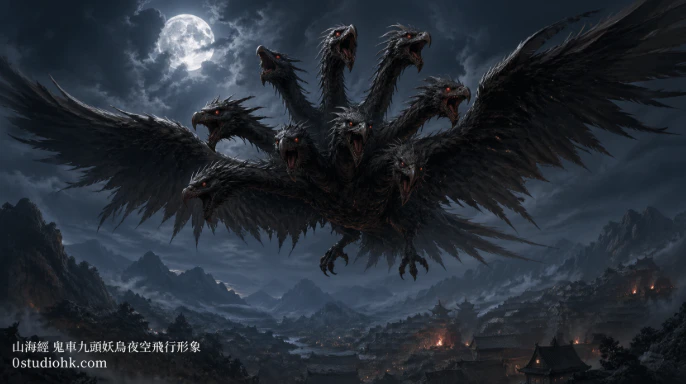
在《山海經》的奇異世界中,鬼車是一種令人不寒而慄的存在,牠以九頭之形在夜色中飛行,象徵災厄與不祥。這種神秘生物不僅代表古人對未知的恐懼,也折射出自然與超自然之間模糊的邊界。
In the strange and haunting universe of the Shan Hai Jing, Gui Che emerges as a chilling presence—a nine-headed bird gliding through the darkness, embodying omens of misfortune. More than a creature, it reflects humanity’s ancient fear of the unseen and the fragile boundary between the natural and supernatural.
中文
夜色如墨,群山沉寂,只有風聲在林間低語。遠方忽然傳來一聲淒厲的鳴叫,似哭似笑,令人心頭發冷。村中的老人臉色驟變,低聲道出那個禁忌的名字——鬼車。傳說牠生於幽冥之地,擁有九個頭顱,每一個頭都能發出不同的聲音,有如九個靈魂同時哀號。當牠掠過村落上空時,往往意味著災禍將至,有人說牠會吸食人魂,有人說牠專取嬰兒精氣,更有人堅信,若在夜半聽見牠的叫聲,必有血光之災降臨。那一夜,月亮被烏雲遮蔽,天地間只剩下微弱的火光與人們壓抑的呼吸。忽然,一陣狂風捲起塵土,屋瓦震動,家畜驚鳴。抬頭望去,只見一道黑影橫越天際,那影子巨大而扭曲,九個頭顱在空中擺動,彷彿在搜尋什麼。牠的羽毛漆黑如夜,雙翼展開時遮蔽星辰,留下令人窒息的壓迫感。有人跪地祈禱,有人緊閉門窗,也有人顫抖著不敢發聲。鬼車的叫聲再次響起,這一次更加清晰,彷彿就在耳邊,帶著詭異的節奏,像是在呼喚,又像是在警告。村中一名年輕人鼓起勇氣,偷偷從門縫窺視,他看見那九個頭顱之中,有一個頭似乎受傷,滴落暗紅色的血。血滴落在地,竟化為黑煙消散。傳說鬼車本有十頭,因某次遭神力擊傷,失去其一,從此成為不完整的存在,也因此更加暴戾與詭譎。年輕人心中一震,忽然明白這並非單純的妖鳥,而是一種被詛咒的存在。鬼車在空中盤旋良久,似乎未找到目標,終於發出一聲尖銳長鳴,振翼遠去。風聲漸止,夜色恢復平靜,但沒有人敢輕言安心。第二天清晨,村外的樹林中發現一片枯萎之地,草木盡數焦黑,彷彿生命被抽離。人們沉默地站在邊緣,誰也不願靠近。老人再次開口,語氣沉重,他說鬼車不是單純的怪物,而是天地失衡的象徵,是人心恐懼的投影。當人們忘記敬畏自然,或打破某種禁忌時,它便會出現,提醒世人代價的存在。從此以後,每當夜風驟起,村人便會關緊門窗,心中默念平安,因為他們知道,那九頭的影子,或許仍在黑暗中盤旋,等待下一次降臨。
English Version
Darkness settled heavily over the mountains, swallowing every sound except the restless whisper of the wind. Then it came—a cry, sharp and unnatural, echoing across the valley like something torn between laughter and grief. The villagers froze, and the elders spoke in hushed voices, naming the creature none wished to encounter: Gui Che. Said to rise from shadowed realms, it bore nine heads, each capable of its own voice, creating a haunting chorus that no human ear could forget. Whenever it crossed the night sky, disaster was believed to follow. Some claimed it devoured souls, others insisted it hunted the essence of the innocent, and a few believed its cry alone could summon tragedy. That night, clouds devoured the moon, leaving the land wrapped in suffocating darkness. A violent gust tore through the village, rattling rooftops and sending animals into panic. Then it appeared—a vast silhouette cutting across the sky, twisted and immense. Its nine heads moved independently, scanning below as if searching for something unseen. Its wings were wide enough to blot out the stars, and its presence pressed down like an invisible weight. Some villagers dropped to their knees, whispering prayers; others barricaded themselves indoors. Yet one young man, trembling but curious, dared to look. Through a narrow gap, he saw it clearly—the monstrous bird circling above. Among its nine heads, one seemed wounded, dripping dark blood that vanished into smoke before touching the ground. Old stories spoke of a time when Gui Che had ten heads, but one was lost in a clash with divine forces. Since then, it had wandered incomplete, its rage deepened by loss. The young man felt a chill not of fear alone, but of understanding. This was not merely a creature—it was something broken, something bound to suffering. The cries intensified, echoing like a warning woven into the night itself. Then, just as suddenly, it lifted higher, releasing one final piercing call before vanishing into the distance. Silence returned, but it was no longer comforting. At dawn, villagers discovered a patch of forest beyond the fields, lifeless and blackened as though drained of vitality. No one stepped forward. The elders spoke again, not with fear, but with quiet certainty. Gui Che, they said, was more than a beast—it was a sign. A manifestation of imbalance, a reflection of human fear and forgotten boundaries. When harmony between people and the world faltered, such things emerged. From that day onward, whenever the wind howled through the night, doors were shut tightly and hearts grew still. Because somewhere beyond sight, beneath the endless sky, the nine-headed shadow might still be circling, waiting for the moment it would return.