三國演義 第八十回:曹丕篡漢稱帝,東漢王朝正式終結 | Romance of the Three Kingdoms Chapter 80: Cao Pi Usurps the Han Throne, Bringing the Eastern Han Dynasty to an End
曹操病逝後,曹丕全面掌握曹魏政權,並迫使漢獻帝禪位,自立為帝,建立魏國。延續近四百年的東漢王朝至此正式滅亡,中國歷史翻開全新篇章。這場改朝換代,不僅改變天下格局,也讓三國鼎立逐漸成形。
After Cao Cao’s death, Cao Pi swiftly consolidated power and compelled Emperor Xian of Han to abdicate. Establishing the Kingdom of Wei, he formally ended the Eastern Han dynasty after nearly four centuries of rule. This historic transition reshaped China’s political landscape and marked the true beginning of the Three Kingdoms era.
中文
洛陽皇宮,秋風蕭瑟。
曹操離世後,魏國朝政迅速落入曹丕手中。
這位沉穩而深思熟慮的世子,比任何人都清楚,若仍以魏王身份統領天下,始終難以真正號令群雄。
真正的天下,需要一位皇帝。
然而,那張皇位上,仍坐著漢獻帝劉協。
這位少年即位的皇帝,一生飽受權臣擺布。
從董卓專權,到李傕、郭汜之亂,再到曹操迎奉天子,他始終未曾真正掌握自己的命運。
如今,他再次站在人生最重要的十字路口。
魏國群臣開始接連上表。
華歆、王朗、陳群等人一致奏請:「漢室天命已盡,魏王當順應天命,登基稱帝。」
朝堂之上,勸進之聲一日高過一日。
曹丕表面推辭數次,口稱不敢受命。
然而群臣三番五次跪請,形成天下歸心之勢。
終於,禪位儀式開始準備。
漢獻帝望著祖宗留下的玉璽,神情複雜。
這枚傳國玉璽,自秦漢相傳,象徵天下正統。
如今,它即將交到另一個姓氏手中。
群臣列隊。
禮樂齊鳴。
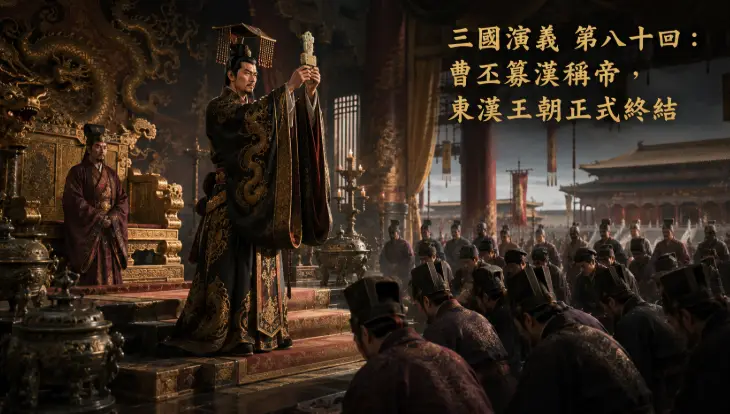
漢獻帝身穿龍袍,緩緩步入大殿。
他宣讀禪位詔書。
「朕德薄才疏,不足以承天下,今順天應人,禪位於魏王曹丕。」
聲音平靜,卻帶著無限滄桑。
詔書宣畢,全殿一片肅然。
曹丕依照禮制,再三推讓後,終於接受皇位。
登基大典正式舉行。
百官山呼萬歲。
新國號仍為「魏」,史稱曹魏。
曹丕改元延康,正式稱皇帝。
至此,延續近四百年的東漢王朝宣告終結。
新的時代,就此展開。
登基之後,曹丕並未虧待漢獻帝。
他封劉協為山陽公,賜予封地與俸祿,准其安享晚年。
雖然失去了皇位,但至少保住了性命與尊嚴。
這份安排,也讓不少朝臣暗自鬆了一口氣。
消息很快傳遍天下。
江東的孫權收到國書後,表面向魏稱臣,實則仍保留自己的實力,靜待時機。
而遠在成都的劉備,卻悲憤萬分。
當他聽聞漢獻帝已禪位時,久久無法言語。
「大漢……真的亡了嗎?」
許多蜀漢舊臣更痛哭流涕。
他們追隨劉備多年,始終以「匡扶漢室」為畢生志業。
如今,漢朝已經正式滅亡。
理想似乎也隨之破碎。
然而,諸葛亮卻平靜地說:
「漢室雖亡,其統未絕。」
這一句話,也點燃了蜀漢最後的希望。
不久之後,群臣紛紛勸進劉備繼承漢統,另立新朝。
歷史的車輪,已無法停止。
魏代漢而起。
蜀漢即將建立。
東吳亦雄踞江東。
三股勢力彼此制衡,真正的三國時代,自此正式展開。
而那座曾經統治天下近四百年的漢朝皇宮,則在夕陽映照下,靜靜見證了一個王朝的落幕。
English Version
Autumn winds swept across the imperial palace in Luoyang.
With Cao Cao gone, authority within Wei quickly passed to his eldest son, Cao Pi.
Unlike many ambitious rulers before him, Cao Pi understood that true legitimacy required more than military strength.
As long as Emperor Xian remained on the throne, Wei’s authority would always appear incomplete.
The emperor himself had spent nearly his entire life as a political hostage.
From the tyranny of Dong Zhuo to the struggles of Li Jue and Guo Si, and finally under Cao Cao’s protection, he had rarely exercised genuine imperial power.
Now another defining moment had arrived.
Leading ministers including Hua Xin, Wang Lang, and Chen Qun repeatedly petitioned Cao Pi to accept the Mandate of Heaven.
According to their arguments, the Han dynasty had exhausted its destiny, and Heaven had chosen Wei to restore order.
Publicly, Cao Pi declined several times.
Privately, the succession was already inevitable.
Preparations for the abdication ceremony soon began.
Standing before the Imperial Seal that had symbolized supreme authority since the Qin dynasty, Emperor Xian quietly contemplated the end of his family’s reign.
The ceremony unfolded with solemn dignity.
Before assembled officials, Emperor Xian read the decree announcing his abdication.
He acknowledged his inability to govern effectively and declared that Heaven’s will now favored Cao Pi.
After observing the traditional formalities of reluctant acceptance, Cao Pi finally ascended the throne.
The Kingdom of Wei officially became an empire.
The Eastern Han dynasty, which had endured for nearly four centuries, came to its historic conclusion.
Despite replacing the Han, Cao Pi treated the former emperor with considerable respect.
Emperor Xian received the noble title of Duke of Shanyang, generous lands, and the privilege of living peacefully in retirement.
The careful arrangement helped ease the sensitive transition of power.
News of the dynastic change spread rapidly throughout China.
Sun Quan outwardly acknowledged Wei’s authority while quietly preserving Eastern Wu’s independence.
In Chengdu, however, Liu Bei received the news with profound sorrow.
The dynasty he had devoted his life to protecting had officially disappeared.
Many of his followers wept openly.
Their dream of restoring the Han seemed to have collapsed forever.
Only Zhuge Liang remained composed.
“The Han dynasty may have fallen,” he declared, “but its rightful legacy has not ended.”
His words inspired renewed determination within Shu.
Soon afterward, Liu Bei’s ministers began urging him to establish a new Han government in the southwest, preserving what they believed to be the legitimate imperial succession.
The age of a united empire had passed.
Wei now ruled the north.
Shu prepared to proclaim its own emperor.
Wu remained firmly established in the south.
The Three Kingdoms had truly begun.