《那些應該存在於那裡的人與事》是一部聚焦福島浪江町請戶地區的紀錄片,透過神社重建與居民的故事,記錄災後重生、文化傳承與人們對故鄉永不放棄的信念。
There Are Things That Belong There is a heartfelt documentary that follows the rebuilding of a historic shrine in Fukushima, revealing how memory, faith, and community continue to endure after unimaginable disaster.
電影內容(中文版本)
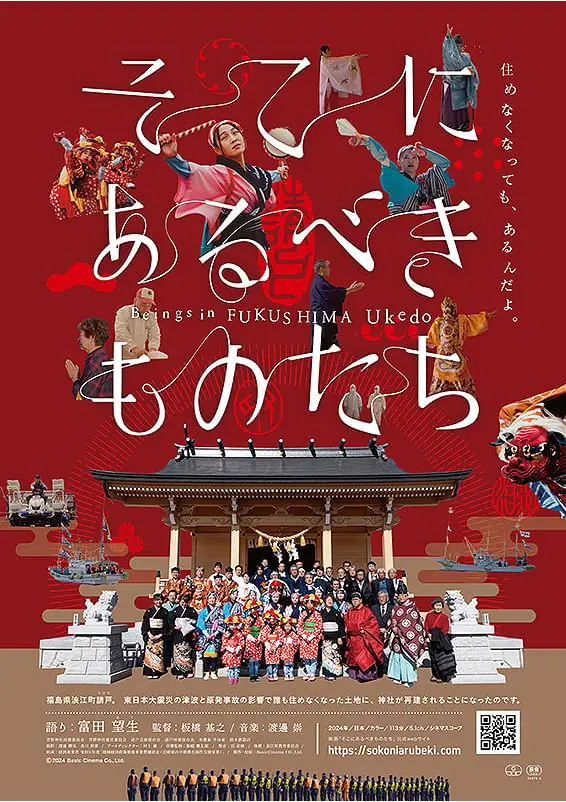
《那些應該存在於那裡的人與事》由板橋基之執導,是一部以日本福島縣浪江町請戶地區為核心的紀錄片。影片聚焦2011年東日本大震災及福島第一核電廠事故後,居民如何在失去家園、流離失所的現實中,努力守護屬於地方的文化、信仰與歷史記憶。請戶地區位於福島第一核電廠以北約七公里,原本是一座靠海而建、充滿生活氣息的小鎮。然而,2011年3月11日發生的東日本大震災引發巨大海嘯,整個聚落遭受毀滅性破壞。隨後爆發的核電事故,更使當地被劃為災害危險區,居民被迫撤離,熟悉的街道瞬間成為無人居住的土地。即使多年過去,許多人仍無法返回昔日家園,但對故鄉的思念從未消失。影片以擁有超過一千三百年歷史的苕野神社重建工程作為主軸。這座神社不僅是地方信仰中心,更承載著居民世世代代共同生活的回憶。即使周圍早已沒有居民,仍有昔日住民與志工願意投入大量心力,希望讓神社重新屹立於原本的位置,象徵故鄉依然存在,也讓下一代仍能找到精神歸屬。導演深入訪問參與重建的居民、地方保存傳統藝能的人士,以及持續維繫祭典文化的傳承者,透過他們的故事描繪一段跨越災難與時間的生命紀錄。電影並未將焦點放在災難本身,而是探討「留下來的東西」與「應該被留下的東西」。當建築倒塌、街道消失、人們離散,信仰、文化、祭典、回憶與土地之間的情感,是否仍然存在?作品藉由苕野神社的重建,象徵人們重新連結故鄉、重新建立身份認同,也讓觀眾看見災後重建不只是恢復建築,更是修復人與土地、人與歷史之間的關係。導演板橋基之自震災前便持續拍攝福島長達十三年,累積深厚紀錄基礎,使影片充滿長時間陪伴所建立的信任與真實感。來自福島縣磐城市的演員富田望生擔任旁白,以溫柔真摯的聲音串連故事,而作曲家渡邊崇則以細膩音樂襯托影片情感,令整部作品散發安靜而深刻的力量。《那些應該存在於那裡的人與事》不僅是一部災後紀錄片,更是一封寫給故鄉、文化與未來世代的情書,提醒人們即使家園改變,記憶與希望仍能繼續扎根於土地之中。
English Version
Directed by Motoyuki Itabashi, There Are Things That Belong There is a moving documentary set in Ukedo, a coastal district of Namie Town in Fukushima Prefecture, where the Great East Japan Earthquake and the Fukushima Daiichi nuclear accident forever transformed both the landscape and the lives of its people. Rather than revisiting the tragedy itself, the film focuses on the enduring relationship between memory, culture, and community, asking what truly remains after a hometown has disappeared. Located only a few kilometers north of the Fukushima Daiichi Nuclear Power Plant, Ukedo was devastated by the massive tsunami that struck in March 2011. The subsequent nuclear disaster forced residents to evacuate indefinitely, leaving the once vibrant community abandoned. Although the streets became silent and homes were left empty, emotional ties to the land never faded. At the heart of the documentary is the reconstruction of Kusano Shrine, a sacred place with more than thirteen centuries of history. Even in a district where no one is officially permitted to live, former residents, volunteers, and cultural guardians unite to rebuild the shrine as a symbol of continuity, remembrance, and hope. Their efforts reflect a belief that restoring a sacred place also restores the invisible connections between generations, traditions, and identity. Through intimate interviews, the film introduces people preserving local performing arts, seasonal festivals, and spiritual customs that have survived despite displacement. Their stories reveal that rebuilding is not simply about replacing physical structures but about preserving a shared sense of belonging. Director Motoyuki Itabashi brings exceptional depth to the documentary, having filmed Fukushima continuously for thirteen years, both before and after the disaster. This long-term commitment allows the camera to capture trust, resilience, and quiet determination with remarkable authenticity. Narration by actor Miu Tomita, who was born in Fukushima Prefecture, adds a deeply personal perspective, while composer Takashi Watanabe’s restrained score reinforces the film’s reflective atmosphere. Rather than portraying loss alone, the documentary celebrates the people who continue to protect their homeland’s cultural heritage even when the community itself has been scattered. There Are Things That Belong There ultimately becomes a powerful meditation on memory, faith, resilience, and the enduring human desire to preserve what truly matters for future generations.
影片簡介(預告片/片段)
中文: 一座神社的重建,承載著整個故鄉跨越災難後的希望與記憶。
English: The rebuilding of one shrine becomes a symbol of remembrance, resilience, and hope for an entire community.
電影資料
導演: 板橋基之
類型: 紀錄片、社會、人文、災後重建、歷史
製片公司: 未公布
上映年份: 2025
主要人物
- 富田望生(旁白)
- 請戶地區原居民
- 苕野神社重建參與者
- 地方傳統藝能保存者
總結
中文版本
《那些應該存在於那裡的人與事》透過神社重建與居民的真實故事,細膩描繪災難後的人性韌性、文化傳承與故鄉情感,是一部充滿希望與力量的人文紀錄片。
English
By documenting the rebuilding of a historic shrine and the determination of displaced residents, There Are Things That Belong There offers a profound reflection on resilience, cultural memory, and the enduring meaning of home.