《ニッポン狂想曲》是由長年關注社會議題的日本導演太田隆文執導的政治紀錄片。繼《朝日のあたる家》與《沖縄狂想曲》等作品後,太田再次以強烈批判視角,聚焦近年震動日本與世界的重要事件,試圖重新檢視那些至今仍充滿疑點與爭議的政治、媒體與社會問題。電影透過專家訪談、資料分析與時事回顧,把不同事件串連成一幅關於現代日本與全球政治結構的不安圖景。
Directed by 太田隆文, Nippon Rhapsody is a politically charged documentary that investigates controversial events shaping modern Japan and the wider world. Continuing the director’s long-standing engagement with social criticism seen in works such as Sunrise House and Okinawa Rhapsody, the film revisits incidents surrounded by unresolved questions, media narratives, and political tension. Through interviews, archival material, and critical analysis, the documentary attempts to expose the hidden structures and anxieties underlying contemporary society.
電影內容
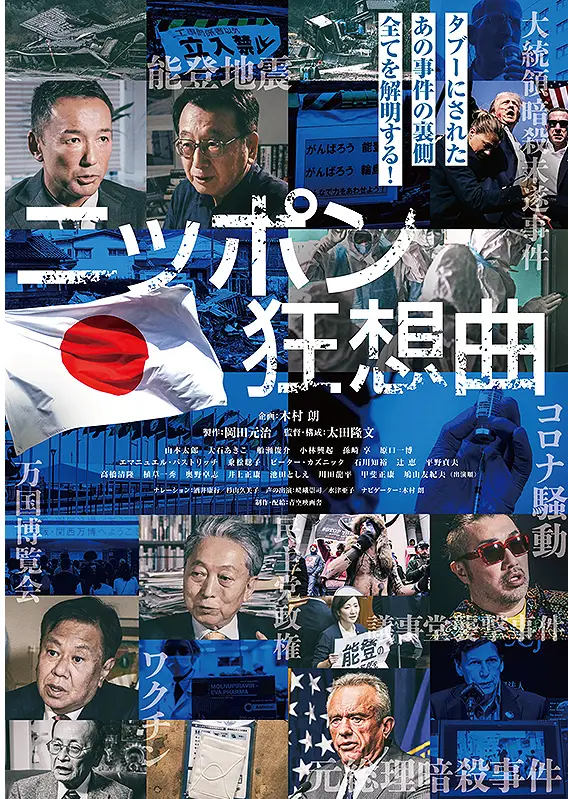
《ニッポン狂想曲》以多個近年引發巨大震撼的政治與社會事件為主軸,透過不同知識份子與評論者的觀點,重新檢視官方說法與媒體敘事背後可能被忽略的問題。電影涵蓋前日本首相安倍晉三遭槍擊事件、Donald Trump暗殺未遂事件、美國國會山莊襲擊事件、新冠疫苗爭議、能登半島地震與大阪萬博之間的政治與利益結構,以及鳩山政權時代鮮少公開的政治內幕等敏感議題。作品並不只是單純回顧事件,而是試圖追問:為何在資訊高度發達的時代,真相反而變得更加模糊?電影中,多位政治人物、學者與評論者輪流登場,包括山本太郎、孫崎享、原口一博、Peter Kuznick以及鳩山由紀夫等人。他們從外交、媒體、歷史與政治角度提出不同觀點,對政府、權力結構與國際關係進行分析與質疑。電影最大的特色,在於它採取近乎「拼圖式」結構,把看似彼此無關的事件放在同一脈絡中討論。從日本政治到美國社會動盪,再到疫情與大型公共建設,作品不斷強調權力、媒體與資本之間的複雜關係。這種敘事方式使電影帶有強烈陰謀論邊界感,同時也反映當代社會普遍存在的不信任情緒。影片中反覆出現的一個核心主題,是「資訊控制」。在網路與媒體資訊爆炸的時代,人們理應更容易接近真相,但實際上,大量資訊反而造成混亂與立場分裂。電影透過不同事件指出,媒體報導往往只呈現部分事實,而政治與商業利益則可能影響輿論方向。這種觀點令整部作品帶有濃厚批判性與警告意味。導演太田隆文延續其過往作品中的紀錄片風格,使用大量新聞畫面、歷史資料與訪談鏡頭,營造出一種不斷追問與懷疑的氣氛。電影節奏偏向論述型,並不追求娛樂性,而是希望觀眾主動思考與質疑。某程度上,《ニッポン狂想曲》更像一場對現代社會的「不安紀錄」。它反映許多人對政府、媒體與國際政治逐漸失去信任,也呈現疫情後世界所瀰漫的焦慮與分裂感。作品雖然帶有鮮明立場,但也因此成為極具爭議性的紀錄片。支持者認為它提供主流媒體之外的視角,而批評者則可能質疑部分論述缺乏客觀性。然而無論立場如何,電影都清楚展現出當代社會中「真相」本身已成為最難掌握的東西。《ニッポン狂想曲》因此不只是政治紀錄片,更是一部關於現代資訊社會、權力結構與集體不安的時代寫照。
English Version
Nippon Rhapsody examines a series of major political and social incidents that have shaken Japan and the international community in recent years, questioning whether the full truth behind these events has ever truly been revealed. Rather than simply documenting historical events, the film investigates how media narratives, political interests, and public perception interact within an age dominated by information overload and social distrust. Topics covered include the assassination of former Japanese Prime Minister Shinzo Abe, the attempted assassination of Donald Trump, the attack on the United States Capitol, controversies surrounding COVID-19 vaccines, political tensions connected to the Noto Peninsula earthquake and the Osaka Expo, and hidden conflicts surrounding the Hatoyama administration. Through these events, the documentary raises a provocative question: why does truth appear increasingly difficult to grasp despite living in an era of unprecedented access to information? The film features interviews with politicians, scholars, diplomats, historians, and commentators, including 山本太郎, 孫崎享, 原口一博, Peter Kuznick, and former Prime Minister 鳩山由紀夫. Each participant contributes perspectives on international politics, media systems, historical interpretation, and state power, often challenging official narratives and mainstream reporting. One of the documentary’s defining characteristics is its mosaic-like structure. Events that initially seem unrelated are gradually connected through recurring themes of political influence, media control, economic interests, and public manipulation. This structure gives the film an atmosphere hovering near conspiracy-oriented interpretation while simultaneously reflecting widespread social distrust present in contemporary society. A central theme throughout the documentary is the concept of information control. In a world saturated with news, social media, and constant communication, people theoretically have greater access to truth than ever before. Yet the film argues that this overwhelming flow of information often produces confusion, polarization, and uncertainty instead. Media organizations are portrayed as selective gatekeepers of reality, while political and corporate interests may shape public understanding behind the scenes. Director Takafumi Ota continues the documentary style seen in his earlier socially critical works, combining archival footage, news broadcasts, interviews, and analytical narration to create an atmosphere of continuous questioning. The film prioritizes reflection and debate over entertainment, encouraging viewers to reconsider accepted narratives rather than passively consume information. In many ways, Nippon Rhapsody functions less as a definitive explanation of events and more as a portrait of collective anxiety within modern society. It captures the growing erosion of trust toward governments, media institutions, and global political systems in the post-pandemic era. The documentary’s strong perspective also makes it inherently controversial. Supporters may view it as an important alternative voice challenging mainstream discourse, while critics may question the objectivity and evidentiary balance of some arguments presented. Regardless of viewpoint, however, the film powerfully illustrates how the concept of “truth” itself has become increasingly unstable in the modern information age. Through political investigation and social critique, Nippon Rhapsody becomes both a documentary and a reflection of contemporary uncertainty, fear, and distrust.
影片簡介(預告片/片段)
從政治暗殺到媒體操控,追問現代社會中的真相與權力。
A political documentary investigating truth, media, and power in contemporary society.
電影資料
導演:太田隆文
類型:紀錄片、政治、社會議題、日本電影
製片公司:日本獨立紀錄片製作
上映年份:2020年代
主要出演人物
山本太郎
孫崎享
原口一博
Peter Kuznick
鳩山由紀夫
總結
《ニッポン狂想曲》以強烈批判視角檢視近年日本與世界的重要事件,探討媒體、權力與資訊控制之間的複雜關係。電影既是一部政治紀錄片,也是一面映照當代社會不安與不信任的鏡子。
Nippon Rhapsody is a provocative political documentary that examines modern society’s growing distrust toward media, institutions, and official narratives. Through controversial events and critical analysis, the film reflects the uncertainty and fragmentation shaping the contemporary world.