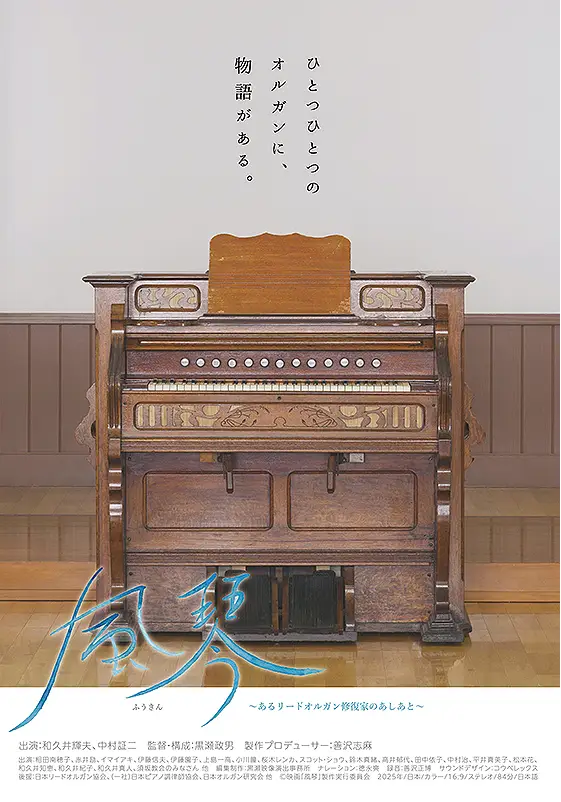
當鋼琴與電子樂器逐漸取代舊式風琴,人們對於木製リードオルガン的記憶,也慢慢停留在學校音樂室與昭和年代的模糊畫面之中。《風琴 あるリードオルガン修復家のあしあと》以溫柔而細膩的鏡頭,記錄日本少數仍致力修復風琴的職人和久井輝夫,透過他的雙手與歲月痕跡,重新喚醒一段幾乎被遺忘的聲音文化,也讓觀眾重新理解樂器與人之間深層而安靜的情感連結。
As pianos and digital instruments gradually replaced traditional reed organs, memories of the wooden foot-pumped instrument began fading into nostalgic images of old classrooms and postwar Japanese homes. Footsteps of a Reed Organ Restorer quietly follows Teruo Wakui, one of Japan’s few remaining reed organ restorers, capturing his delicate craftsmanship and lifelong devotion to preserving instruments that once shaped everyday musical life. Through intimate observation and reflective storytelling, the documentary becomes not only a portrait of restoration, but also a meditation on memory, sound, and disappearing traditions.
電影內容
《風琴 あるリードオルガン修復家のあしあと》是一部充滿時間感與人文氣息的紀錄電影,透過長野縣調律師兼修復家和久井輝夫的工作日常,描繪一種幾乎消失於現代社會的聲音文化。所謂的「風琴」,其實是日本明治至昭和時期極為普及的リードオルガン,也就是以腳踏產生風壓、利用金屬簧片震動發聲的木製樂器。它曾經存在於學校、教會、家庭之中,陪伴許多人度過童年與青春年代。然而隨著電子琴與鋼琴普及,這類樂器逐漸被淘汰,而全球也已經沒有任何工廠繼續生產這種風琴。電影並未以激烈戲劇性推進,而是以極其安靜的方式,讓觀眾凝視和久井修復一台又一台古老風琴的過程。鏡頭停留在木材紋理、老化零件、金屬簧片與踏板之間,那些細小聲音與動作構成了一種近乎儀式性的節奏。對和久井而言,修復並不只是技術工作,更像是在傾聽樂器殘留的生命。他會細心分辨每個零件的年代與音色差異,也會思考樂器曾經陪伴過哪些人,又經歷過怎樣的歲月。電影同時穿插日本各地與風琴有關的人們,包括收藏者、音樂教師、教會人士與研究者,讓這件樂器不只是古董,而成為一段集體記憶的象徵。觀眾可以從中感受到昭和時代家庭文化與學校教育的影子,也能體會舊樂器在人類情感中的特殊位置。影片氣氛帶有濃厚的懷舊感,但並不只是回憶過去,而是在探討現代社會裡「保存」究竟代表什麼。當大量事物快速被淘汰與更新,仍有人願意花費數月甚至數年,只為修好一台已經不再被生產的樂器,這種執著本身便具有深刻力量。《風琴 あるリードオルガン修復家のあしあと》也是一部關於聲音的電影,那些帶有空氣感與微弱顫動的風琴聲,與現代電子聲響形成鮮明對比。它不追求完美,而帶著時間磨損後的溫度。電影透過極簡敘事與沉靜畫面,讓觀眾重新感受手工技藝、歷史記憶與聲音情感之間的微妙關係,也讓一位默默守護舊時代聲音的人物,成為這個快速時代裡難得的存在。
English Version
Footsteps of a Reed Organ Restorer is a contemplative documentary that explores the fading cultural memory surrounding the reed organ, once a familiar presence in Japanese schools, churches, and homes. The film centers on Teruo Wakui, a tuner and restoration specialist living in Nagano Prefecture, whose life’s work involves reviving instruments that the modern world has largely abandoned. Unlike conventional documentaries driven by dramatic conflict, this film unfolds with patience and stillness, allowing viewers to observe the meticulous process of restoration in extraordinary detail. The reed organ, known historically in Japan as “fukin,” produces sound through air pressure and vibrating metal reeds operated by foot pedals. Imported during the Meiji era and later manufactured domestically, these instruments became deeply embedded in everyday Japanese life throughout the twentieth century. Yet today, no company in the world still manufactures them, leaving only aging instruments and the specialists capable of maintaining them. The documentary treats each organ not as an object, but as a vessel of memory. As Wakui carefully disassembles worn wooden panels, cleans rusted reeds, and restores damaged mechanisms, the film quietly suggests that every instrument carries traces of the people who once gathered around it. The sound of the reed organ itself becomes central to the viewing experience: soft, breathing, imperfect, and deeply human compared to the polished precision of digital sound. Through extended observational sequences, the audience witnesses not only technical craftsmanship, but also a philosophy of preservation rooted in patience and respect for history. The film also introduces collectors, teachers, church communities, and enthusiasts across Japan who continue to value the reed organ’s emotional resonance. These encounters broaden the documentary beyond a simple profile of an artisan, transforming it into a reflection on cultural continuity and the fragile survival of analog traditions in a rapidly modernizing world. There is a strong nostalgic atmosphere throughout the film, yet it never feels trapped in sentimentality. Instead, it asks what it truly means to preserve something in an age defined by efficiency, replacement, and technological acceleration. Wakui’s dedication becomes quietly profound precisely because the world around him no longer sees practical value in these instruments. The documentary’s calm pacing and understated cinematography invite viewers to slow down and listen — not only to the organs themselves, but also to the fading echoes of a different era. In doing so, the film reveals how craftsmanship, memory, and sound can become intertwined forms of resistance against cultural disappearance.
影片簡介(預告片/片段)
一段逐漸消失的風琴聲,串起日本舊時代的集體記憶。
A quiet journey into the disappearing world of reed organs and the craftsman preserving their voice.
電影資料
導演:黑瀬政男
類型:紀錄片、人文、音樂
製片公司:日本紀錄電影製作團隊
上映年份:2020年代
主要演員
和久井輝夫
總結
《風琴 あるリードオルガン修復家のあしあと》並非只是關於修理樂器的紀錄片,它更像是一封寫給舊時代聲音文化的情書。電影透過一位職人的堅持與安靜身影,讓觀眾重新理解那些曾經陪伴無數人成長的聲音,如何在時間流逝中逐漸消失,又如何被少數人努力保存。它沒有誇張情節,卻能在細微之中帶來深刻情感,是一部充滿餘韻與溫度的人文作品。
Conclusion
Footsteps of a Reed Organ Restorer is far more than a documentary about repairing instruments. It is a poetic reflection on memory, craftsmanship, and the fragile endurance of cultural soundscapes. Through the quiet devotion of Teruo Wakui, the film reminds audiences that even forgotten objects can continue carrying emotional and historical meaning. Gentle, immersive, and deeply human, the documentary leaves behind a lingering resonance long after the final note fades.