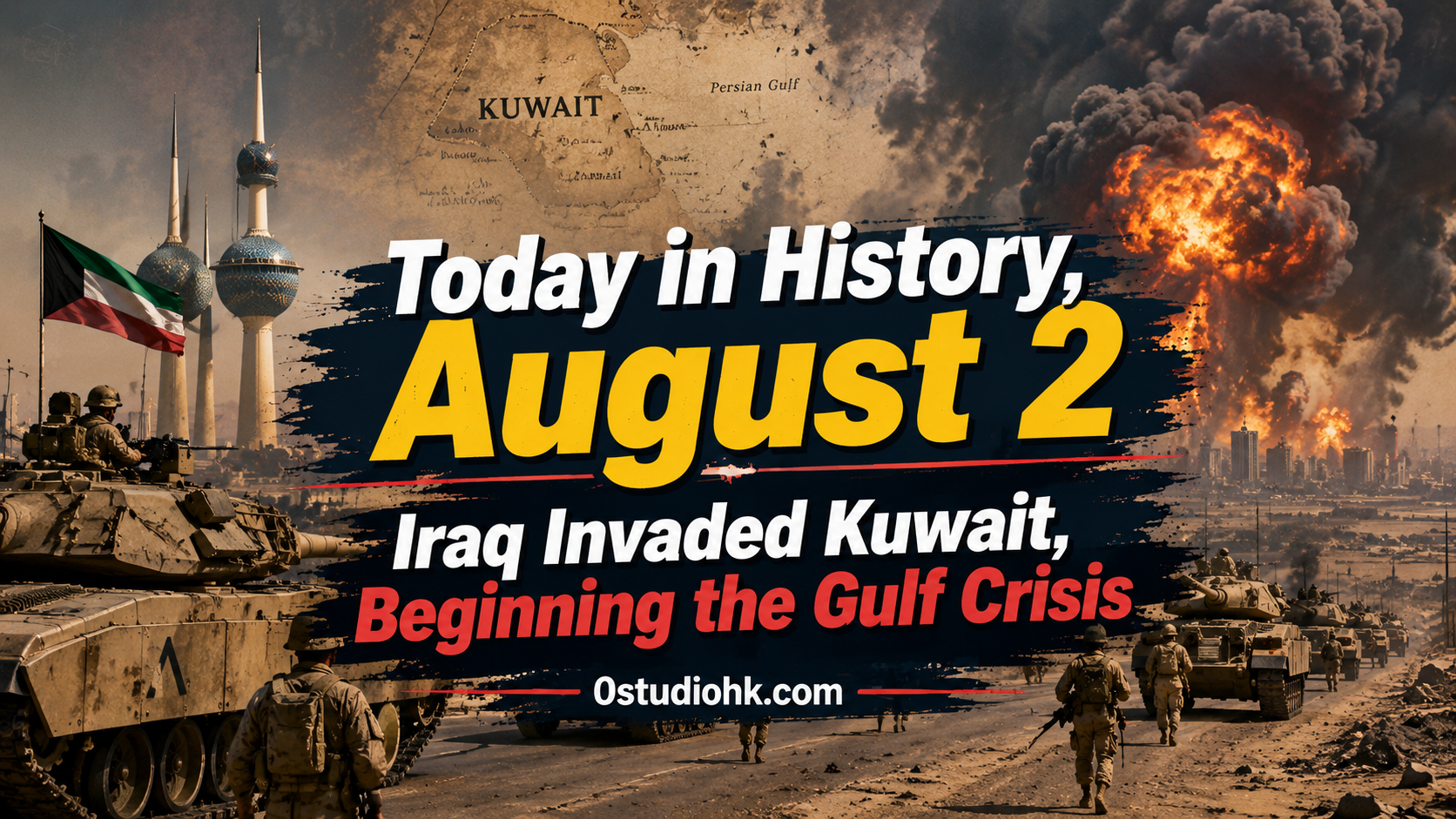
🎵 8月2日今日歷史|伊拉克入侵科威特,波斯灣戰爭序幕 Today in History, August 2 | Iraq Invaded Kuwait, Beginning the Gulf Crisis
1990年8月2日,伊拉克大舉入侵科威特,震驚國際社會,也引發波斯灣危機。這場事件不僅改變中東地緣政治,更促使多國聯軍介入,最終爆發波斯灣戰爭,成為20世紀末最重要的國際事件之一。
On August 2, 1990, Iraqi forces invaded Kuwait, triggering an international crisis that reshaped Middle Eastern politics. The invasion prompted a global response, leading to the Gulf War and marking one of the most significant geopolitical turning points of the late twentieth century.
中文版本
1990年8月2日凌晨,伊拉克總統薩達姆.侯賽因下令大批軍隊越過邊境,迅速攻佔鄰國科威特。短短數小時內,伊拉克便控制了科威特主要城市、政府機關及重要石油設施,震驚全球。這次軍事行動的原因涉及石油價格、債務問題、邊界爭議,以及伊拉克在兩伊戰爭後面臨的沉重經濟壓力。伊拉克認為科威特過度生產石油導致油價下跌,影響其戰後重建,同時指控科威特在邊界油田進行非法開採,因此以武力解決爭端。然而,國際社會普遍認為此舉違反國際法及國家主權原則。聯合國安全理事會迅速通過決議,要求伊拉克立即撤軍,並對其實施經濟制裁。隨後,美國、英國、法國、沙烏地阿拉伯等多國開始組建聯軍,在沙烏地阿拉伯展開大規模部署,行動代號為「沙漠盾牌行動」,目的是保護鄰近國家並阻止戰事進一步擴大。經過數月外交努力仍未能解決危機後,1991年1月,多國聯軍展開「沙漠風暴行動」,對伊拉克軍事目標發動空襲及地面攻勢。由於聯軍擁有壓倒性的科技與軍事優勢,僅用了約一百小時的地面作戰便成功收復科威特,伊拉克軍隊撤離。波斯灣戰爭亦成為全球首次透過24小時新聞頻道即時報導的大型現代戰爭,衛星直播讓世界各地觀眾幾乎同步目睹戰況,也改變了媒體報導國際衝突的方式。此外,精準導引武器、隱形戰機及資訊化作戰等新技術受到廣泛關注,象徵現代戰爭進入新的階段。雖然科威特獲得解放,但戰爭對中東局勢造成深遠影響,包括長期駐軍、地區安全變化、經濟重建及後續國際關係發展,都延續多年。這場危機亦提醒世界,能源、安全與外交密不可分,任何區域衝突都有可能對全球政治與經濟帶來重大影響。8月2日因此成為研究國際關係、地緣政治及現代戰爭的重要歷史日期。
English Version
In the early hours of August 2, 1990, Iraqi forces crossed the border into Kuwait under the orders of President Saddam Hussein. Within hours, key government buildings, military facilities, and oil infrastructure had fallen under Iraqi control, shocking governments around the world. The invasion was driven by a combination of economic hardship following the Iran–Iraq War, disputes over oil production, financial debt, and long-standing border disagreements. Iraq accused Kuwait of depressing global oil prices through excessive production and claimed that Kuwaiti drilling activities extended into Iraqi oil fields. While Baghdad presented these arguments as justification, the international community widely viewed the invasion as a violation of international law and the sovereignty of an independent nation. The United Nations Security Council quickly condemned the attack, demanded Iraq’s immediate withdrawal, and imposed comprehensive economic sanctions. At the same time, a multinational coalition led by the United States began deploying forces to Saudi Arabia under Operation Desert Shield, aiming to defend neighboring countries and deter further aggression. Diplomatic negotiations continued for several months but ultimately failed to resolve the crisis. In January 1991, coalition forces launched Operation Desert Storm, beginning with an extensive air campaign followed by a rapid ground offensive. Supported by advanced military technology and international cooperation, coalition troops liberated Kuwait in just over one hundred hours of ground combat. The conflict also transformed the way wars were reported. Around-the-clock satellite television broadcasts allowed millions of viewers to follow military operations almost in real time, making the Gulf War one of the first globally televised conflicts. Precision-guided weapons, stealth aircraft, and modern command systems demonstrated a new era of high-technology warfare. Although Kuwait regained its independence, the consequences of the conflict continued to shape Middle Eastern politics for decades. Regional security arrangements, military alliances, energy markets, and diplomatic relations all evolved in response to the war’s aftermath. Today, August 2 remains an important historical date that highlights the global significance of international law, energy security, and geopolitical stability.
總結
伊拉克入侵科威特揭開波斯灣危機序幕,不但改變中東局勢,也深刻影響國際政治、能源安全與現代戰爭發展。
The invasion of Kuwait reshaped international relations, transformed modern warfare, and demonstrated how regional conflicts can have lasting global consequences.