在動盪的英國革命時代,約翰·彌爾頓以詩歌與思想回應信仰與權力的衝突,透過宏大的敘事描繪人類墮落與救贖的命題,塑造出永恆的文學經典。
Amid political upheaval and religious conflict, John Milton crafted powerful poetry that explores humanity’s fall and redemption, transforming epic storytelling into a profound reflection on faith, freedom, and moral choice.
中文
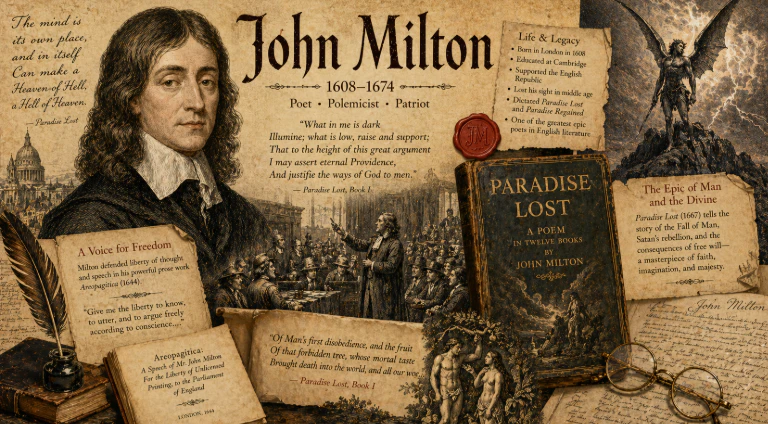
約翰·彌爾頓(John Milton)是十七世紀英國最重要的詩人之一,他的作品融合宗教信仰、政治理念與哲學思考,展現出深厚的思想力量與藝術高度。他出生於倫敦一個重視教育的家庭,自幼接受良好訓練,精通多種語言,並深受古典文學影響,這些背景使他的創作具有宏大結構與嚴謹風格。在英國內戰與共和政體建立的時期,他積極參與政治,支持共和理念,並以文字為工具捍衛言論自由,其著名的散文《論出版自由》即為捍衛思想解放的重要作品。然而,晚年的他失去視力,卻未因此停止創作,反而完成了最偉大的詩篇《失樂園》,以盲人之身構築出震撼人心的史詩世界。《失樂園》以聖經故事為基礎,描寫撒旦的反叛、人類的墮落以及自由意志的代價,作品不僅呈現善與惡的對立,更深入探討選擇與責任的意義。彌爾頓以莊嚴而富節奏感的語言,塑造出宏大的宇宙觀與複雜的人物形象,使讀者在閱讀過程中感受到強烈的思想張力。他筆下的撒旦形象尤為引人注目,既叛逆又充滿魅力,成為文學史上最具爭議的角色之一,也引發後世對英雄與反叛的重新思考。除了史詩創作外,他的詩歌與散文同樣具有高度價值,展現出對自由、信仰與人性的深刻關懷。彌爾頓的作品不僅是宗教文學的巔峰,更是對人類存在問題的哲學探索,影響了後世無數作家與思想家。他以堅定信念與卓越才華,將個人命運與時代變遷融合於創作之中,使其作品跨越時代仍具震撼力與啟發性。
English Version
John Milton stands among the most significant poets of the seventeenth century, renowned for blending theology, politics, and philosophy into a unified poetic vision. Born in London and educated in classical traditions, he developed a mastery of language and form that would later define his literary achievements. Living through the English Civil War and the rise of the Commonwealth, Milton was not merely an observer but an active participant in political discourse, advocating for republican ideals and freedom of expression. His prose work defending the liberty of the press remains a landmark in the history of intellectual freedom. In the later years of his life, despite losing his eyesight, Milton produced his greatest masterpiece, Paradise Lost, dictating lines that would form one of the most influential epics in English literature. Drawing from biblical narratives, the poem recounts the rebellion of Satan, the fall of humankind, and the profound consequences of free will. Yet beyond its religious framework, the work delves deeply into questions of choice, authority, and moral responsibility. Milton’s language is elevated and rhythmic, constructing a vast cosmic stage populated by complex and compelling figures. His portrayal of Satan, in particular, has sparked centuries of debate, as the character embodies both defiance and tragic grandeur, challenging traditional notions of heroism and villainy. Milton’s writing extends beyond epic poetry, encompassing works that reflect his enduring commitment to liberty, faith, and human dignity. His influence resonates across literature and philosophy, inspiring generations to grapple with the fundamental tensions between obedience and freedom. Through his visionary imagination and unwavering conviction, Milton transformed personal adversity and historical turmoil into works of lasting significance, ensuring his place as one of the greatest voices in literary history.