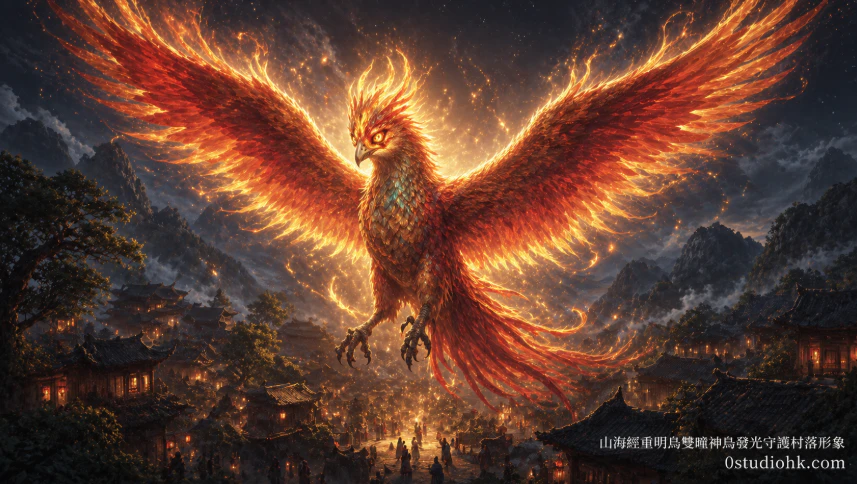
在《山海經》的神話世界裡,重明鳥是一種象徵光明與守護的神鳥,牠以雙瞳之眼洞察萬物,能驅逐邪祟。這種神秘存在承載著古人對光明、正氣與平安的渴望與信仰。
In the mythic tapestry of the Shan Hai Jing, the Chongming Bird shines as a symbol of light and protection. With its double pupils said to see through all illusions, it embodies the ancient human longing for safety, clarity, and the triumph of good over darkness.
中文
天光未明,群山籠罩於薄霧之中,村落靜默無聲,唯有微弱的晨風掠過屋簷。老人常說,在最黑暗與最接近黎明的時刻,正是邪祟最易出沒之時。然而,也正是在這樣的時刻,重明鳥會現身。牠並非尋常之鳥,體態雄健,羽色如火焰般鮮明,雙目之中各含雙瞳,目光如炬,能看穿人心與妖影。傳說只要重明鳥降臨之地,百鬼退散,邪氣不存。某年,村中接連發生異事,夜半之時有人聽見低語,有人見影子在牆上游走,牲畜莫名驚逃,孩童驚醒啼哭。恐懼如霧般瀰漫,沒有人敢在夜晚獨行。村中的長者最終決定設壇祈願,請求重明鳥降臨守護。他們燃起香火,向東方叩拜,等待天明。就在夜色最深之際,一道紅光從天際劃過,帶著溫暖而不刺目的光輝,落在村口古樹之上。眾人抬頭,只見一隻巨大的神鳥展翅而立,羽毛層層如火焰流動,雙眼之中重瞳閃耀,彷彿能照見一切隱藏之物。重明鳥靜靜注視四周,忽然發出一聲清亮的鳴叫,那聲音不同於凡鳥,既不尖銳也不低沉,而是一種令人心神安定的回響。隨著鳴聲傳開,空氣中那股壓抑的陰冷逐漸消散,黑影無聲退去,彷彿從未存在。村人感到一種久違的輕鬆,彷彿重擔被卸下。重明鳥並未停留太久,牠展開雙翼,振翅之際帶起一陣溫暖的氣流,如晨光初現。當第一縷陽光照進山谷時,牠已消失於天際。此後,村中再未出現怪異之事,人們將這一夜視為轉折。每逢新年或重要節日,他們便會以重明鳥為圖騰,懸掛門前,以祈求平安與驅邪。有人說,重明鳥並非總在天上,而是棲息於人心之中,當人們心存正氣與光明,它便會出現,守護不受侵擾。歲月流轉,故事被一代代傳述,但那一夜的光,仍在記憶深處閃耀,提醒人們,即使黑暗再深,總會有光降臨。
English Version
Before dawn breaks, when the world feels suspended between night and day, shadows seem to grow heavier, and silence carries a quiet tension. In such moments, the elders say, unseen forces wander freely. Yet they also speak of a guardian that appears precisely when darkness reaches its peak—the Chongming Bird. Unlike any ordinary creature, it is said to possess a radiant body and eyes with double pupils, granting it the ability to see beyond illusions and reveal hidden truths. Its presence is believed to banish evil, restoring balance wherever it arrives. In one village, a series of strange events unsettled daily life. Whispers echoed through empty spaces at night, shadows moved without cause, and animals reacted with unexplained fear. Sleep became restless, and unease spread among the people. With no explanation in sight, the villagers turned to ancient rituals, offering prayers to call upon the Chongming Bird for protection. As the night deepened and hope seemed fragile, a glow appeared on the horizon. It was not the cold light of the moon, but something warmer—alive. The light descended gently, revealing a magnificent bird perched upon an ancient tree at the edge of the village. Its feathers shimmered like living embers, and its gaze, layered with dual pupils, seemed to pierce through every hidden corner. When it called out, the sound carried a calm resonance, unlike any natural cry. It did not startle—it soothed. As the echo spread, the suffocating tension dissolved. The unseen presence that had haunted the village faded into nothingness, as if erased by light itself. For the first time in many nights, the villagers felt at ease. The bird did not linger. With a powerful motion, it rose into the sky, its wings stirring a gentle warmth that felt like the arrival of dawn. By the time sunlight reached the valley, it was gone. From that day forward, peace returned. The villagers honored the Chongming Bird as a symbol of protection, placing its image at their doors during festivals to ward off harm. Over time, some came to believe that the bird was not merely a creature of the skies, but a reflection of inner clarity and righteousness. When people carried light within themselves, the guardian would appear. And though years passed, the memory of that luminous presence endured—a reminder that even in the deepest darkness, something pure and watchful may rise to protect the world.