《山海經 050(哲學與象徵)》為何《山海經》充滿怪物?神話、恐懼與想像的交織 Why Is Shan Hai Jing Full of Monsters? Myth, Fear, and Imagination Intertwined
《山海經》描繪出無數奇異生物與未知世界,這些怪物不僅是幻想產物,更反映古人對自然、異域與未知的理解與恐懼,是文化想像的縮影。
The Shan Hai Jing is filled with strange creatures and surreal landscapes, not merely as fantasy but as reflections of how ancient people understood nature, distance, and the unknown through imagination and fear.
中文
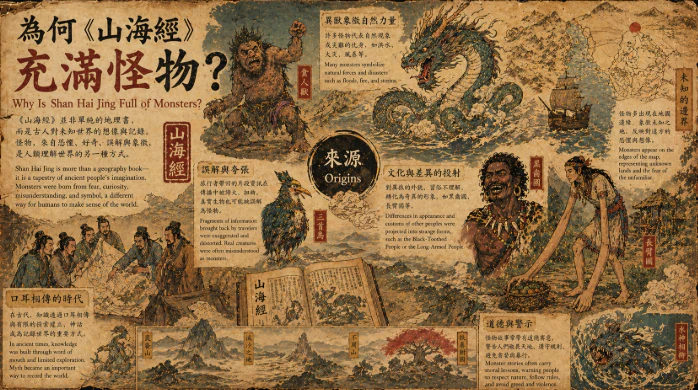
在遠古的時代,世界並未被地圖完整描繪,人類對遠方的認知來自傳說與片段的記憶。《山海經》正誕生於這樣的時空之中,它並非單純的地理記錄,而是一幅交織著想像與經驗的世界圖景。當人們翻開這部古書,映入眼簾的是各種難以理解的生物:人面獸身、鳥首人形、長臂異族、黑齒之民,甚至還有吞噬日月的怪獸。這些形象看似荒誕,卻蘊含著深層的文化意義。對古人而言,未知即危險。遠方的山川、異域的民族、未曾見過的動物,都可能被轉化為帶有威脅性的形象。於是,怪物成為一種解釋世界的方式,是對未知的具象化表達。當航行者遠赴他鄉,帶回零碎的見聞,這些資訊在傳播中逐漸被誇大與重構,最終形成了神話中的奇異生物。某些怪物可能源自真實動物的誤解,例如對大型野獸或奇特鳥類的誇張描述;而另一些則來自文化投射,將陌生族群的外貌或習俗轉化為「異類」的形象。黑齒國或長臂國的描述,正反映了這種將差異轉化為奇觀的過程。同時,《山海經》中的怪物也承載著象徵意義。它們往往與災難、自然力量或道德寓意相關,提醒人們敬畏天地、遵循秩序。吞火的獸象徵火災的破壞力,食人的怪物警示人性中的貪婪與暴力。這些形象不只是故事元素,更是早期社會對世界運作方式的理解。在沒有科學解釋的年代,神話與怪物填補了知識的空白,使人們得以理解不可解釋之事。另一方面,怪物也代表著邊界。它們存在於地圖的邊緣,象徵文明與未知之間的界線。當人們尚未踏足某片土地,那裡便可能充滿奇異與危險。這種想像既帶來恐懼,也激發探索的渴望。《山海經》的世界因此既令人畏懼,又令人著迷。它讓人看到一個未被馴服的宇宙,一個充滿可能性的空間。隨著時代演進,人類對自然的認識逐漸深化,許多曾被視為怪物的存在得到了合理解釋。然而,《山海經》中的形象並未因此失去價值。相反,它們成為文化記憶的一部分,提醒我們曾經如何看待世界。這些怪物並不只是幻想,而是古人心靈的映射,是恐懼、好奇與創造力交織而成的產物。當我們再次閱讀這些故事,不僅是在觀看奇觀,更是在理解一種早已遠去卻仍深刻影響今日的思維方式。
English Version
Long before maps could define the world with precision, knowledge of distant lands existed as fragments—stories passed between travelers, reshaped by imagination with every retelling. The Shan Hai Jing emerged from this uncertain landscape, not as a scientific record but as a tapestry woven from observation, myth, and interpretation. Within its pages, readers encounter beings that defy ordinary logic: creatures with human faces and animal bodies, distant tribes marked by unusual features, and beasts capable of swallowing celestial bodies. These descriptions may seem fantastical, yet they reveal something deeply human. For early societies, the unknown was inseparable from danger. Lands beyond familiar borders were not empty—they were filled with possibility, often perceived through fear. As a result, unfamiliar animals, distant cultures, and unexplored terrains were transformed into monstrous forms that could be understood and remembered. Reports from travelers, often incomplete or exaggerated, evolved into elaborate narratives. A large predator might become a mythical beast; a unique cultural practice might be reimagined as something uncanny. Over time, these distortions solidified into the creatures described in the text. But these beings are not merely errors of perception—they are symbols. Many of them represent natural forces or moral ideas. A fire-breathing creature might embody the destructive power of wildfire, while man-eating beasts could reflect anxieties about violence and survival. In this way, monsters became tools for explaining a world that lacked scientific clarity. They filled the gaps between knowledge and mystery. At the same time, these creatures marked the edges of the known world. They lived at the borders of maps, in places where certainty ended and imagination began. This boundary between the familiar and the unknown gave rise to both fear and curiosity. The Shan Hai Jing captures this tension beautifully, presenting a universe that is at once terrifying and compelling. As human understanding of the natural world expanded, many of these “monsters” were reinterpreted or dismissed as myth. Yet their cultural significance remains intact. They are echoes of how people once thought, how they processed uncertainty, and how they constructed meaning from limited information. Today, reading the Shan Hai Jing is not just an exploration of myth—it is a journey into the early human mind, where fear, creativity, and the desire to understand the world converged into stories that continue to fascinate across time.