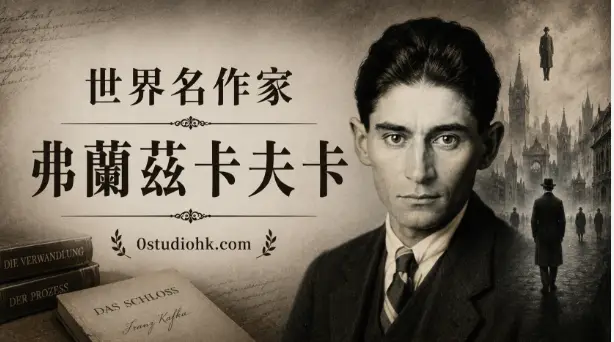
弗蘭茲・卡夫卡是二十世紀最具影響力的作家之一,他以充滿荒誕、孤獨與壓迫感的作品聞名,深刻描寫現代人在社會制度與內心世界之間的掙扎,影響遍及文學、哲學與藝術。
Kafka’s novels and stories reshaped modern literature by exploring alienation, bureaucracy, and existential anxiety. His distinctive vision gave birth to the term “Kafkaesque,” describing situations that feel both absurd and disturbingly real.
中文版本
弗蘭茲・卡夫卡(1883年至1924年)出生於當時奧匈帝國統治下的布拉格,成長於一個德語猶太家庭。由於身處捷克、德國與猶太文化交會之地,他自小便感受到身分認同的矛盾與孤獨,這種夾在不同文化之間的經歷,也深深影響了他的創作。卡夫卡的父親是一位性格強勢的商人,對兒子要求嚴格,父子關係長期緊張。成年後,卡夫卡曾寫下著名的《致父親的信》,坦率表達自己多年來對父親的恐懼、壓力與無法擺脫的心理陰影。這段家庭經歷,成為他許多作品中權威壓迫與個人無力感的重要來源。大學畢業後,他取得法律博士學位,並在保險公司工作多年,負責工傷保險與勞工案件。繁重的工作讓他只能利用夜晚寫作,因此他經常在深夜創作到凌晨,將日常生活中的焦慮與壓力轉化為充滿象徵意義的小說世界。他生前十分低調,出版作品並不多,也始終認為自己的創作尚未完成。卡夫卡最著名的作品是《變形記》,故事描述推銷員葛雷高爾.薩姆沙某天醒來,竟發現自己變成一隻巨大的昆蟲。真正令人震撼的並非變形本身,而是家人逐漸由關心轉為厭惡,最終將他視為負擔。小說透過荒誕情節,揭示現代社會中人的價值往往建立在工作能力與社會角色之上,一旦失去功能,便容易遭到遺棄。另一部代表作《審判》描寫銀行職員約瑟夫.K某天突然被神秘機構逮捕,卻始終不知道自己犯了什麼罪。他試圖尋求真相,卻被層層官僚制度困住,最後在毫無答案的情況下迎向死亡。小說深刻描繪人在龐大制度面前的無助,也使「卡夫卡式」成為形容荒謬官僚與無法理解權力結構的代名詞。《城堡》則講述測量員K試圖進入城堡工作,但無論如何努力,都無法真正接近權力核心,象徵人類不斷追求目標,卻始終與答案保持距離。卡夫卡的作品沒有傳統英雄,也少有圓滿結局,而是透過夢境般的情節、象徵性的場景與細膩的心理描寫,讓讀者感受到孤獨、焦慮、罪惡感與存在的不確定性。他的文字平靜克制,卻充滿令人不安的力量,使普通日常逐漸演變成難以逃離的噩夢。卡夫卡一生深受肺結核困擾,1924年病逝,年僅四十歲。臨終前,他曾要求好友馬克斯.布羅德燒毀所有未出版手稿,但布羅德沒有遵從遺願,而是整理出版《審判》、《城堡》、《美國》等作品,才讓世界得以認識這位文學巨匠。今天,卡夫卡被視為現代主義與存在主義文學的重要先驅,他的作品持續影響文學、哲學、電影、戲劇及心理學領域。「卡夫卡式」更成為全球通用的文化詞彙,象徵人在陌生制度、權力迷宮與自我迷失之中的深刻處境,也讓他的名字永遠留在世界文學史的重要篇章。
English Version
Franz Kafka ranks among the most influential voices in modern literature, creating stories that continue to resonate because they capture the unsettling experience of living in an increasingly complex world. Born in Prague in 1883, then part of the Austro-Hungarian Empire, Kafka grew up at the intersection of German, Czech, and Jewish cultures. This multicultural environment gave him a lifelong awareness of isolation and identity, themes that became central to his fiction. His relationship with his father profoundly shaped his emotional life. Hermann Kafka was a successful businessman whose commanding personality intimidated his sensitive son. Years later, Kafka poured these emotions into his famous Letter to His Father, revealing how authority, guilt, and fear had influenced his understanding of himself. These personal conflicts later emerged in many of his fictional characters, who often struggle against invisible systems of power they cannot fully comprehend. After earning a doctorate in law, Kafka worked for an insurance company specializing in industrial accident claims. The demanding job occupied his days, leaving only late nights for writing. Despite physical exhaustion, he remained devoted to literature, believing that writing was essential to his existence. Yet he published relatively little during his lifetime and often doubted the value of his own work. His most celebrated novella, The Metamorphosis, opens with one of literature’s most unforgettable moments: salesman Gregor Samsa awakens to discover he has become a gigantic insect. Rather than focusing on the impossible transformation itself, Kafka explores the emotional collapse that follows as Gregor’s family gradually abandons him. The story exposes how modern society frequently measures human worth through productivity and usefulness, leaving those who cannot contribute isolated and forgotten. Another masterpiece, The Trial, follows Josef K., who is unexpectedly arrested without being told the nature of his alleged crime. As he navigates an endless maze of officials, confusing procedures, and inaccessible authorities, he becomes trapped in a legal system that never explains itself. The novel captures feelings of helplessness before bureaucratic institutions, giving rise to the adjective “Kafkaesque,” now widely used to describe situations that are irrational, oppressive, and impossible to escape. In The Castle, a land surveyor identified only as K. struggles to gain access to mysterious authorities controlling a remote village. Every attempt leads to further confusion, suggesting that human beings often pursue meaning and acceptance while remaining forever separated from the powers governing their lives. Kafka’s fiction rarely offers heroic triumphs or comforting conclusions. Instead, it presents ordinary individuals confronting invisible forces, uncertain identities, and moral ambiguity. His calm, restrained prose contrasts sharply with the growing anxiety beneath the surface, creating narratives that feel strangely believable despite their surreal events. Kafka died from tuberculosis in 1924 at the age of forty. Before his death, he instructed his close friend Max Brod to destroy his unpublished manuscripts. Brod chose not to follow those wishes, preserving and publishing works such as The Trial, The Castle, and Amerika. That decision introduced the world to one of literature’s greatest innovators. Today Kafka’s influence extends beyond novels into philosophy, psychology, theatre, cinema, and political thought. His exploration of alienation, authority, and existential uncertainty remains remarkably relevant, ensuring that the word “Kafkaesque” continues to describe experiences that are uniquely modern and universally human.
總評
卡夫卡以獨特的文學風格揭示現代人的孤獨、焦慮與制度困境,他的作品跨越時代,持續啟發文學、哲學與藝術創作,成為世界文學史不可忽視的重要經典。
Franz Kafka transformed personal anxiety into universal literature. His visionary works continue to illuminate the complexities of identity, authority, and modern existence, securing his place among the most enduring writers of all time.