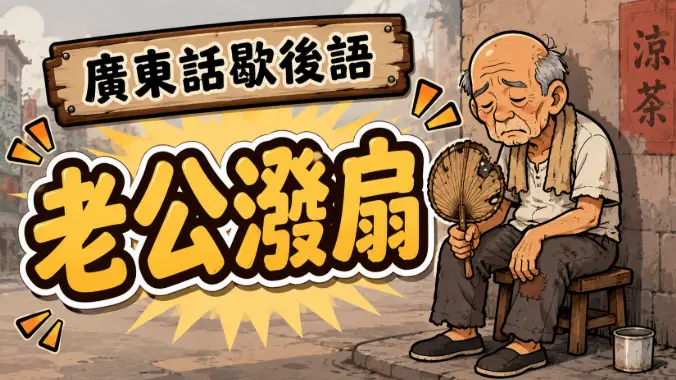
「老公潑扇-淒涼」是一句帶有濃厚舊香港民間氣息的廣東話歇後語,聽起來既有畫面感,也帶點黑色幽默。所謂「老公」並不是現代人所說的丈夫,而是古時對年老男子的稱呼;「潑扇」則是指手中拿著破舊的扇子。從前窮苦老人穿著殘舊、手持破扇,在街頭巷尾乘涼的模樣,往往令人聯想到孤苦、落魄與淒清的生活。因此廣東人便以這種形象,比喻人處境悲慘、生活冷清,或者形容某些場面特別冷淡蕭條。這句歇後語流傳多年,至今依然能在香港人口語之中聽到。
“老公潑扇 – 淒涼” is a traditional Cantonese saying filled with vivid imagery and old-world street culture. In this expression, “老公” does not mean husband as it does in modern Chinese, but instead refers to an elderly man. “潑扇” describes an old, worn-out fan used for cooling off in hot weather. The image of a poor old man sitting alone with a broken fan became associated with loneliness, hardship, and a bleak life. Over time, Cantonese speakers transformed this visual scene into a colorful expression used to describe situations that feel miserable, deserted, or emotionally depressing. Even today, the phrase still survives in everyday Hong Kong conversations because of its strong emotional atmosphere and memorable imagery.
意思
「老公潑扇-淒涼」主要用來形容一種孤苦冷清、令人同情或者氣氛低落的狀態。這句歇後語背後帶有濃厚的舊社會色彩,因為從前不少窮苦老人沒有穩定生活,只能坐在街邊搖著破扇度日,那種場景自然令人感到悲涼。因此廣東人後來便借這個形象,用來比喻生活潦倒、場面冷清,甚至是遭遇失敗後的失落感。例如一家店鋪完全沒有客人,便可能有人說「成間舖好似老公潑扇咁淒涼」;又或者某人失戀、失業後情緒低落,也可以用這句話來形容。這句歇後語有時帶有同情意味,但有時也會夾雜少許幽默感,特別是在朋友之間互相調侃時使用。廣東話歇後語的特色之一,就是善於利用平民生活畫面去描寫人情世態,而「老公潑扇」正正展現了這種民間智慧。即使現代社會已很少見到真正手持破扇的老人,但這種淒清感與落寞氣氛,仍然能令人一聽便明白。也因為它畫面鮮明,所以多年來一直保留在香港人的口語文化之中,成為經典廣東話俗語之一。
English Version
The phrase “老公潑扇 – 淒涼” is commonly used to describe loneliness, hardship, or an atmosphere that feels painfully quiet and depressing. Its origins come from the image of impoverished elderly men in older Cantonese communities who sat alone on the streets with worn-out fans, trying to endure the heat while living difficult lives. This visual eventually became symbolic of sadness, isolation, and hopelessness. Today, Cantonese speakers use the expression whenever something feels empty, miserable, or emotionally bleak. A restaurant with no customers, a failed business, a lonely apartment, or a person struggling after heartbreak can all be described using this saying. Sometimes the phrase carries genuine sympathy, while in other situations it is used humorously among friends to exaggerate how unfortunate or deserted something appears. One reason the expression remains memorable is because it captures emotion through ordinary street imagery rather than formal language. Cantonese culture often transforms simple scenes from daily life into rich metaphors about human emotion, and this saying is a perfect example of that tradition. Even though modern Hong Kong looks very different from the past, the feeling of loneliness and disappointment behind the expression is still instantly relatable today.
用法
這句歇後語多數用於形容氣氛冷清、處境可憐或者生活落魄。廣東人平日聊天時,當看到店舖沒有人光顧、聚會氣氛沉悶,或者朋友樣子特別失落,都可能會說一句「老公潑扇,真係淒涼」。有時亦會用作半開玩笑式的自嘲,例如有人失業、冇人約、收入減少時,也會拿這句話來形容自己。由於語氣帶點幽默,所以即使說的是不開心的事情,也不會太過沉重。
English Version
This saying is mainly used to describe situations that feel empty, pitiful, or emotionally gloomy. Cantonese speakers often say it when a shop has no customers, a gathering lacks energy, or someone appears lonely and discouraged. It is also commonly used as self-deprecating humor. A person joking about unemployment, lack of money, or having no social life might laugh and describe themselves with this phrase. Because the expression contains a touch of dark humor, it softens sadness while still clearly expressing disappointment or loneliness.
小故事:
阿明開了一間小茶餐廳,希望靠自己的手藝闖出一番事業。開張頭幾日,他每天都很早回店準備食材,還特地在門口掛上新招牌。可是附近競爭激烈,大部分客人都習慣去大型連鎖店,結果整個上午都沒有幾個人進來。阿明坐在收銀台後面,一邊搖著紙扇,一邊望著空蕩蕩的店舖發呆。中午時分,老朋友阿強經過,看見店內冷冷清清,忍不住笑說:「你呢度真係老公潑扇,夠晒淒涼喎。」阿明苦笑回應:「我都唔想,但現實就係咁。」雖然嘴上說得輕鬆,但他心裡其實十分失落。後來阿強主動幫他拍片放上網,又介紹朋友來幫襯。慢慢地,茶餐廳開始有了固定客人,氣氛也熱鬧起來。有一天,店裡坐滿食客,阿強再次走進店內,笑著說:「今次終於唔再係老公潑扇啦。」阿明聽後哈哈大笑,心裡卻特別感激當初朋友在他最失意時沒有離開。
English Version
Ming opened a small local café hoping to build a better future through hard work. During the first few days, he woke up early every morning to prepare ingredients and proudly hung a brand-new sign outside the shop. Unfortunately, competition in the neighborhood was fierce, and most people preferred visiting large chain restaurants nearby. Entire mornings passed with barely a single customer entering the café. Sitting behind the counter with a paper fan in his hand, Ming stared quietly at the empty tables and silent room. Around lunchtime, his old friend Keung walked by and peeked inside. Seeing the deserted café, he laughed and joked, “This place looks absolutely miserable — like an old man with a broken fan.” Ming smiled bitterly and replied, “I don’t want it to be this way either.” Although he tried to sound relaxed, he felt deeply discouraged inside. Later, Keung decided to help by filming short videos about the café and sharing them online while inviting friends to support the business. Gradually, more customers started arriving, and the once-empty café became lively and full of conversation. One busy afternoon, Keung returned to find every table occupied. Looking around proudly, he laughed and said, “Now this definitely isn’t ‘老公潑扇’ anymore.” Ming burst into laughter, but quietly felt grateful that his friend had stayed by his side during the hardest days.
結語
「老公潑扇-淒涼」透過一個舊社會人物形象,把孤單與落魄描寫得十分傳神。這句歇後語既有民間幽默,也蘊含對人生冷暖的觀察,因此直到今天仍然深受廣東話文化保留與流傳。
English Version
“老公潑扇 – 淒涼” captures loneliness and hardship through a simple but unforgettable street image from old Cantonese society. Its emotional depth, humor, and realism have allowed the expression to survive across generations as part of Hong Kong’s living language culture.