
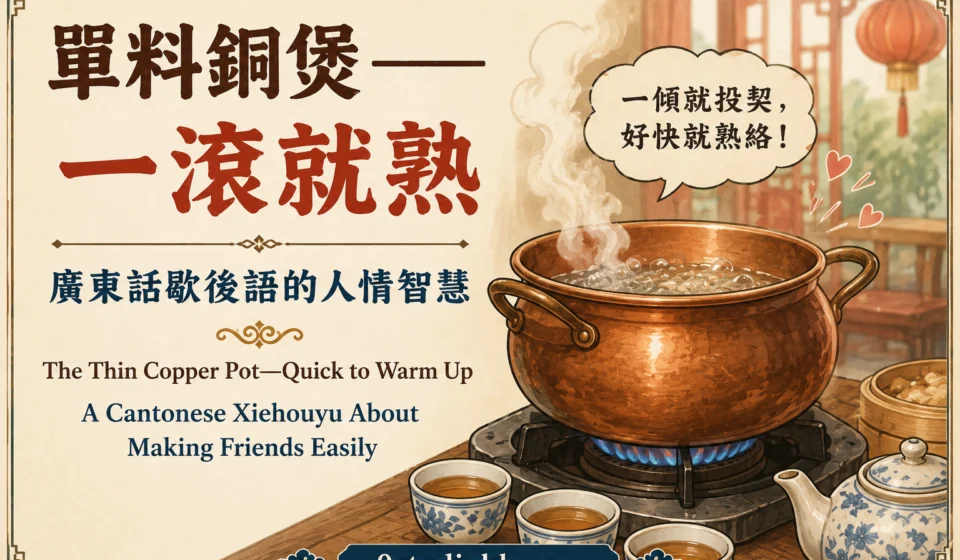
單料銅煲——一滾就熟|廣東話歇後語的人情智慧|The Thin Copper Pot—Quick to Warm Up|A Cantonese Xiehouyu About Making Friends Easily

「單料銅煲」本身係一種較薄嘅銅煲,因為銅傳熱快,所以一煲水好快就滾。廣東人就借呢個生活現象,比喻有啲人好容易同陌生人熟絡,一講兩句已經可以打成一片。相關廣東話歇後語資料亦將「單料銅煲」解作「一滾就熟」。
中文
「單料銅煲——一滾就熟」形容一個人好容易同人熟絡。銅嘅傳熱速度快,單料銅煲又比較薄,所以加熱之後好快就滾。廣東人將呢個生活現象套落人際關係,就變成一個非常生動嘅比喻。有啲人性格外向,第一次見面已經可以自然咁傾偈,唔使幾耐就同大家打成一片;有時甚至只係一齊食餐飯、傾幾句,已經熟到好似識咗好多年咁。呢種人就可以形容為「單料銅煲」。部分資料亦指出,呢句歇後語傳統上有時會用嚟形容女性容易同人混熟,但現代使用時其實可以泛指任何人,重點係「容易熟絡」而唔係性別。
English Version
The Cantonese expression “單料銅煲——一滾就熟” describes someone who becomes friendly with others remarkably quickly. A thin copper pot heats up fast, allowing water to reach boiling point in a short time. Cantonese speakers turn this everyday kitchen image into a playful description of people who can quickly break the ice. Some people may meet a stranger for the first time and, within minutes, start chatting naturally as if they have known each other for years. They are comfortable, sociable and rarely need a long period to build rapport. The expression is therefore less about deep friendship and more about the speed at which familiarity develops. Older references sometimes associate the phrase particularly with women who are quick to become familiar with others, but in modern everyday Cantonese it can be applied more generally. The charm of the expression comes from the comparison: just as the copper pot heats quickly, the person becomes “hot” with everyone almost immediately.
用法
中文
日常講「單料銅煲——一滾就熟」,通常係半開玩笑咁形容一個人好識同人打交道。例如朋友第一次參加聚會,轉頭已經識晒成班人,仲同大家有講有笑,就可以話:「你真係單料銅煲,一滾就熟!」如果有人本身比較慢熱,見到呢類型朋友,亦可能會覺得佢哋特別叻於建立關係。呢句通常唔係負面批評,更多係帶住親切、幽默嘅語氣,形容一個人容易親近、冇架子。
English Version
The phrase is usually used in a light-hearted way for someone who quickly becomes comfortable with new people. For example, a person may attend a gathering where they know nobody, yet within half an hour they are already chatting, laughing and exchanging stories with everyone. A Cantonese speaker might smile and say, “You’re like a thin copper pot—you’re boiling already!” It can be affectionate rather than critical, especially when describing someone who is naturally sociable and approachable. The expression works particularly well because it captures something many people recognise: some individuals need time before they feel comfortable, while others seem able to turn strangers into friends almost immediately.
小故事:
阿明第一次參加公司部門聚餐,嗰晚除咗自己部門嘅同事之外,仲有其他部門嘅人。阿明本身比較怕生,坐低之後只係靜靜咁食嘢,唔敢主動同人傾偈。坐喺佢隔籬嘅阿May就完全唔同,佢一入場已經同幾個唔識嘅同事打招呼,問人哋做邊一部門,又傾起最近公司嘅新安排。唔夠十分鐘,阿May已經同成枱人講到笑晒口,連平時最少出聲嘅同事都畀佢帶到一齊傾。阿明睇住佢,忍唔住笑住講:「你真係單料銅煲——一滾就熟,我坐咗成晚都仲未熟。」阿May聽完哈哈大笑:「有咩所謂,慢慢咪識囉!」結果食完飯之後,阿明都開始主動同大家傾偈,原本陌生嘅一班人,最後反而變成一個幾熱鬧嘅朋友圈。
English Version
Ming attended a company dinner for the first time and found himself sitting with colleagues from several departments he barely knew. He was naturally quiet around strangers, so he simply concentrated on his food and waited for someone else to start a conversation. May, sitting nearby, was completely different. The moment she arrived, she greeted people she had never met before, asked which departments they worked in and soon started chatting about the latest changes at the company. Within ten minutes, she was laughing and talking with almost everyone at the table. Even one of the quietest colleagues had joined the conversation. Ming watched her and laughed, saying, “You really are a thin copper pot—you’re boiling before everyone else has even warmed up!” May laughed and replied, “There’s nothing wrong with that. You just need a little time to get to know people.” By the end of the evening, Ming had also started talking more freely. What began as a table full of strangers eventually became a lively and friendly group.
總結
「單料銅煲——一滾就熟」將銅煲傳熱快嘅特點,變成人際相處嘅有趣比喻,形容一個人好快就可以同陌生人熟絡。呢句歇後語提醒我哋,每個人建立關係嘅速度都唔同,有人慢熱,有人一見如故,最重要係真誠相處。
English Version
“單料銅煲——一滾就熟” turns an ordinary kitchen object into a lively observation about human relationships. It describes people who quickly feel at ease with strangers and can make connections almost immediately. Some people warm up slowly, while others can break the ice within minutes. Neither style is better; the expression simply celebrates the colourful differences in how people connect.