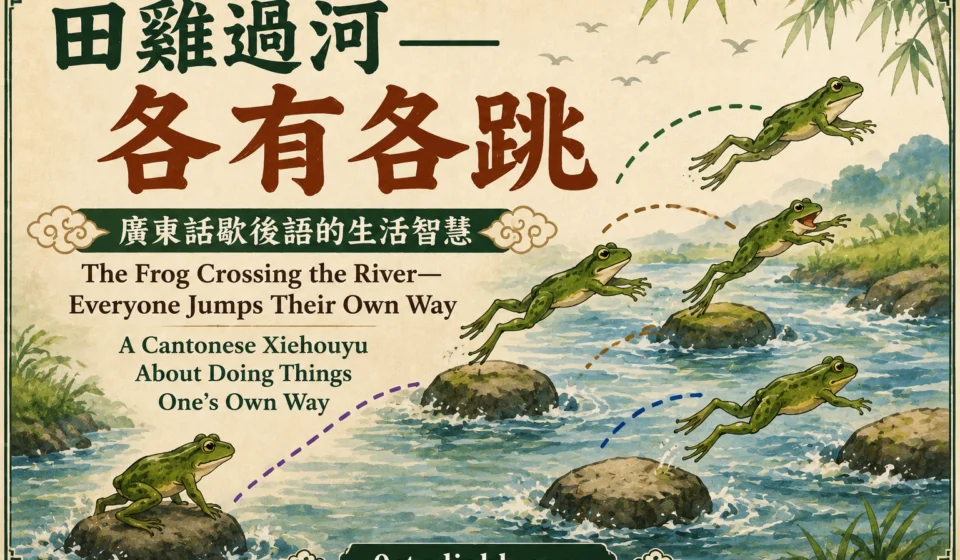
田雞過河——各有各跳|廣東話歇後語的生活智慧|The Frog Crossing the River—Everyone Jumps Their Own Way|A Cantonese Xiehouyu About Doing Things One’s Own Way

廣東話歇後語「田雞過河——各有各跳」,用田雞過河嘅有趣畫面,比喻人做事各有自己嘅方法。田雞要過河,唔會排隊行橋,亦唔會用同一個方式前進,而係一隻跳一隻、各自向前。呢句說話充滿生活氣息,講出人與人之間性格、習慣同處事方式各有不同。
中文
「田雞過河——各有各跳」意思係每個人都有自己嘅做法、步伐或者選擇。遇到同一件事情,有人鍾意快手處理,有人習慣慢慢計劃;有人勇於嘗試,有人就比較謹慎。大家目標可能一樣,但行動方法未必相同。呢句歇後語通常帶有輕鬆、幽默嘅語氣,唔一定係批評人做得唔一樣,反而可以用嚟形容各人按照自己習慣做事。有時一班人一齊完成工作,每個人都有自己嘅節奏,就可以笑住講:「田雞過河,各有各跳。」重點唔係邊個一定啱,而係承認人與人之間本來就有差異。
English Version
“The frog crossing the river—everyone jumps in their own way” describes a situation where people face the same task but choose different methods. One person may act quickly, another may prefer to plan carefully, while someone else may take a completely different route. The destination can be the same even when the journey looks nothing alike. The expression has a playful Cantonese character because it turns a simple image of frogs hopping across a river into a comment about human behaviour. It is not necessarily criticism. Instead, it can acknowledge that people naturally have different personalities, habits, rhythms and ways of solving problems. When several people work together and each person follows their own style, the phrase can be used with a smile to describe the situation. It reminds us that doing things differently does not automatically mean doing them wrongly.
用法
中文
日常生活入面,如果幾個人一齊做同一件事,但每個人都有自己嘅方式,就可以用「田雞過河——各有各跳」嚟形容。例如一班同事一齊執貨,有人先整理貨架,有人先補貨,有人就一路行一路檢查價錢牌,雖然方法唔同,但最後都係完成工作,就可以笑住講:「大家真係田雞過河,各有各跳。」呢句亦可以用喺朋友旅行、家庭分工或者一齊籌備活動嘅時候。只要大家冇必要完全跟同一套方法,而係按照自己習慣做事,呢句就非常貼切。語氣通常比較輕鬆,重點係「各有各嘅方法」,而唔係話其中一個人做錯。
English Version
The expression is useful when several people are working toward the same result but using noticeably different approaches. Imagine a group of colleagues organising a shop: one starts with the shelves, another checks stock, and someone else goes straight to the price labels. They are all doing useful work, but their methods and priorities are different. A Cantonese speaker might laugh and say, “Like frogs crossing a river—everyone jumps their own way.” It can also describe friends planning a trip, family members sharing household responsibilities or a team preparing an event. The phrase is especially suitable when there is no single correct method. Rather than insisting that everyone must work in exactly the same way, it recognises that people have their own habits and rhythms. The humour comes from the lively image of frogs making their separate jumps toward the same destination.
小故事:
公司今日要重新整理倉庫,主管叫幾個同事一齊執貨。阿強一收到指示,就即刻將所有紙箱搬到同一邊,準備逐箱分類;阿明就先拿住張清單,逐件貨對數量;阿芳更加直接,先將最常用嘅貨品搬去前面,方便之後取貨。三個人做法完全唔同,初時阿強仲笑阿明:「你咁慢,幾時先做得完呀?」阿明就話:「慢慢對清楚,之後少啲出錯嘛。」阿芳聽到就笑:「你哋兩個慢慢傾,我已經搬咗一半喇。」主管行過嚟見到三個人各自忙緊,反而話:「冇問題,大家目的都係整理好個倉庫。」阿強聽完笑住講:「真係田雞過河——各有各跳!」大家聽完都笑咗,繼續用自己最熟悉嘅方法完成工作。
English Version
The company decided to reorganise its storage area, so three colleagues were asked to work together. Cheung immediately moved all the boxes to one side so he could sort them later. Ming took a different approach: he picked up the inventory list and carefully checked each item against the quantities. Fang went straight for the products that were used most often and moved them closer to the front so they would be easier to reach. Their methods could not have been more different. Cheung joked that Ming was working too slowly, while Ming explained that checking carefully would prevent mistakes later. Fang simply laughed and pointed out that she had already moved half of the stock. Their supervisor came over, looked at the three different approaches and said there was no problem because they were all working toward the same goal. Cheung smiled and said, “Just like frogs crossing a river—everyone jumps their own way!” Everyone laughed and carried on. By the end of the day, the warehouse was organised, even though nobody had followed exactly the same method.
總結
「田雞過河——各有各跳」講嘅係一種好生活化嘅道理:同一個目標,可以有唔同方法去完成。人有自己嘅性格、習慣同節奏,唔需要每個人都用同一套方式做事。只要方向一致、結果理想,「各有各跳」其實亦可以互相配合。
English Version
“The frog crossing the river—everyone jumps their own way” offers a simple lesson about individuality. People can work toward the same destination while taking very different routes. Different habits and methods do not necessarily create conflict; sometimes they complement one another. What matters most is not whether everyone moves in exactly the same way, but whether they can contribute to the same goal.