
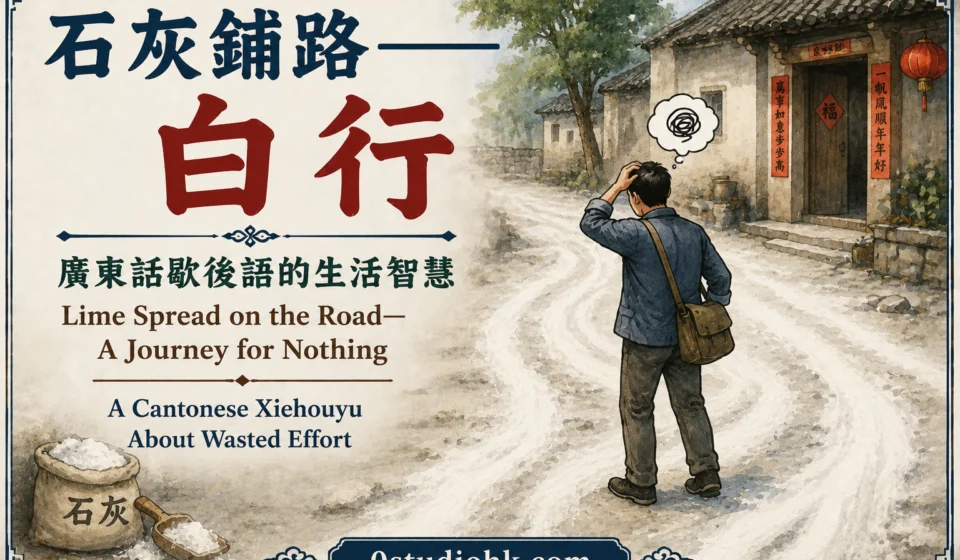
石灰鋪路——白行|廣東話歇後語的生活智慧|Lime Spread on the Road—A Journey for Nothing|A Cantonese Xiehouyu About Wasted Effort

「石灰鋪路」係舊時生活中常見嘅情景。石灰鋪喺路面,本來似乎係為行路作準備,但石灰本身容易散開,亦唔能夠真正成為可以行走嘅道路。廣東話就借呢個畫面,形成「石灰鋪路——白行」嘅歇後語,用嚟形容白白走一趟、白費力氣,或者做咗一輪工夫最後得不到結果。
中文
「石灰鋪路——白行」意思係白白走一趟,做咗嘢但冇得到應有結果。石灰雖然鋪喺路上,看起來好似整好咗條路,但實際上仍然唔可以當普通道路咁行。所以「白行」就有「白費功夫」嘅意思。日常生活中,如果有人特登去一個地方辦事,去到先發現對方唔喺度,或者資料準備好晒但最後發現程序錯咗,就可以話:「今次真係石灰鋪路——白行!」呢句歇後語嘅趣味,就係將一個舊時生活畫面,變成形容徒勞無功嘅生動比喻。
English Version
“石灰鋪路——白行” describes making a journey or putting in effort only to discover that it has achieved nothing. The image comes from lime being spread over a road: it may look as though something has been done to prepare the way, but it does not create a proper surface for travelling. The expression therefore carries the idea of wasted effort, an unnecessary trip or work that produces no useful result. It can be used when someone travels somewhere only to find that the person they need is absent, prepares everything only to discover that the process has changed, or spends time solving a problem that turns out to have been unnecessary. Its humour comes from turning an ordinary scene into a memorable description of doing something for nothing.
用法
中文
「石灰鋪路——白行」通常用喺一件事情最後冇結果,尤其係本來滿心歡喜去做,但最後先發現根本冇必要。例如你特登返公司攞一份文件,去到先知道份文件已經有人送咗過嚟,咁就可以笑住講:「我咪石灰鋪路——白行囉!」又或者朋友叫你特登去買一樣嘢,去到商店先發現已經賣晒,返嚟都可以用呢句自嘲。呢句通常帶有無奈同幽默感,唔一定係責怪人,更多時係講自己白走一趟、白花時間。
English Version
The phrase is commonly used when a person makes an effort or takes a trip that turns out to be completely unnecessary. For example, you may travel across town to collect a document, only to discover that someone has already delivered it. You could laugh and say that you have just made a “lime-road journey”—a trip for nothing. It also works when someone goes shopping for a particular item only to find that it has already sold out. The expression often carries a self-mocking tone rather than serious anger. Instead of complaining at length, a Cantonese speaker can use this short and colourful phrase to describe the frustration of spending time and energy without getting anything in return.
小故事:
阿強朝早收到朋友電話,叫佢幫手去一間舊店買一本已經絕版嘅書。朋友話:「嗰間店仲有一本,你快啲去,遲咗可能畀人買咗。」阿強聽完即刻出門口,搭車去到嗰間店,仲行咗一大段路先搵到舖頭。點知一入門口,店員就話:「你講嗰本書?琴日已經畀人買咗喇。」阿強聽完呆咗幾秒,問:「真係冇啦?」店員搖搖頭。阿強唯有打電話畀朋友:「你話仲有一本,我行咗咁遠先嚟到,點知已經冇喇!」朋友都覺得唔好意思。阿強笑住講:「算啦,今次真係石灰鋪路——白行!」雖然白走咗一趟,但大家講完都笑咗,原本令人掃興嘅事情,反而變成一個幾好笑嘅生活小插曲。
English Version
Cheung received a call from a friend one morning asking him to find a rare, out-of-print book at an old shop. His friend was certain that the shop still had one copy and urged him to go quickly before somebody else bought it. Cheung immediately set off, travelled across town and then walked quite a distance to find the shop. When he finally arrived, he asked the shop assistant about the book. The assistant shook his head and said, “That copy? Someone bought it yesterday.” Cheung stood there in disbelief and asked whether there were any others, but there were none. He called his friend and explained what had happened. His friend apologised, admitting that the information had been out of date. Cheung laughed and said, “Never mind. This was definitely a lime-road journey—a trip for nothing!” What could have been an irritating experience became a funny little story instead. The expression allowed him to describe the wasted journey without turning the mistake into a serious argument.
總結
「石灰鋪路——白行」用簡單嘅生活畫面,講出一個大家都容易明白嘅感受:花咗時間、出咗力,最後先發現一切都係徒勞。人生入面難免會有白行、白等、白忙嘅時候,與其一直嬲,不如笑住講一句「石灰鋪路——白行」,將無奈變成幽默。
English Version
“石灰鋪路——白行” captures a familiar human experience: spending time and effort on something only to find that it was unnecessary. Everyone has moments when a journey, plan or piece of work leads nowhere. The Cantonese way of expressing it adds humour to that frustration. Sometimes the best response to a wasted trip is simply to laugh, learn from it and move on.