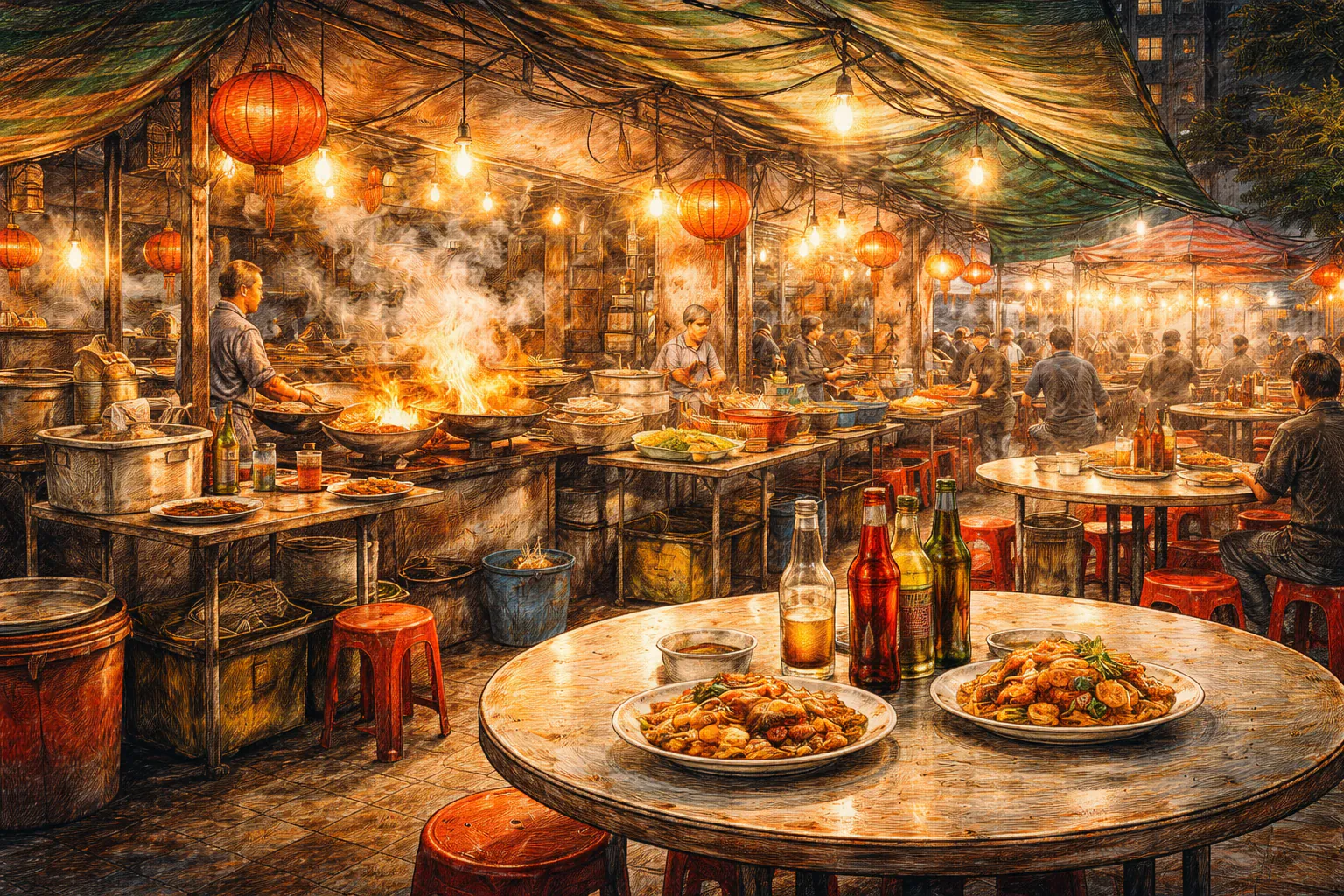
在香港的街頭歷史中,大排檔曾是最熱鬧、最接地氣的飲食文化象徵。從戰後年代開始,這些搭着鐵棚與帆布的小攤檔遍佈街道,為市民提供價廉味美的熱食。炒粉麵、煲仔菜、海鮮小炒與熱騰騰的湯麵,在鑊氣與煙火之間散發誘人香味。工人、街坊、夜歸人與遊客圍坐在簡單的桌椅旁,形成一幅充滿生活氣息的城市畫面。隨着城市發展與管理制度改變,大排檔逐漸減少,但那些燈光與炒鑊聲交織的夜晚,仍然是香港人難以忘記的集體記憶。
Under neon lights and open skies, Hong Kong’s dai pai dongs once defined the spirit of the city’s nights. With sizzling woks, shared tables, and the unmistakable aroma of wok hei, these open-air food stalls brought people together across backgrounds. More than places to eat, they were spaces of connection, storytelling, and the living pulse of urban life.
在香港的城市記憶裡,有一種聲音與味道曾經充滿街頭,那就是大排檔的鑊氣與炒菜聲。這些簡單的街邊食肆,在很長一段時間裡,是市民最熟悉的飲食場所之一。
大排檔的歷史,可以追溯到戰後的香港。當時城市人口迅速增加,許多基層市民需要便宜而快捷的食物。一些小販開始在街邊擺設爐具與簡單桌椅,售賣炒粉麵、粥品與家常小菜。這些攤檔逐漸形成規模,被稱為「大排檔」。
「大排檔」這個名稱,其實與政府牌照制度有關。早年的香港政府為了管理街頭小販,發放一種較大型的熟食牌照。由於攤檔規模較大,可以擺放多張桌椅,因此被稱為大排檔。
典型的大排檔通常搭建在街邊或後巷。鐵棚、帆布與簡單的燈泡構成整個空間。幾張摺枱與塑膠椅擺在路旁,顧客就在這些簡單的位置上用餐。雖然環境簡樸,但卻充滿熱鬧氣氛。
大排檔最吸引人的,是那股濃烈的「鑊氣」。廚師站在大火爐前,用鐵鑊快速翻炒食材。油煙與香味在空氣中交織,遠遠就能聞到誘人的味道。
炒牛河是大排檔最具代表性的菜式之一。寬闊的河粉在高溫下與牛肉、芽菜與醬油一起翻炒,帶着焦香與鑊氣。這道看似簡單的料理,其實非常考驗廚師的技巧。
除了炒牛河,大排檔還提供各式小炒,例如椒鹽鮮魷、蒜蓉炒菜心、豉椒炒蜆與避風塘炒蟹等。許多食材都是即叫即炒,味道濃郁而新鮮。
粥品與湯麵也是常見選擇。深夜時分,不少人會到大排檔吃一碗熱騰騰的魚片粥或雲吞麵,既暖胃又實惠。
大排檔的客人來自不同階層。白天時,附近的工人與商店員工會到這裡吃午餐。到了晚上,街坊、朋友與夜班工作者則會聚集在一起,一邊吃小炒,一邊聊天。
在很多香港人的記憶中,大排檔不只是餐廳,更是一種夜生活文化。朋友聚會時,幾個人圍坐在小桌旁,點幾道小炒,再配上一些飲料,氣氛熱鬧而隨意。
夜晚的大排檔尤其迷人。街燈與檔口燈光照亮整條街道,廚師翻炒鐵鑊的聲音此起彼落。顧客的談笑聲與餐具碰撞聲混在一起,形成城市獨特的節奏。
在一些舊區裡,大排檔甚至成為旅遊特色。不少外地遊客特地前來體驗這種充滿煙火氣息的街頭飲食文化。
然而,隨着城市發展與公共衛生規定改變,大排檔數量逐漸減少。政府停止發放新的大排檔牌照,許多老牌攤檔在經營者退休後便結束營業。
高昂的租金與城市規劃,也使得街頭空間越來越少。曾經熱鬧的街邊食肆,逐漸被室內餐廳取代。
儘管如此,香港仍然保留着少數歷史悠久的大排檔。這些店舖往往成為城市文化的一部分,也吸引不少食客專程前往。
走進一間老大排檔,可以看到鐵棚下忙碌的廚師、擺滿桌子的食客,以及冒着熱氣的鐵鑊。那種熱鬧而隨意的氣氛,是許多現代餐廳難以複製的。
對很多老香港人來說,大排檔承載着年輕時的回憶。放工後與同事吃小炒、朋友聚會聊天、或者深夜吃一碗麵,都是生活的一部分。
近年來,一些餐廳開始模仿大排檔風格,把鐵棚、霓虹燈與街邊桌椅搬進室內。雖然環境更舒適,但那種真正的街頭氣氛仍然難以完全重現。
回望香港大排檔的年代,可以看到一座城市最真實的一面。那些煙火與燈光交織的夜晚,記錄着無數普通人的生活故事。
當鑊氣在鐵鑊中翻騰,香味飄散到街道上,人們圍坐在簡單的桌椅旁分享食物與笑聲。那樣的場景,也許平凡,但正是香港最動人的城市記憶。
English Version
In the glowing nights of old Hong Kong, dai pai dongs stood as vibrant centers of food, noise, and human connection. These open-air eateries, often set up along sidewalks or tucked into side streets, were instantly recognizable by their folding tables, plastic stools, and the constant clatter of metal against metal. At the heart of every dai pai dong was the wok, its flames rising and falling as chefs moved with speed and precision. The resulting dishes carried the signature “wok hei,” a smoky, seared aroma that became synonymous with Hong Kong’s culinary identity. Unlike formal restaurants, dai pai dongs embraced a raw and unfiltered atmosphere. Diners sat shoulder to shoulder, sometimes sharing tables with strangers, creating an environment that was both crowded and surprisingly intimate. Office workers unwound after long days, friends gathered over late-night meals, and passersby were drawn in by the energy of the scene. The experience was immediate and immersive—orders shouted across the stall, plates arriving fresh from the wok, and conversations blending into a lively hum that lasted deep into the night. It was a place where the boundaries between people softened, replaced by a shared enjoyment of food and presence. The menus at dai pai dongs were diverse yet grounded in practicality. Stir-fried noodles, seafood, seasonal vegetables, and hearty rice dishes formed the backbone of their offerings. Each dish was prepared quickly but with a level of skill that came from years of experience. The chefs, often working in intense heat and tight spaces, developed an instinctive understanding of timing and flavor. This mastery allowed them to produce dishes that were both simple and deeply satisfying, reflecting the essence of Cantonese cooking. The appeal of dai pai dongs extended beyond the food itself. They were part of Hong Kong’s social fabric, places where stories were exchanged, relationships were built, and moments were shared. Regular customers returned not just for the taste, but for the familiarity—the recognition from staff, the predictable chaos, and the sense of belonging. For many, these stalls represented a version of Hong Kong that was unpretentious and alive, where life unfolded openly in public spaces. Historically, dai pai dongs emerged as a response to economic necessity. In earlier decades, street food vendors provided affordable meals for the working class, operating with minimal resources but maximum ingenuity. Over time, these informal setups evolved into more established stalls, gaining popularity and becoming an integral part of the city’s identity. However, as Hong Kong modernized, the number of licensed dai pai dongs began to decline. Government regulations, urban redevelopment, and changing public health standards gradually reduced their presence. Many were forced to close, while others transitioned into indoor establishments, altering their original character. The disappearance of traditional dai pai dongs marked more than just a shift in dining options. It represented a broader transformation in how people interacted with the city. The open, communal nature of these stalls gave way to more structured and private dining environments. While modern restaurants offer comfort and consistency, they often lack the spontaneity and shared energy that defined the dai pai dong experience. The streets, once filled with the sounds and smells of cooking, became quieter in comparison. Yet, the legacy of dai pai dongs endures. A small number of these stalls continue to operate, preserving the techniques and atmosphere that made them iconic. In addition, their influence can be seen in contemporary restaurants that attempt to recreate the flavors and aesthetic of traditional street dining. Despite these efforts, the essence of dai pai dongs remains tied to a specific time and place—a period when Hong Kong’s nights were defined by openness, interaction, and the simple pleasure of eating together under the sky. Remembering the era of dai pai dongs is, ultimately, about remembering a way of life. It is about recognizing how food can bring people together, how public spaces can foster connection, and how culture is often shaped by everyday experiences. These stalls, with their smoke-filled air and lively atmosphere, captured the spirit of a city that was constantly moving yet always found time to gather. Their memory continues to resonate, reminding us of the warmth, energy, and humanity that once filled Hong Kong’s streets long after the sun had set.