
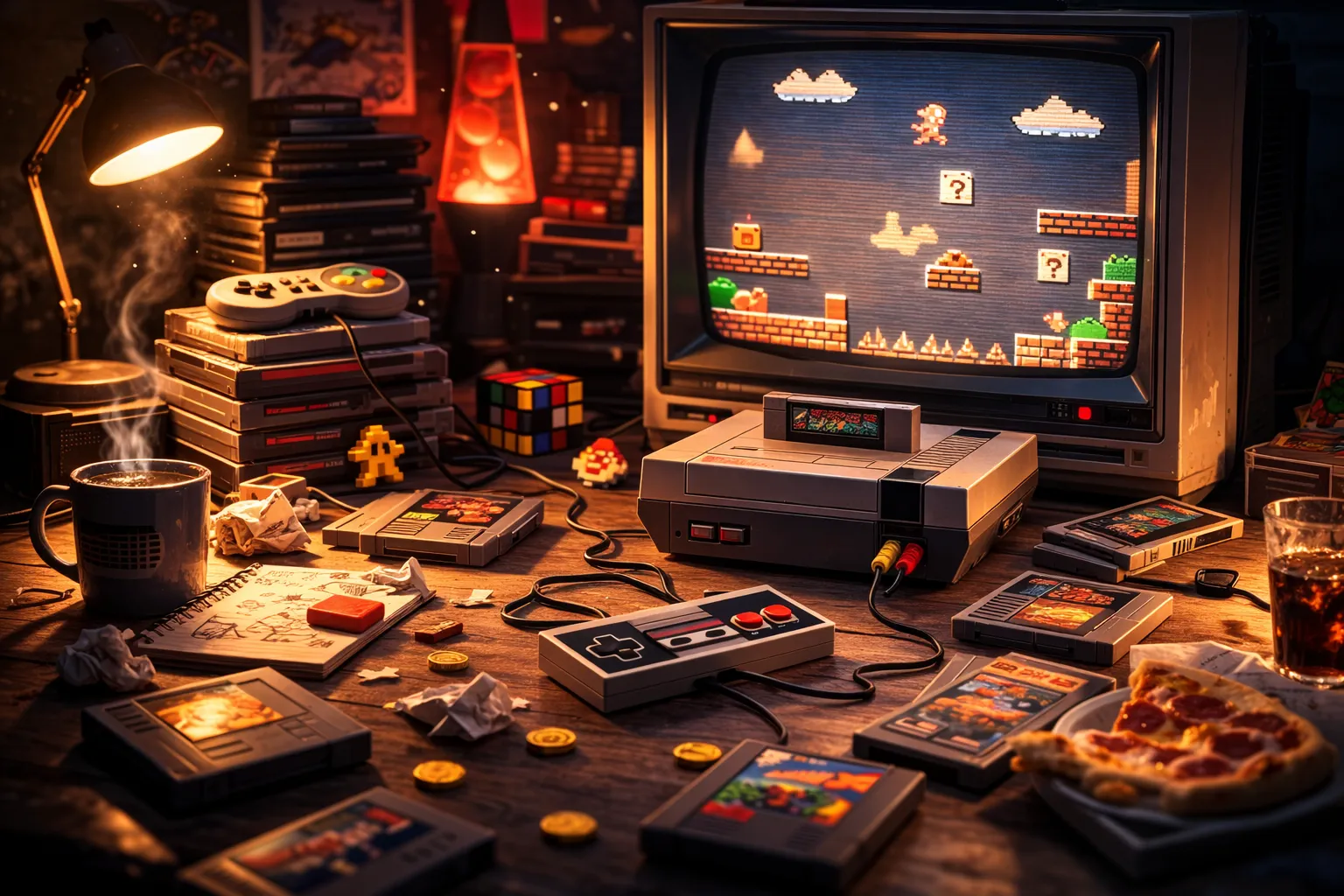
遊戲誌 | LV1 | 遊戲機的誕生:電子娛樂的起點 | The Birth of Video Games: The Origins of Electronic Entertainment | Game Journal LV1
在科技尚未普及的年代,遊戲機的誕生並非出於娛樂的需求,也不是源自於文化創造的野心。它的起點,反而是冷冰冰的實驗室,是工程師們手中那些複雜的電路板、訊號測試儀器與顯示裝置。這些設備的原始設計,僅僅是為了驗證技術是否運行正常,檢查畫面是否穩定,信號是否準確。沒有人會想到,這些技術演示最終會成為一個嶄新文化的基石。
The birth of video games did not begin as a grand cultural movement, but as a series of small experiments driven by curiosity, technology, and imagination. What started as simple electronic interactions gradually evolved into a new form of entertainment that would reshape how people engage with play itself. Behind every pixel and primitive sound lies a story of innovation, where engineers and dreamers unknowingly laid the foundation for an industry that would grow far beyond its humble origins.
最早的電子遊戲,可以說是技術與創意的一次偶然碰撞。那時候的畫面極其簡單,僅由幾個點或幾條線組成,規則也極為單一,甚至完全沒有故事性可言。然而,當人們開始使用雙手去操控這些點與線時,一種前所未有的互動感油然而生。電子信號不再只是被動地運算,它開始回應人的動作,這種全新的體驗揭開了電子遊戲的序幕。
這種互動的本質,不僅是遊戲機誕生的核心,也是它能夠迅速吸引人類注意力的重要原因。當畫面會因為操作而改變,當結果不再完全可預測,人們便從「觀看者」轉變為「參與者」。這種參與感讓人第一次意識到,透過機器,可以影響螢幕裡的世界。
這樣的概念很快被引入到公共空間。第一代遊戲機被設計成獨立的街機機台,並配備了投幣裝置。令人意外的是,投幣裝置的設計初衷並不僅僅是為了商業利益,而是為了建立一種秩序:每次投入硬幣意味著一場遊戲的開始,而當遊戲結束時,玩家需要讓位給下一個人。這樣的設計無形中將時間切割得更加分明,也使得每一次遊戲都變得彌足珍貴。
投幣機制帶來了一個重要的心理影響——讓玩家感受到「有限資源」的壓力。每一枚硬幣都成為一場賭注,每一秒都需要全神貫注地投入。這種緊張感促使玩家更加專注,而遊戲設計者也開始圍繞著這一點進行創新。他們需要在短時間內吸引玩家的注意力,讓他們快速理解遊戲規則,同時又能激發他們投入更多硬幣來挑戰更高分數。
街機文化便是在這樣的背景下誕生的。這是一種高度濃縮的娛樂形式——沒有冗長的教學關卡,也沒有複雜的存檔系統。遊戲必須直觀明瞭,失敗必須迅速且明確,而成功則需要立即給予回饋。畫面、音效與操作方式都被精心設計,以達到最直接、最強烈的刺激效果。
隨著技術的不斷進步,遊戲機逐漸從街頭走進家庭。家用遊戲機的出現,使得更多人能夠在自己的客廳裡享受電子遊戲所帶來的樂趣。雖然家庭遊戲機不再依賴投幣機制,但早期街機文化所奠定的基礎——即時反應、清晰回饋以及流暢操作感——依然深深地影響著後來所有電子遊戲的設計。
家庭遊戲機進一步拓展了遊戲的可能性。隨著硬體性能的不斷提升,遊戲畫面變得更加精緻,故事情節更加豐富,虛擬世界也更加龐大。然而,即使如此,那些最初讓人著迷於電子遊戲的核心特質依然未變:玩家通過自己的操作,可以即時影響螢幕中的一切。
值得注意的是,遊戲機並不是為了取代其他娛樂形式而誕生的。它並非要挑戰電影、音樂或文學,而是提供了一種全新的體驗模式——透過人與機器之間的互動,建立起情感聯繫與投入感。這種互動不僅改變了人們對於娛樂的理解,也重新定義了人類與科技之間的關係。
在此之前,人們對於科技產品大多抱持著工具性的看法,認為它們只是用來完成特定任務。然而,遊戲機讓人們看到了科技作為一種媒介,可以如何創造出情感上的連結。從某種意義上說,它賦予了冷冰冰的電子設備以生命,使它們成為了人類情感表達與交流的一部分。
回顧遊戲機誕生的歷史,我們可以清楚地看到,它不僅僅是一段技術發展史,更是一個文化轉折點。它改變了人們與科技之間互動的方式,也為後來數位娛樂產業乃至整個科技文化打開了一扇嶄新的大門。
今天,我們所熟知的電子遊戲已經發展出無數分支,包括虛擬實境、擴增實境以及多玩家在線遊戲等。然而,不論技術如何進步,那些最初讓人著迷於電子遊戲的核心特質——即時反應、清楚回饋和人機互動——仍然是每一款成功遊戲所不可或缺的重要元素。
可以說,遊戲機並非單純地改變了我們消磨時間的方式,而是改變了我們如何看待世界、如何與技術互動,以及如何在虛擬空間裡找到真實情感。它讓我們明白,在科技飛速發展的同時,人類與科技之間也可以建立起深刻而有意義的連結。而這正是遊戲機誕生之初所未曾預見,但卻深遠影響後世的一點。
雖然距離第一台遊戲機誕生已經過去了數十年,但其所帶來的影響依然鮮活地存在於我們生活中的每一個角落。無論是手機上的休閒小遊戲,還是電腦上的大型多人線上角色扮演遊戲,它們都在以不同形式延續著那份最初的人機互動魅力。而這一切,都要歸功於那台誕生於實驗室裡、原本只是一項技術示範的小小遊戲機。
English Version
The origin of video games is often imagined as a sudden breakthrough, a moment where entertainment and technology fused into something entirely new, yet the reality is far more gradual and layered, shaped by a sequence of experiments that were not initially intended to create an industry but to explore the possibilities of emerging electronic systems. In the early days, computers were not designed for leisure; they were tools of research, calculation, and military application, occupying large rooms and operated by specialists. Within these rigid environments, however, there were individuals who saw beyond pure function, who began to ask whether these machines could simulate play, interaction, and even a form of storytelling. These early explorations were modest in appearance, often consisting of simple visual outputs on oscilloscopes or rudimentary displays, yet they carried a radical idea: that machines could respond to human input in real time, creating a feedback loop that resembled play. This concept, though primitive, marked a turning point, as it shifted the perception of computers from passive tools into interactive systems. As technology advanced, these experiments became more structured, incorporating rules, objectives, and competition, gradually resembling what we now recognize as games. The transition from laboratory curiosity to public entertainment did not happen overnight; it required not only technological progress but also a change in mindset, where creators began to see the potential for wider audiences. Early arcade machines played a crucial role in this transformation, bringing electronic games out of research institutions and into public spaces where anyone could engage with them. These machines were often simple in design, limited by hardware constraints, yet their accessibility and novelty captivated players, introducing the idea that electronic interaction could be both entertaining and social. The arcade environment itself became a cultural space, where players gathered, competed, and shared experiences, laying the groundwork for gaming as a communal activity. At the same time, the development of home consoles extended this experience into private spaces, redefining the relationship between players and games. No longer confined to arcades, games became part of everyday life, accessible at any time and integrated into domestic environments. This shift was significant, as it transformed gaming from a public spectacle into a personal experience, allowing for longer engagement and deeper exploration. The limitations of early hardware, such as restricted graphics and sound capabilities, did not hinder creativity; instead, they encouraged developers to focus on gameplay mechanics, design ingenuity, and player imagination. These constraints gave rise to iconic forms of interaction, where simplicity became a strength rather than a weakness. Players were not merely consuming content; they were actively interpreting and completing the experience through their own engagement. As the industry began to take shape, the role of developers evolved from experimenters to designers, individuals who crafted experiences with intention and purpose. The emergence of recognizable genres, such as action, puzzle, and simulation, reflected a growing understanding of what made games compelling. At the same time, technological advancements continued to expand the possibilities of what games could achieve, introducing more complex visuals, sound, and interactivity. Despite these advancements, the core principle remained unchanged: games were systems of interaction, built upon rules and feedback, where players engaged in a dynamic process of challenge and response. The rise of gaming as a cultural phenomenon was not solely driven by technology; it was also shaped by the players themselves, whose enthusiasm, creativity, and community engagement played a vital role in defining the medium. Players shared strategies, created their own challenges, and formed communities that extended beyond the games themselves, contributing to a sense of identity and belonging. This participatory aspect distinguished video games from other forms of entertainment, as it blurred the line between creator and audience. Over time, the influence of video games expanded beyond entertainment, impacting areas such as education, art, and social interaction. The principles of game design, including feedback loops, reward systems, and interactive storytelling, began to be applied in various fields, demonstrating the broader potential of this medium. Yet, despite its growth and diversification, the essence of video games can still be traced back to those early experiments, where the focus was not on profit or scale, but on exploration and possibility. The simplicity of those beginnings serves as a reminder that innovation often starts with curiosity, with individuals willing to experiment and challenge existing boundaries. The birth of video games is therefore not a single event, but an ongoing process, a continuous evolution driven by technological progress, creative vision, and human engagement. Each new development builds upon the past, while also redefining what games can be, ensuring that the medium remains dynamic and ever-changing. In this sense, the history of video games is not just about machines or software, but about the relationship between humans and technology, a relationship that continues to evolve as new possibilities emerge.