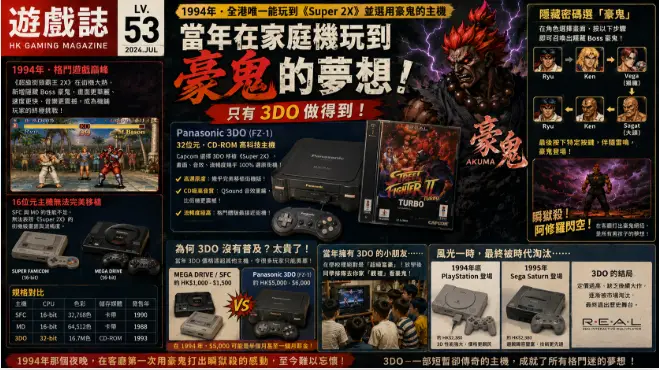
1994年的街機熱潮中,《超級街頭霸王2X》與神秘角色豪鬼成為無數玩家的夢想。在家中電視上使用豪鬼作戰,當年幾乎只有3DO能夠實現。
In 1994, Super Street Fighter II Turbo dominated arcades, and the hidden boss Akuma became every fighting game fan’s obsession. For a brief moment, one console gave players the chance to experience that dream at home.
中文
1994年是街機格鬥遊戲最輝煌的年代之一,無論是香港的機舖、日本的遊戲中心,還是世界各地的街機廳,《超級街頭霸王2X》都是最受歡迎的作品之一。Capcom憑藉更快的速度、更華麗的招式以及全新登場的隱藏Boss豪鬼,將街頭霸王系列推向新的高峰。當年對許多玩家而言,豪鬼不只是角色,更像是一個都市傳說。街機裡突然出現的神秘人物、強大到近乎無敵的實力,以及標誌性的瞬獄殺,讓無數玩家對這名角色充滿好奇。然而在那個年代,想把這份感動帶回家卻並不容易。當時市場主流仍然是超級任天堂與Mega Drive等16位元主機,雖然擁有許多優秀遊戲,但面對《超級街頭霸王2X》這種大型街機作品,無論畫面、音效還是流暢度都難以完整重現。就在這個時候,主打32位元與CD-ROM技術的Panasonic 3DO登場。這部主機雖然價格昂貴,卻憑藉先進硬體吸引大量玩家目光。當Capcom宣布把《超級街頭霸王2X》移植到3DO時,立刻成為遊戲界的大新聞。遊戲推出後更沒有令人失望,角色比例、動畫流暢度與戰鬥節奏都極度接近街機原作,被不少玩家譽為當時最接近街機室體驗的家庭版本。更令人震撼的是CD音源帶來的高品質音樂效果,背景音樂經過重新編曲後展現出前所未有的震撼力,許多玩家第一次發現家用主機原來也能擁有如此出色的音效表現。而真正讓3DO版本成為傳奇的,是玩家能夠透過隱藏指令選擇豪鬼。當時不少遊戲雜誌都刊登了相關秘技,玩家們在角色選擇畫面反覆練習,只為成功召喚這名神秘角色。當豪鬼伴隨雷鳴登場的瞬間,整個客廳都會爆發歡呼聲。能夠在家中施展瞬獄殺與阿修羅閃空,對當年的格鬥遊戲迷來說簡直是夢想成真。可惜的是,3DO雖然技術先進,但售價遠遠超出一般家庭負擔。當其他主機售價大約一至兩千港元時,3DO動輒五、六千港元的價格令不少玩家望而卻步。能夠擁有一部3DO的小朋友,往往成為朋友圈中的焦點人物,同學放學後紛紛聚集到他家,只為親眼看看豪鬼在家用主機上的表現。然而這份榮耀維持時間並不長。隨著PlayStation與Sega Saturn相繼登場,更便宜的價格與更豐富的遊戲陣容迅速吸引市場目光,3DO逐漸失去競爭力。儘管如此,它仍然在遊戲歷史上留下濃厚的一筆。對許多老玩家而言,1994年那個在客廳裡第一次使用豪鬼擊出瞬獄殺的夜晚,至今依然是難以忘懷的青春回憶。
English Version
The year 1994 marked a golden age for arcade fighting games. Across Japan, Hong Kong, and countless gaming centers worldwide, Super Street Fighter II Turbo stood at the top of the genre. Capcom elevated the series with faster gameplay, enhanced visuals, and the introduction of a mysterious hidden boss known as Akuma. To many players, Akuma felt larger than life—a secret character surrounded by rumors, possessing overwhelming power and unforgettable techniques. His appearance alone became a symbol of arcade prestige. Bringing that experience into the living room, however, was a challenge. Home consoles of the period, including the Super Nintendo and Sega Mega Drive, were still based on aging 16-bit technology. While excellent in their own right, they struggled to reproduce the scale and quality of Capcom’s latest arcade masterpiece. Then came the Panasonic 3DO, a premium multimedia console that promised a glimpse of the future. Powered by 32-bit hardware and equipped with a CD-ROM drive, the system represented a major technological leap. When Capcom announced a home version of Super Street Fighter II Turbo for the platform, excitement spread rapidly through gaming communities and magazines. Upon release, the game impressed players with its remarkable arcade accuracy. Character animation, visual detail, and gameplay speed closely matched the original coin-operated version. Even more impressive was the audio. Thanks to CD technology, the soundtrack featured richer arrangements and higher-quality sound than many players had ever experienced on a home console. Yet the feature that transformed the game into legend was the ability to access Akuma. Secret commands circulated through gaming magazines, schoolyards, and word of mouth. Players spent hours mastering the sequence required to unlock the hidden fighter. The moment Akuma appeared on screen felt magical, turning an ordinary gaming session into a memorable event. Executing signature moves such as the Raging Demon at home was a dream come true for fighting game enthusiasts. Despite these achievements, the 3DO faced a major obstacle: price. The console cost significantly more than competing systems, placing it beyond the reach of many families. Owning one often made a player the center of attention among friends, with classmates eager to witness arcade-quality gaming in a home setting. The console’s moment in the spotlight was brief. The arrival of Sony’s PlayStation and Sega Saturn brought stronger competition, lower prices, and broader software libraries. Nevertheless, the 3DO secured a unique place in gaming history. For many veterans of the era, it remains forever linked to the excitement of bringing arcade-perfect Street Fighter action—and the legendary Akuma—into the living room for the very first time.