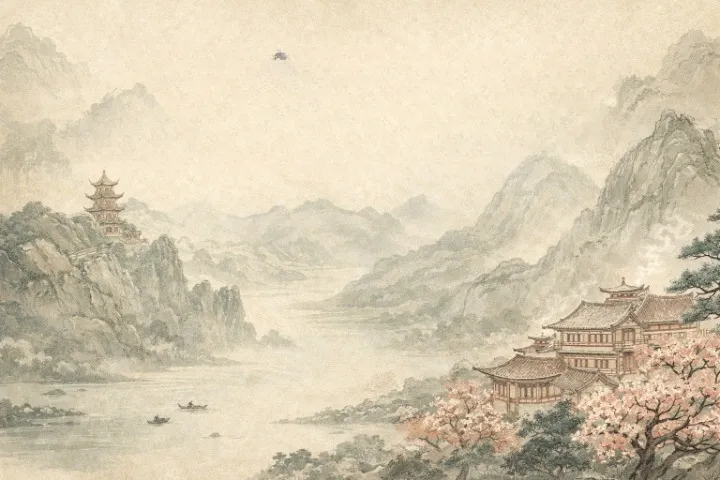
《紅樓夢》第二章解析:賈府秩序與階級制度的形成 |Dream of the Red Chamber Chapter 2 Summary: The Structure of the Jia Family
當世界由混沌走向秩序,人物與關係亦逐漸清晰。《紅樓夢》第二章不再只是神話鋪陳,而是將視角帶入人間,開始描繪賈府的結構與人際網絡。繁華之中,規矩與階級悄然建立,也為日後的命運埋下伏線。
As chaos settles into order, the story begins to take human shape. Chapter Two of Dream of the Red Chamber shifts from myth to structure, introducing the social world that defines the Jia household. Hierarchy, ritual, and relationships emerge, forming the invisible framework that governs every action. Beneath the elegance, a rigid system begins to take hold—quietly setting the stage for future tensions and inevitable decline.
一日,賈雨村寓居於甄士隱舊宅附近。此時甄家早已敗落,庭院荒涼,唯有殘牆敗瓦。雨村常經過此地,心中不免感慨世事無常。
當時他暫居於葫蘆廟旁的一間小屋,每日清晨讀書,夜晚挑燈作詩。雖貧困潦倒,但志氣不減。廟中有一老僧,見他舉止不凡,時常與他談論世情。老僧常說:「世間榮華,不過過眼煙雲;但人若無志,也枉來一世。」
這話雨村聽了,卻只淡淡一笑。他心中所想,仍是仕途功名。
一日春暖,雨村出門閒行,經過一條小巷。忽見一戶人家院門半掩,院中一位少女正倚門觀花。那女子眉如遠山,目若秋水,氣質清雅。雨村遠遠望見,不禁怔住,心中暗想:「世間竟有如此人物!」
正在此時,少女似有所覺,輕輕回身入內。雨村站立良久,方才離去。此後數日,他常在那附近徘徊,只盼再見那女子一面。
不久,他從鄰人處得知,那女子乃鹽政林家的千金,名喚黛玉,自幼體弱,卻聰慧異常。雨村聽後,更覺此女不同凡俗。
然而好景不長。雨村因久居無業,盤纏漸盡,只得準備離開此地,另尋出路。
臨行之前,他偶然在街市上遇見一位舊識。此人乃是甄士隱昔日好友,名喚冷子興,為人精明健談。兩人相見,分外親切,便尋一家茶肆坐下敘話。
冷子興問起雨村近況,雨村苦笑道:「滿腹文章,卻無用武之地。」
冷子興聽後說道:「若論才學,你自然不差。只是世道如此,沒有門路終究難行。如今京城賈府權勢極盛,若能得其提攜,前程自不難。」
雨村聽到「賈府」二字,精神一振,忙問其詳。
冷子興便娓娓道來:京城有榮國府、寧國府兩家,同宗同族,皆為顯赫世家。家中子弟繁盛,富貴無比。只是外表榮華,內中卻也暗藏種種故事。
雨村聽得入神,心中暗暗盤算。若能投身此門第,或許真能改變命運。
二人談到夜深方散。雨村回到住處,望著昏黃燈火,心中忽生感慨:人生在世,若不能有所作為,豈不辜負胸中學問?
於是,他決意北上求仕。臨行前,他寫下一首詩貼於窗前:
「玉在匣中求善價,
釵於奩內待時飛。
他年若遂凌雲志,
敢笑黃巢不丈夫。」
寫罷,他長嘆一聲,收拾行裝,踏上北行之路。
而就在此時,京城賈府之中,一位含玉而生的公子即將長大成人。那塊通靈寶玉的故事,也正慢慢與天下人的命運交織在一起。
English Version
With the mythic veil lifting, the narrative moves firmly into the human world. What once felt abstract now gains structure, as the Jia household emerges not just as a family, but as a system.
Hierarchy defines everything. Roles are assigned, expectations are clear, and behavior is guided by tradition. Every gesture, every interaction, reflects an invisible code that governs life within the household.
At first glance, this order brings stability and elegance. The Jia family appears refined, disciplined, and prosperous. But beneath this polished surface lies something more restrictive—a framework that leaves little room for individuality.
Emotions do not disappear within such a system; they retreat. Desires are softened, concealed, or redirected, creating an undercurrent of tension that cannot be easily seen.
As order takes shape, so too does the quiet beginning of imbalance.