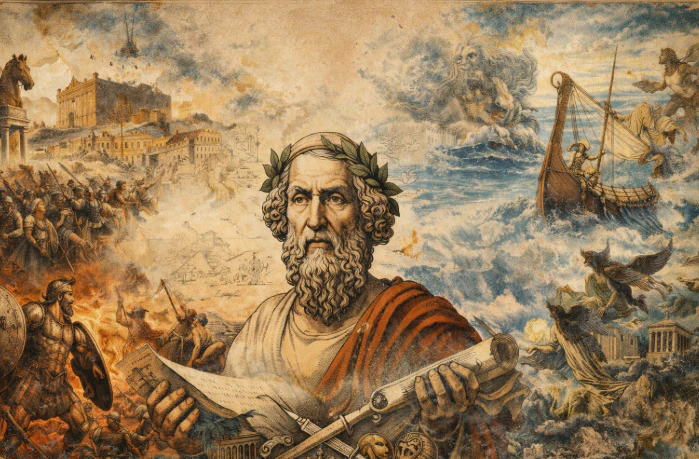
他以吟唱之聲記錄戰爭與歸途,將英雄與命運編織成跨越千年的史詩記憶。
He shaped tales of war and wandering into epic songs that have echoed across centuries, defining heroism and fate.
中文
荷馬被視為古希臘最重要的史詩詩人,其生平充滿謎團,甚至是否真有其人仍存在爭議,但這並未削弱其作品在文學史上的崇高地位。《伊利亞特》與《奧德賽》被認為是西方文學的源頭,兩部作品以口述傳統流傳,後來才被整理成文本,展現出古代詩歌與集體記憶的結合。《伊利亞特》聚焦特洛伊戰爭後期,以阿基里斯的憤怒為核心,描繪榮耀與死亡交織的戰場,英雄的選擇往往帶來無法逆轉的命運,讓戰爭不只是勝負,更是人性與悲劇的展現。《奧德賽》則描寫奧德修斯在戰後歷經十年漂泊回家的旅程,途中遇到神祇、怪物與誘惑,每一次試煉都象徵人類面對未知與自我掙扎的過程,最終回歸家庭與秩序,呈現出另一種關於堅持與智慧的英雄形象。荷馬的詩歌以節奏與重複句式構成,適合吟唱,也強化記憶與情感傳達,他透過神與人的交錯描寫,建立出一個充滿命運與神意的世界觀,讓人類行動始終與更高力量相互影響。他的作品不僅塑造了古希臘文化,也影響後世文學、戲劇與哲學,成為理解西方文明的重要入口。即使在現代,這些史詩仍被重新詮釋與改編,從小說到電影都可見其影響,顯示其敘事結構與人物塑造具有持久生命力。荷馬的價值在於他將集體經驗轉化為藝術形式,讓戰爭與旅程不再只是歷史事件,而成為關於人類存在的象徵,他的詩句在時間中持續回響,使讀者在不同時代仍能感受到英雄的孤獨、選擇的重量與歸家的渴望,這種普遍性使他成為文學傳統中不可忽視的起點與基石。
English Version
Homer stands at the very beginning of Western literary tradition, though his identity remains shrouded in mystery, with scholars still debating whether he was a single individual or a symbolic figure representing a long oral tradition. Regardless of this uncertainty, the epics attributed to him—The Iliad and The Odyssey—have shaped storytelling for millennia. These works likely emerged from generations of oral performance before being written down, preserving the collective memory of ancient Greek culture through rhythm, repetition, and vivid imagery. The Iliad centers on the final phase of the Trojan War, focusing on Achilles and the destructive power of his rage, exploring themes of honor, mortality, and the cost of glory, where heroism is inseparable from tragedy. In contrast, The Odyssey follows Odysseus on his long journey home after the war, encountering divine forces, mythical creatures, and moral trials that test his resilience, intelligence, and identity, ultimately presenting a different vision of heroism grounded in endurance and cunning rather than brute strength. Homer’s poetic style, designed for oral recitation, relies on formulaic expressions and rhythmic patterns that enhance both memorability and emotional impact, while his integration of gods into human affairs reflects a worldview in which fate and divine will are deeply intertwined with personal action. His influence extends far beyond ancient Greece, informing later literature, philosophy, and artistic expression across cultures. Even today, these epics continue to inspire reinterpretations in novels, films, and other media, demonstrating their enduring narrative power. Homer transformed stories of war and wandering into universal reflections on human experience, capturing the tension between destiny and choice, the longing for home, and the enduring search for meaning, ensuring that his voice remains a foundational presence in the history of storytelling.