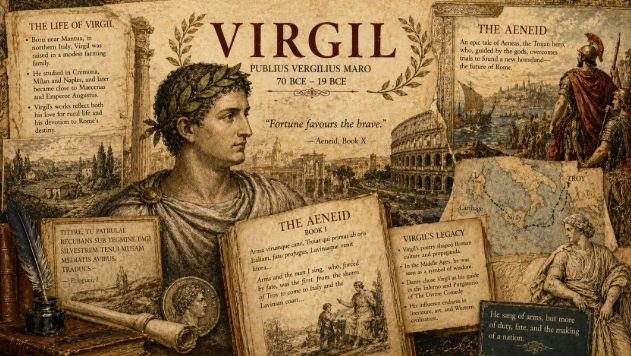
在古羅馬文化的巔峰時期,維吉爾以史詩描繪民族起源與命運,將神話與歷史交織,塑造出一部影響深遠的文學經典,成為西方文學的重要基石。
At the height of Roman civilization, Virgil transformed myth and history into epic poetry, crafting a narrative of origin and destiny that would shape the foundations of Western literary tradition.
中文
維吉爾(Virgil),全名普布利烏斯·維吉利烏斯·馬羅(Publius Vergilius Maro),是古羅馬最偉大的詩人之一,他的創作不僅體現文學藝術的高度,也承載著羅馬帝國的政治與文化理想。他出生於義大利北部,成長於農村環境,這段經歷使他對自然與土地有著深厚情感,並在早期作品《牧歌》中展現出對田園生活的詩意描寫。隨著羅馬政治局勢的變化,他逐漸進入權力核心的文化圈,並受到奧古斯都的支持,開始創作其最重要的史詩《埃涅阿斯紀》。這部作品以特洛伊英雄埃涅阿斯的流亡與建國歷程為主線,描繪他如何在神祇指引下穿越戰亂與困境,最終抵達義大利,為羅馬的建立奠定基礎。維吉爾在敘事中融合神話與歷史,使作品既具有史詩的宏大氣勢,又蘊含深刻的政治寓意,象徵羅馬帝國的合法性與命運。他的語言優雅而富節奏感,結構嚴謹,展現出對古希臘史詩傳統的繼承與創新,特別是對荷馬作品的致敬與轉化。《埃涅阿斯紀》不僅講述英雄的旅程,更探討責任、命運與個人情感之間的衝突,埃涅阿斯常在個人愛情與國家使命之間作出艱難選擇,呈現出英雄形象的複雜性。維吉爾的作品在中世紀與文藝復興時期被廣泛研究,甚至在神曲中被塑造成引導詩人穿越地獄與煉獄的象徵性人物,顯示其在文學史上的崇高地位。他的詩歌不僅塑造了羅馬文化的自我認同,也影響了整個西方文學傳統,使史詩成為表達民族精神與歷史使命的重要形式。維吉爾以精緻語言與宏大視野,將個人創作提升為文明敘事,成為跨越時代的文學典範。
English Version
Virgil, known formally as Publius Vergilius Maro, stands among the greatest poets of ancient Rome, celebrated for shaping literary expression into a vehicle for cultural identity and imperial vision. Born in northern Italy and raised in a rural setting, he developed a deep sensitivity to nature that is reflected in his early work, the Eclogues, where pastoral life is rendered with lyrical elegance. As Rome transitioned into a new political era, Virgil became closely associated with the cultural ambitions of Emperor Augustus, who supported his literary endeavors. This patronage led to the creation of the Aeneid, an epic that traces the journey of Aeneas, a Trojan hero destined to lay the foundations of Rome. Through divine guidance, personal sacrifice, and relentless perseverance, Aeneas embodies the ideals of duty and destiny that underpin Roman identity. Virgil’s narrative masterfully blends mythological elements with historical purpose, crafting a story that not only entertains but also legitimizes the rise of an empire. His poetic style is refined and structured, drawing inspiration from the traditions of Homer while introducing a distinctly Roman perspective. At its core, the Aeneid explores the tension between personal desire and collective responsibility, as Aeneas repeatedly chooses his mission over his emotions. Virgil’s influence extended far beyond antiquity, reaching into the medieval and Renaissance periods, where his work was revered and studied extensively. In The Divine Comedy, he appears as a guiding figure, symbolizing wisdom and poetic authority. His legacy continues to resonate, shaping the way epic narratives convey identity, history, and the enduring struggle between fate and human will.