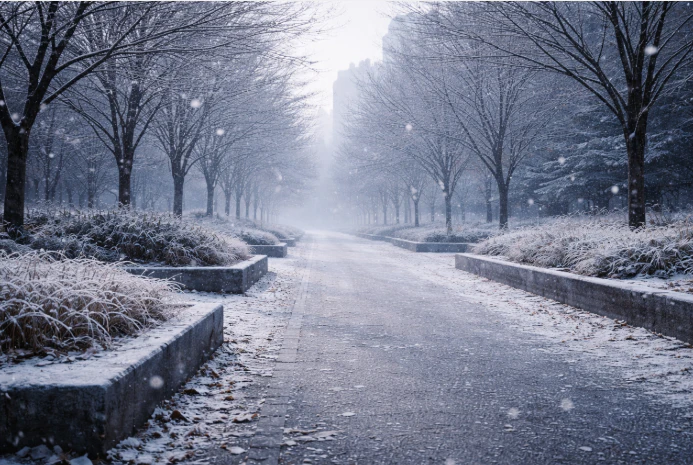
小雪,是冬天逐漸展開的時刻。氣溫持續下降,空氣變得更加寒冷,偶爾出現的細雪,為季節揭開序幕。
Light Snow marks the unfolding of winter. Temperatures continue to fall, and the occasional appearance of light snowfall signals the beginning of the colder season.
中文
小雪,是冬天真正展開之前的一個過渡時刻,它不像立冬那樣只是宣告開始,也不像大雪那樣進入全面的寒冷,而是一種帶著預感的節氣。氣溫在這個時期持續下降,冷空氣變得穩定且持久,早晚的寒意不再只是短暫,而是逐漸滲透進整個日常。清晨的空氣帶著明顯的冷感,呼吸之間可以看到白色的氣息在空中短暫停留,這種畫面讓人直觀地感受到氣溫的變化。小雪的「雪」,並不一定指明顯的降雪,而是一種氣候條件的成熟,意味著降雪開始有可能出現。在某些地區,天空會偶爾飄下細小的雪花,落在地面上迅速融化,留下短暫的痕跡。這種短暫性,使小雪帶著一種未完成的感覺,它不是冬天的極致,而是一種開始。城市在小雪時節呈現出不同的面貌,天空顯得較為陰沉,光線變得柔弱而分散,整個空間帶著一種低調的色調。街道上的人們開始穿上更厚的衣物,圍巾與手套逐漸出現,行走的節奏也變得更為緩慢。這種變化,不只是氣溫帶來的影響,也是心理上的調整,人們開始準備迎接更寒冷的日子。對學生而言,小雪通常已經接近期末,氣溫的下降與學業的壓力交織,使時間感變得更加緊湊。對上班族而言,小雪則是一種提醒,提醒年度即將結束,工作進入最後的整理與衝刺階段。這種外在的寒冷與內在的節奏形成對應,使人更加專注。小雪同時帶著一種安靜的特質,自然界的活動進一步減少,樹木大多已經失去葉片,景象變得簡單而開闊。這種開闊,不是空曠,而是一種去除多餘之後的純粹。夜晚的小雪更加明顯,氣溫進一步下降,空氣變得乾冷,聲音在空間中顯得更加清晰。當細雪在夜裡飄落,燈光下的雪花顯得格外清楚,這種畫面帶著一種安靜的動態,使整個環境呈現出一種緩慢流動的感覺。小雪的記憶,往往來自於這些細微的瞬間,是空氣中的冷,是偶爾出現的雪,是光線的柔弱,也是時間逐漸收斂的感覺。在這個節氣裡,人們開始真正進入冬天的狀態,生活節奏轉向內在,活動減少,思考增加。小雪提醒我們,所有的開始都不是突然的,而是在不斷累積中慢慢成形。冬天的到來,也是一樣,是從這些細微的變化開始,逐步走向完整。
English Version
Light Snow represents a transitional phase just before winter fully takes hold. Unlike the Beginning of Winter, which announces the season’s arrival, or Heavy Snow, which embodies its intensity, this period carries a sense of anticipation. Temperatures continue to decline steadily, and cold air becomes more consistent and enduring. The chill of early mornings and evenings is no longer temporary, but gradually extends into the entirety of daily life. Breathing in the cold air, one may notice faint clouds of condensation, a visible reminder of the dropping temperature. The “snow” in this period does not always refer to heavy snowfall, but rather to the climatic conditions that make it possible. In some regions, light snowflakes may appear sporadically, falling gently and melting quickly upon contact with the ground. This fleeting presence gives the season a sense of incompleteness, as it suggests the beginning rather than the peak of winter. Urban environments take on a different atmosphere during this time. The sky often appears overcast, and light becomes softer and more diffused, creating a subdued visual tone. People begin to wear heavier clothing, with scarves and gloves becoming more common, and the pace of movement slows slightly. This shift is not only a response to temperature but also a psychological adjustment, as individuals prepare for the deeper cold ahead. For students, this period often aligns with the approach of final examinations, where the pressure of academic responsibilities combines with the cold environment, making time feel more compressed. For working adults, Light Snow serves as a reminder that the year is nearing its end, prompting a focus on completion and final efforts. The external cold mirrors an internal sense of concentration. This season also introduces a quiet stillness. Natural activity diminishes further, trees have largely shed their leaves, and the landscape becomes more open and minimal. This simplicity is not emptiness, but a form of clarity that emerges when excess is removed. Nights during this period become even more pronounced. Temperatures drop further, the air turns crisp and dry, and sounds seem sharper within the quiet environment. When light snow falls under artificial lights, each snowflake becomes visible, creating a gentle sense of motion within stillness. The memory of Light Snow is often formed through these subtle experiences—the coldness of the air, the occasional presence of snow, the softness of light, and the gradual contraction of time. During this period, people begin to fully enter a winter state of mind. Daily rhythms turn inward, activity decreases, and reflection increases. Light Snow reminds us that beginnings are rarely sudden. Instead, they emerge gradually through accumulation. The arrival of winter follows this same pattern, unfolding step by step until it becomes complete.