8月19日今日歷史|蘇聯政變爆發,葉利欽站上坦克改變歷史 | Today in History, August 19 | The Soviet Coup Begins and Boris Yeltsin Defies the Hardliners
1991年8月19日,蘇聯發生震撼世界的政變。強硬派高層宣布緊急狀態,試圖推翻戈爾巴喬夫的改革;葉利欽則公開反抗,站上坦克呼籲人民抵抗。這場僅持續數日的政變,最終加速蘇聯解體。
English
On August 19, 1991, a dramatic coup shook the Soviet Union. Communist hardliners declared a state of emergency and attempted to remove Mikhail Gorbachev, while Boris Yeltsin emerged as the leading voice of resistance. The failed coup would accelerate the collapse of the Soviet Union itself.
中文版本
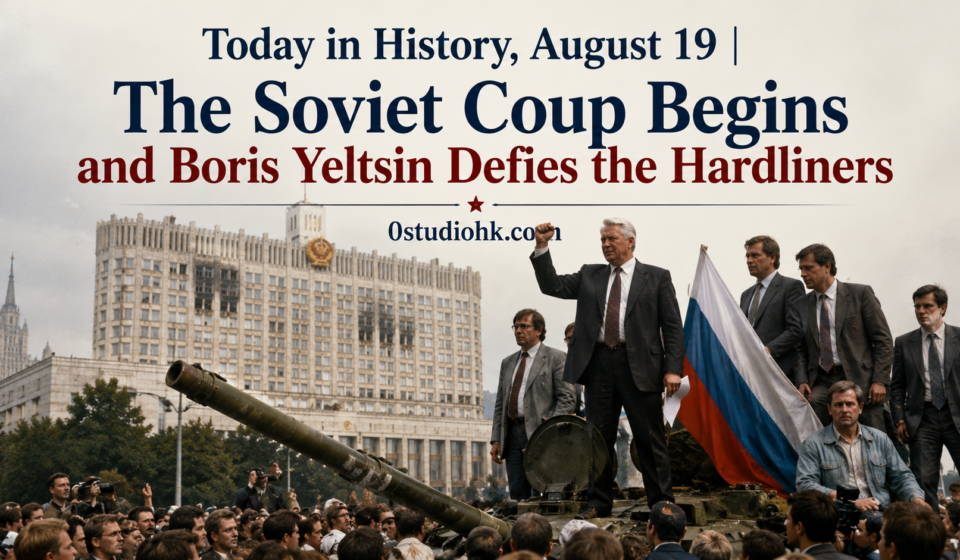
1991年8月19日,蘇聯迎來了最後歲月中最關鍵的歷史時刻之一。清晨,蘇聯強硬派政治人物、軍方及安全機構高層發動政變,宣布成立「國家緊急狀態委員會」,聲稱總統米哈伊爾・戈爾巴喬夫因健康原因無法履行職務,並宣布國家進入緊急狀態。當時的戈爾巴喬夫正在克里米亞度假,政變者已經切斷他的通訊,並將他軟禁在度假別墅內。政變背後的核心問題,其實早已累積多年。1985年成為蘇聯最高領導人後,戈爾巴喬夫推動「改革」與「開放」,希望透過經濟及政治改革挽救蘇聯體制。他放寬新聞與公共討論,改善與西方國家的關係,也逐步減少中央對部分共和國的控制。然而,改革產生的結果並不完全按照他的計劃發展。經濟問題仍然嚴重,社會對政府的不滿增加,而蘇聯各加盟共和國的民族及獨立運動亦逐漸壯大。對共產黨內的強硬派而言,戈爾巴喬夫的改革已經走得太遠。他們擔心中央權力削弱,蘇聯最終會分裂。另一方面,更激進的改革派則認為戈爾巴喬夫改革得不夠快,其中最具代表性的人物便是俄羅斯共和國總統鮑里斯・葉利欽。1991年夏季,戈爾巴喬夫正嘗試與部分加盟共和國領導人談判新的聯盟條約,希望建立一個權力更加分散的蘇聯。原定8月20日簽署的新條約,被強硬派視為一個危險訊號,因為它可能進一步削弱中央政府,讓加盟共和國取得更大的自主權。就在條約簽署前一天,政變爆發。8月19日清晨,國家緊急狀態委員會宣布接管國家權力,軍隊及坦克開始進入莫斯科。政府控制的媒體亦開始受到限制,政變者試圖向全國人民塑造一個「政府正在挽救國家」的形象。當時的官方說法,是戈爾巴喬夫因健康原因不能繼續履行總統職務,但消息很快引起國內外質疑。 政變者原本希望透過軍隊及國家機器迅速控制局面,但他們沒有預料到俄羅斯共和國總統葉利欽會成為最重要的反抗力量。葉利欽當時正在莫斯科俄羅斯議會大樓,也就是著名的「白宮」。他公開宣布政變違法,呼籲人民進行罷工及抵抗,並要求恢復戈爾巴喬夫的合法權力。大量市民開始聚集在白宮附近,用人鏈、路障及其他方式阻擋坦克。軍隊雖然進入莫斯科,但部分士兵不願意向示威者開火,甚至有部隊開始倒向反政變一方。8月19日最令人難忘的畫面之一,就是葉利欽站在一輛坦克上向群眾發表講話。這個畫面很快成為世界媒體的象徵性影像,也令葉利欽從一名重要政治人物,迅速成為反對政變的核心領袖。 當天的莫斯科氣氛非常緊張。坦克出現在街頭,政府大樓周圍部署軍隊,而普通市民則聚集在俄羅斯議會大樓附近保護民主選出的政府。政變者雖然控制了部分國家機構,但始終沒有建立真正有效的全國性控制。俄羅斯多個地區的政府及工人開始表態支持葉利欽,部分軍事單位亦拒絕執行政變者的命令。這場政變因此從一開始的突然奪權,逐漸變成強硬派與人民、地方政府及部分軍隊之間的政治對抗。 國際社會同樣密切關注局勢。美國總統喬治・H・W・布殊公開反對以武力推翻戈爾巴喬夫,並支持恢復合法政府。對西方國家而言,蘇聯正處於冷戰結束後最敏感的轉型時期,一場成功的軍事政變可能改變東西方關係,也可能令核武器控制及歐洲安全局勢出現新的危機。 然而,政變者的計劃很快開始瓦解。他們沒有得到足夠的民眾支持,也沒有完全掌握軍隊。莫斯科街頭的抗議者越來越多,白宮周圍形成防線。8月20日及21日,局勢進一步惡化,部分軍隊開始拒絕鎮壓反對者。最終,政變僅持續約三日便宣告失敗。戈爾巴喬夫獲釋並返回莫斯科,但他原本試圖改革及保存蘇聯的政治地位已受到致命打擊。 這裡最值得注意的歷史諷刺,是政變者原本希望「拯救蘇聯」,結果卻加速了蘇聯的解體。政變失敗後,葉利欽的政治力量大幅上升,俄羅斯共和國進一步擺脫蘇聯中央控制。波羅的海國家等加盟共和國亦加快爭取獨立的步伐。戈爾巴喬夫雖然仍然是蘇聯總統,但實際政治權力已迅速流向俄羅斯及其他共和國。 幾個月後,歷史真的走向了強硬派最害怕的方向。1991年12月,戈爾巴喬夫辭去蘇聯總統職務;同月底,蘇聯正式解體。一個存在超過六十年的超級大國,就這樣在短短數月內完成了從危機、政變到解體的歷史轉折。8月19日的政變因此不能只被理解為一次失敗的奪權行動,它更像是蘇聯解體最後階段的一個引爆點。 從世界歷史角度看,1991年8月19日的重要性遠遠超過莫斯科街頭本身。蘇聯是第二次世界大戰後兩個超級大國之一,長期與美國形成冷戰對峙。當這個國家的政治體制開始崩潰,世界秩序亦隨之改變。東歐共產主義政權的瓦解、德國統一、冷戰結束,以及蘇聯最終解體,都在同一歷史時期互相連結。8月政變的失敗,使原本已經快速變化的國際局勢再向前推進了一步。更值得記住的是,這一天也展示了政治制度中「合法性」的重要性。政變者擁有軍隊、官僚機構及安全部門,看似掌握強大力量,但當人民、地方政府及部分軍隊拒絕接受其命令時,單靠武力並不足以建立穩定政權。葉利欽站在坦克上的影像之所以成為歷史象徵,正是因為它代表了一個政治人物公開挑戰以武力奪權的行動。當然,葉利欽後來的政治生涯同樣充滿爭議,而俄羅斯在蘇聯解體後所經歷的經濟及社會轉型亦非常複雜。因此,回望1991年8月19日,不能只把它簡單寫成「民主戰勝獨裁」的故事。它同時是一場國家危機、政治權力重新分配、民族獨立運動及冷戰結束共同交織的歷史事件。今天回望這一天,最令人感慨的是,政變者真正想阻止的事情,反而因為他們的行動而更快發生。原本希望維持蘇聯完整的強硬派,最終削弱了中央政府的合法性,也讓葉利欽及各加盟共和國獲得更大的政治空間。不到半年,蘇聯便走到終點。1991年8月19日因此成為20世紀世界歷史的重要坐標:坦克駛入莫斯科街頭,人民走上街頭,葉利欽站上坦克,而一個即將消失的超級大國則在這場短暫政變之後,再也無法回到原來的道路。
English Version
August 19, 1991, became one of the decisive days in the final chapter of the Soviet Union. Before dawn, Communist hard-liners moved against President Mikhail Gorbachev and announced a state of emergency. They claimed that Gorbachev was unable to perform his presidential duties because of ill health and established the State Committee on the State of Emergency to take control of the country. In reality, the move was an attempted coup designed to stop the political and economic transformation that was rapidly weakening the authority of the Soviet central government. Gorbachev had become Soviet leader in 1985 and launched a series of reforms that changed the country in ways few people could have predicted. His policies of perestroika, or restructuring, and glasnost, or openness, were intended to modernise the Soviet system rather than destroy it. Political discussion became more open, censorship was reduced, relations with Western countries improved, and the Soviet leadership became increasingly willing to reconsider the rigid structures that had defined the Cold War. Yet reform created new problems as well as new freedoms. Economic difficulties remained severe, public confidence in the Communist Party weakened, and nationalist movements grew stronger in several Soviet republics. Hard-line officials in the Communist Party, military and security services increasingly feared that Gorbachev’s reforms were leading the country toward collapse. At the same time, more radical reformers believed that Gorbachev was moving too slowly. Among the most powerful of these figures was Boris Yeltsin, the elected president of the Russian republic. By the summer of 1991, Gorbachev was negotiating a new Union Treaty with the leaders of several Soviet republics. The proposed agreement would have transferred more authority from the central government to the republics. For the hard-liners, this was an unacceptable threat. They believed that a weaker central government would encourage the republics to demand even greater autonomy or complete independence. The treaty was scheduled to be signed on August 20. One day before that was supposed to happen, the coup began. On August 19, the State Committee on the State of Emergency announced that extraordinary measures were being introduced. Gorbachev, who was spending his vacation in Crimea, had already been isolated at his government residence. Communications were cut, and the coup leaders claimed that he was unable to continue governing. Tanks and military vehicles moved into Moscow, while the authorities attempted to control the media and prevent opposition from organising. The first impression was that the Soviet state had been taken over by a powerful and well-organised group. But the coup leaders soon discovered that possessing military and administrative power was not the same as having political legitimacy. Boris Yeltsin became the central figure of resistance. As president of the Russian republic, he had his own democratic mandate and access to the Russian parliament building, known as the White House. Rather than accepting the new authorities, Yeltsin declared the coup illegal and called on citizens to resist. Thousands of people gathered around the parliament building. They built barricades, formed human chains and confronted the military forces sent into the capital. Some soldiers refused to attack the demonstrators, while other military units began to show sympathy for the resistance. One of the most famous images of the entire episode came on August 19, when Yeltsin climbed onto a tank outside the Russian parliament and addressed the crowd. The photograph and television footage quickly became symbols of resistance to the coup. It also transformed Yeltsin into the most visible political opponent of the hard-line leadership. The atmosphere in Moscow was tense. Tanks occupied strategic positions, while ordinary citizens gathered around the White House to defend the elected Russian government. The coup leaders had expected the military to provide decisive support, but the situation became increasingly uncertain. Some regional governments supported Yeltsin, while workers and miners announced strikes. Several military units refused to carry out orders against the protesters. The hard-liners therefore faced a problem they had not anticipated: they could use force, but they could not easily create a government that people accepted as legitimate. The international community watched the crisis closely. U.S. President George H. W. Bush condemned the removal of Gorbachev and supported calls for the restoration of the legitimate government. The Soviet Union remained a nuclear superpower, and any violent political transition carried enormous international consequences. The coup also threatened the fragile improvement in relations between the Soviet Union and the West that Gorbachev had helped create during the final years of the Cold War. The coup began to collapse almost as quickly as it had begun. The hard-line leaders failed to gain broad public support, and the military was not united behind them. Demonstrations grew larger, resistance around the parliament intensified, and some troops refused to participate in a violent crackdown. By August 21, the coup had failed. Gorbachev was released and returned to Moscow, but the political balance had changed permanently. His authority had been severely weakened, while Yeltsin had emerged as the most powerful political figure in Russia. The greatest irony of the August coup was that the people who wanted to preserve the Soviet Union helped accelerate its destruction. The hard-liners believed that they were acting to prevent the country from breaking apart. Instead, their attempted seizure of power demonstrated how weak the central government had become. The failure of the coup encouraged republics to move more rapidly toward independence and strengthened Yeltsin’s challenge to Soviet authority. The Baltic states and other republics continued to assert their sovereignty, while the Communist Party rapidly lost influence. Gorbachev remained president of the Soviet Union for several more months, but his political position was increasingly symbolic. By December 1991, the Soviet Union was effectively finished. Gorbachev resigned as president on December 25, and the Soviet Union formally ceased to exist at the end of the month. A superpower that had shaped international politics for more than six decades disappeared from the map, replaced by fifteen independent states and a completely different political landscape. The importance of August 19 therefore extends far beyond the attempted coup itself. It was one of the moments when the post-Cold War world was being created in real time. The collapse of Communist governments in Eastern Europe, German reunification, the end of the Cold War and the eventual dissolution of the Soviet Union were all part of a wider transformation. The failure of the August coup removed one of the last possibilities for preserving the Soviet system in something close to its traditional form. It also demonstrated how rapidly political power could move from a central government to republics, elected leaders and popular movements. The image of Yeltsin standing on a tank became one of the defining photographs of the late twentieth century because it captured the extraordinary uncertainty of the moment. Tanks represented the coercive power of the old Soviet state, while Yeltsin represented a new political authority claiming democratic legitimacy. The confrontation was not simply military. It was a struggle over who had the right to govern and what kind of state the Soviet Union would become. Yet the history should not be reduced to a simple story in which one side represented absolute freedom and the other absolute oppression. The collapse of the Soviet Union produced enormous political opportunities, but it also created economic hardship, social instability and new conflicts. Yeltsin himself would later become a controversial leader, and Russia’s post-Soviet transition proved far more difficult than many people had expected. The events of August 1991 therefore need to be understood within the larger context of a society undergoing an extraordinary transformation. What makes August 19 especially remarkable is the speed at which events changed direction. The coup leaders believed they were restoring order, but their actions weakened the very system they wanted to preserve. Gorbachev was removed temporarily but returned to Moscow; Yeltsin was expected to be contained but became more powerful; the republics were expected to remain within the Union but moved closer to independence; and the Soviet state was expected to survive but disappeared within months. The failed coup became a turning point precisely because it exposed how little remained of the old political structure. Looking back today, August 19, 1991, stands as one of the great turning points of twentieth-century history. It was the day when tanks entered Moscow, citizens gathered around the parliament, Yeltsin climbed onto a tank and a group of powerful officials attempted to reverse the direction of Soviet history. They failed. Within a few months, the Soviet Union itself was gone. The events of that August therefore offer a powerful historical lesson: political systems can appear strong until the moment their authority is challenged, and an attempt to stop change can sometimes become the very force that makes change irreversible.
總結
中文版本
1991年8月19日,蘇聯強硬派發動政變,葉利欽率領人民抵抗。政變三日後失敗,卻加速蘇聯解體,改變冷戰後世界秩序。
English
On August 19, 1991, Soviet hard-liners attempted to seize power, but Boris Yeltsin and public resistance defeated the coup. Its failure accelerated the collapse of the Soviet Union and reshaped the post-Cold War world.