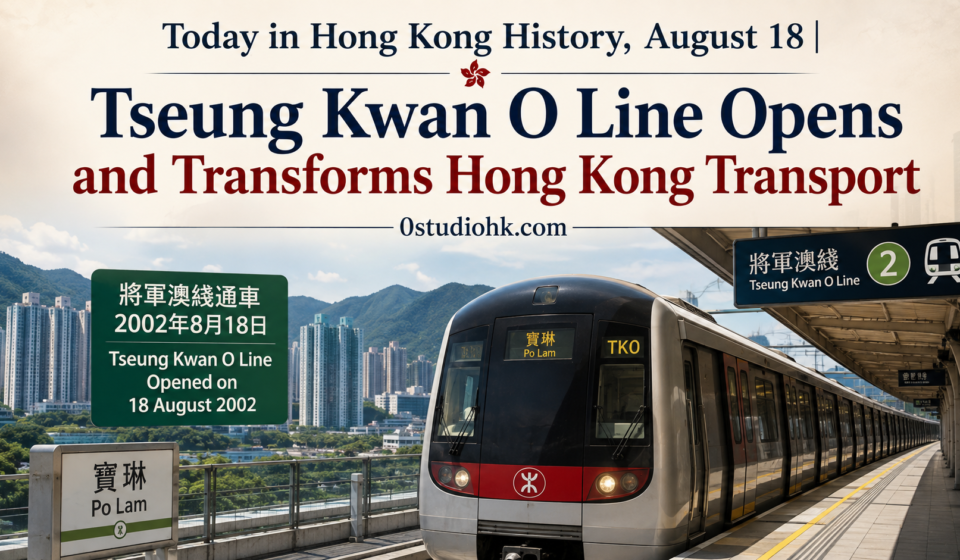
8月18日今日歷史・香港版|將軍澳線通車,改變將軍澳與東九龍交通 | Today in Hong Kong History, August 18 | Tseung Kwan O Line Opens and Transforms Hong Kong Transport
2002年8月18日,香港地鐵將軍澳線正式通車,連接將軍澳新市鎮與港島北角,並透過油塘及調景嶺與觀塘線接駁。這條鐵路不但改善將軍澳居民往返市區的交通,也成為香港新市鎮發展的重要基礎設施。
On August 18, 2002, Hong Kong’s Tseung Kwan O Line opened to the public, linking the rapidly developing Tseung Kwan O New Town with North Point and the wider MTR network. The new railway reshaped daily commuting, supported the growth of the new town and became an important part of Hong Kong’s transport infrastructure.
中文版本
2002年8月18日,是香港鐵路發展史上一個值得記住的日子。這一天,當時的香港地鐵將軍澳線正式投入服務,將將軍澳新市鎮與港島北角連接起來,亦透過油塘及調景嶺與觀塘線接駁,使原本需要依靠巴士及其他交通工具往返市區的將軍澳居民,擁有更直接、更穩定的鐵路選擇。今天大家對將軍澳線可能已經非常熟悉,但在2002年,這條新鐵路代表的並不只是多了一條地鐵線,而是香港一個新市鎮逐漸成熟的重要標誌。 將軍澳在20世紀後期開始快速發展,住宅、商業及公共設施陸續增加,人口亦逐步上升。新市鎮要真正成為一個可以讓大量居民長期生活的社區,交通便是一個不可缺少的條件。單靠道路和巴士服務,很難完全應付人口持續增加所帶來的交通需求,因此鐵路一直是將軍澳發展規劃的重要一環。將軍澳線的建設,正是在這個背景下出現。將軍澳線屬於將軍澳支線工程的一部分。根據香港路政署資料,將軍澳線連接將軍澳寶琳與港島北角,當中包括早於2001年投入運作的鰂魚涌紓緩擠塞方案,以及2002年開始服務將軍澳新市鎮的鐵路部分。現時整條將軍澳線由北角至寶琳,全長約10.7公里,設有鰂魚涌、油塘、調景嶺、將軍澳及坑口等中途站,北角及鰂魚涌可接駁港島線,而油塘及調景嶺則可接駁觀塘線。 不過,2002年的將軍澳線與今天大家熟悉的網絡仍然有所不同。當年康城站尚未存在,將軍澳線主要服務寶琳、坑口、將軍澳、調景嶺及油塘一帶,並連接港島的鰂魚涌及北角。康城站要到2009年7月26日才正式投入服務,因此今天乘客看到的路線結構,是經過多年城市發展及鐵路延伸後逐步形成的結果。 將軍澳線的建設本身亦是一項大型工程。香港地鐵當年的資料顯示,將軍澳延線工程於1998年11月開始施工,最終於2002年完成,工程成本約160億港元,較1997年原先估算的305億港元大幅降低,而且比原定項目時間表提早超過四個月完成。對當年的香港而言,這不只是鐵路工程速度上的成果,也反映大型基建項目在規劃、施工及成本控制方面所面對的挑戰。 將軍澳線的另一個特色,是它需要穿越山嶺及人口密集地區。香港特區政府在2002年8月18日的開通訊息中形容,將軍澳線是一項高度具挑戰性的工程,需要處理山區及密集市區的複雜施工環境。政府亦特別指出,這條新線比原定時間提早四個月完成,並認為工程展示了香港在大型建設項目上的效率及執行能力。 在正式通車之前,香港政府及運輸部門已經開始為新鐵路投入服務作準備。2002年8月11日,位於坑口、將軍澳及調景嶺地鐵站附近的三個公共交通交匯處啟用,加上原有的寶琳公共交通交匯處,形成較完整的巴士、小巴及的士轉乘系統。部分巴士及專線小巴服務亦配合將軍澳線通車而調整路線,讓居民可以更容易在鐵路與其他公共交通工具之間轉乘。 這種「鐵路+巴士+小巴」的交通安排,其實正是香港新市鎮發展的一個重要特色。鐵路並不是獨立存在,而是與道路、巴士總站、公共小巴及其他交通設施互相配合。對居民而言,一條鐵路線真正能否改善生活,不只是看列車本身,而是看由家門口到車站、由車站到目的地的整個交通網絡是否順暢。將軍澳線的開通,正好展示了香港如何把鐵路與新市鎮規劃結合起來。2002年8月18日通車後,將軍澳居民前往港島及九龍的交通選擇明顯增加。將軍澳線經過東區海底隧道一帶連接港島鐵路網,乘客可以在油塘或調景嶺轉乘觀塘線,也可以在鰂魚涌或北角轉乘港島線。這種多線互相接駁的設計,使將軍澳不再只是香港東部一個相對獨立的新市鎮,而逐漸融入整個都市鐵路網絡。 從香港城市發展角度看,將軍澳線的意義遠遠超過交通本身。新市鎮的發展需要住宅、學校、商場、醫療、休閒及就業機會,而交通則把這些不同功能連接起來。鐵路通車後,居民可以更方便地往返港島、九龍及其他地區,企業及商業活動亦更容易在將軍澳發展。鐵路因此成為一種城市發展工具,而不只是單純的運輸設施。香港運輸署的資料亦顯示,將軍澳線的加入成為當年鐵路客量增長的重要因素之一。港鐵當時的年度資料指出,2002年鐵路網客量增加,其中一個主要原因正是將軍澳線投入服務;跨海交通市場的鐵路份額亦有所上升。 今天回望2002年8月18日,很多人可能只會想到「將軍澳線通車」這六個字,但對當時居住在將軍澳的人而言,這可能是日常生活的一次重大改變。以前由新市鎮前往市區可能需要花更多時間轉乘巴士,鐵路開通後,交通變得更容易預計,通勤方式亦更加穩定。對學生、上班族、家庭以及長者而言,鐵路逐漸成為日常生活的一部分,而車站周邊亦開始形成新的社區活動中心。將軍澳線之後亦持續發展。2007年12月2日,地鐵與九廣鐵路的車務運作合併,香港鐵路系統正式進入港鐵年代;2009年7月26日,康城站正式啟用,將軍澳線進一步服務新發展區。原本2002年只是一條服務新市鎮主要地區的新鐵路,經過多年發展後,逐漸成為今天香港鐵路網絡的重要一環。 更有意思的是,今天我們看見的將軍澳,已經很難與2002年前後的景象完全相比。住宅區不斷增加,商業中心逐步形成,人口及社區設施亦持續發展。鐵路站不再只是上落車的地方,而成為商場、住宅、公共設施及社區活動互相連接的節點。這正是香港鐵路與城市發展經常出現的關係:鐵路帶來交通便利,而交通便利又進一步推動土地及社區發展。從這個角度看,2002年8月18日其實是將軍澳城市故事的一個重要分界點。當天第一班列車開出,不只是把乘客送往另一個車站,也把一個正在成長的新市鎮更緊密地連接到香港這座城市。二十多年後,當我們乘坐將軍澳線往返北角、鰂魚涌、油塘、調景嶺或寶琳時,很多人可能不會再想起這條鐵路最初通車的日子。但城市的每一次便利,其實都有一段歷史。車站、路軌、隧道以及每天穿梭其中的列車,都記錄著香港人口、城市規劃與交通模式如何一步一步改變。2002年8月18日,將軍澳線正式投入服務,正是這段城市歷史中值得留下的一頁。它見證將軍澳由新市鎮逐步發展成成熟社區,也見證香港鐵路網絡由單一線路逐漸走向互相連接的城市交通系統。今天再回望這一天,真正值得記住的,不只是「一條新地鐵線開通」,而是香港如何透過基礎建設,把一個新市鎮與整個城市連在一起。
English Version
August 18, 2002, marked an important chapter in the development of Hong Kong’s railway network when the Tseung Kwan O Line opened to the public. The new railway connected the rapidly developing Tseung Kwan O New Town with North Point and linked the area to the wider MTR system through interchanges at Yau Tong, Tiu Keng Leng, Quarry Bay and North Point. For residents of Tseung Kwan O, the opening represented far more than the arrival of a new train service. It was a major step in transforming a growing new town into a better-connected part of metropolitan Hong Kong. Tseung Kwan O had developed rapidly during the late twentieth century as Hong Kong expanded its new-town programme. As housing estates, schools, commercial facilities and community services increased, transportation became one of the most important requirements for the area’s long-term growth. Roads and bus services were essential, but a high-capacity railway connection offered a more reliable way to move large numbers of residents between the new town and the rest of Hong Kong. The Tseung Kwan O Extension Project was therefore closely connected with the wider development of the new town itself. According to the Hong Kong Highways Department, the Tseung Kwan O Line connects Po Lam in Tseung Kwan O with North Point on Hong Kong Island. The present line includes stations at Quarry Bay, Yau Tong, Tiu Keng Leng, Tseung Kwan O and Hang Hau between its two terminal stations, with interchange connections to the Island Line and Kwun Tong Line. The railway that opened in 2002 was not exactly the same system passengers see today. The LOHAS Park station, for example, did not yet exist. It was added later and officially opened on July 26, 2009. The original railway primarily served the established parts of Tseung Kwan O New Town, linking Po Lam, Hang Hau, Tseung Kwan O, Tiu Keng Leng and Yau Tong with the Island Line network through Quarry Bay and North Point. The route therefore expanded over time as the surrounding communities developed. The construction itself was a major undertaking. MTR’s historical corporate records state that construction of the Tseung Kwan O Extension Project began in November 1998. The project cost approximately HK$16 billion, considerably below the original 1997 estimate of HK$30.5 billion, and was completed more than four months ahead of its original project schedule. The project was therefore significant not only because of the railway it created, but also because of the engineering and project-management challenges involved in building major infrastructure in Hong Kong. The Hong Kong Government described the project at the time as particularly challenging because construction had to take place across mountainous terrain and densely developed urban areas. The successful completion of the line ahead of schedule was presented as an example of Hong Kong’s ability to undertake complex infrastructure projects. The opening also reflected the cooperation between the MTR Corporation, contractors and government departments involved in planning, construction, transport management and public services. Preparation for the opening began before the railway itself entered service. On August 11, 2002, new public transport interchanges were opened near Hang Hau, Tseung Kwan O and Tiu Keng Leng stations. Together with the existing Po Lam interchange, these facilities provided integrated terminal arrangements for buses, minibuses and taxis. Some bus and minibus services were also adjusted before the railway opened so that passengers could transfer more easily between road transport and the new railway. This integration was important because a railway does not operate in isolation. Its effectiveness depends on how easily passengers can reach stations and continue their journeys after leaving the train. Hong Kong’s transport system has long relied on the interaction between railways, buses, minibuses, ferries and roads. The opening of the Tseung Kwan O Line demonstrated this principle clearly: the new railway was supported by a network of other public transport services that helped connect residential districts with stations. When the line opened on August 18, residents gained a direct railway connection to the wider urban network. Passengers could transfer to the Kwun Tong Line at Yau Tong or Tiu Keng Leng, while Quarry Bay and North Point provided connections with the Island Line. This meant that Tseung Kwan O was no longer as isolated from the main urban railway network as it had been before. Instead, the new town became increasingly integrated into the wider transport structure of Hong Kong. The importance of the railway extended beyond commuting. New towns require a combination of housing, employment, education, shopping, healthcare, recreation and community facilities. Transportation provides the connections that allow these elements to function together. Once railway access becomes available, residents can travel more easily to other districts, while businesses and services can also operate within a more connected urban environment. In this sense, the Tseung Kwan O Line was not simply a transport project; it was part of the physical framework supporting the growth of the new town. MTR’s historical records also show that the opening of the Tseung Kwan O Line contributed significantly to passenger growth in 2002. The company’s annual reporting at the time identified the new line as one of the main reasons for increased patronage on the MTR network, while its cross-harbour market share also increased partly as a result of the new railway connection. For residents in 2002, however, the significance was much more personal. A railway station changes the practical rhythm of everyday life. Students can travel more predictably to school, employees gain another commuting option, families can reach shopping and recreational areas more easily, and older residents can access different parts of the city with less dependence on road traffic. As stations become established, they can also become centres around which commercial and community activities develop. The railway therefore changes not only travel patterns but also the way a neighbourhood functions. The Tseung Kwan O Line continued to evolve after its opening. On December 2, 2007, the railway operations of the former MTR and Kowloon-Canton Railway systems were merged, creating the modern MTR network. Two years later, LOHAS Park station opened on July 26, 2009, extending rail service to another major development area of Tseung Kwan O. The line that began operating in 2002 was therefore only the beginning of a longer process of railway expansion and urban development. Today, it is easy to take the Tseung Kwan O Line for granted. Trains arrive as part of an ordinary daily routine, stations are surrounded by residential towers and shopping centres, and transfers between lines have become normal. Yet the landscape of Tseung Kwan O was very different before the railway became a central part of daily life. The opening of the line helped accelerate the transformation of the new town into a mature urban community. The railway stations became more than places where passengers boarded trains. They developed into important points where housing, retail, public facilities and transport intersected. This relationship between railway development and urban growth is one of the defining features of modern Hong Kong. Infrastructure can make an area more accessible, while improved accessibility can encourage further development. The story of Tseung Kwan O provides a clear example of this process. Looking back at August 18, 2002, the most important point is therefore not simply that a new railway line opened. The event represents the moment when a rapidly expanding new town became more closely connected to the rest of Hong Kong. The railway helped reduce the sense of distance between Tseung Kwan O and the main urban areas, while creating a foundation for further development. More than two decades later, the route has become a familiar part of everyday life for thousands of passengers. Yet every familiar railway line has a beginning. For the Tseung Kwan O Line, that beginning came on August 18, 2002, when the first public services opened and a new chapter of Hong Kong’s transport history began.
總結
2002年8月18日,將軍澳線正式通車,將將軍澳新市鎮接入香港鐵路網絡。這不只改善居民出行,也成為將軍澳城市發展的重要基礎,見證香港新市鎮逐步成熟。
English
The Tseung Kwan O Line opened on August 18, 2002, connecting the new town with Hong Kong’s wider railway network. More than a transport link, it became part of the infrastructure that helped shape Tseung Kwan O into a mature urban community.