
Skip to content
madefrom.hk madefrom.hk madefrom.hk

Rewriting culture, history and memories beyond language and borders.

madefrom.hk madefrom.hk madefrom.hk

Rewriting culture, history and memories beyond language and borders.

  • English
    • Comics
      • Strange Tales
      • Myths of the Constellations
    • DAY
  • 繁體中文
    • 學習筆記
    • 漫畫
      • 碧廬冤孽
  • Column
    • Knowledge Hub
      • 生活篇
      • 食品篇
      • 科技篇
      • 超市篇
    • Life & Technology
    • Hong Kong Guide
    • Today in History
    • City Stories
    • Anime & Manga
    • Game Magazine
    • Toy Club
    • Language of Flowers
    • Street Notes
    • All Things
    • Music Memories
    • Chinese Idioms
    • Cantonese Sayings
    • Movie Magazine
  • Original Stories
    • 不可思議故事
    • 十三號的約定
    • 星座宮神話
    • 香港山怪談
    • 香港都市靈異傳說
  • Adapted Stories
    • romance of the three kingdoms
    • hong kong places
    • dream of the red chamber
    • strange tales
    • The house on the borderland
    • usherhouse
    • Theblackcat
  • History
    • History in 80 Seconds
    • 當年報章摘要
    • 香港歷史
    • 世界名作家
    • World Biographies
  • Movies
    • USA
    • japan
    • Korea
    • Taiwan
    • HONGKONG
    • India
    • china
    • france
    • Tunisia
    • Germany
    • Jordan
    • Switzerland
    • sweden
    • Spain
    • Palestine
    • Norway
    • Argentina
    • Brazil
  • ACG
    • Winter 2026 Anime
    • Summer 2026 Anime
    • ACGHK
      • 2016
      • 2018
      • 2019
      • 2023
      • 2024
    • 創天綜合同人祭
      • 同人表演
    • 音樂
    • 電玩
      • 玩具資訊
      • 遊戲資訊
    • 遊戲
      • SNK Neo Geo
      • PlayStation 2
      • Arcade
      • NEWS
  • 旅行
    • Hong Kong Travel
      • 土瓜灣
      • 舊建築
      • 街道
      • 單車
      • 文化
      • 交通
      • 香港書展
      • 表演
      • 廟宇
      • 教堂
      • 香港書展
      • 分享會
      • 紀念活動
      • 文化活動
      • 活動
      • 寵物
      • 巴士
      • 電車
      • 機場
      • 飲食
        • 上環
        • 中環
        • 筲箕灣
        • 西環
        • 天后
        • 旺角
        • 荔枝角
        • 佐敦道
        • 太子
        • 大角咀
        • 深水埗
        • 油麻地
        • 長沙灣
        • 黃大仙
        • 尖沙咀
        • 油塘
        • 葵芳
        • 屯門
        • 元朗
        • 上水
        • 粉嶺
        • 荃灣
        • 渡輪
      • 心理測驗
    • Macau Travel
    • International Travel
    • 日本旅遊
    • Taiwan Travel
    • Thailand Travel
  • Archive
    • 文化生活
    • 莎拉有約
  • English
    • Comics
      • Strange Tales
      • Myths of the Constellations
    • DAY
  • 繁體中文
    • 學習筆記
    • 漫畫
      • 碧廬冤孽
  • Column
    • Knowledge Hub
      • 生活篇
      • 食品篇
      • 科技篇
      • 超市篇
    • Life & Technology
    • Hong Kong Guide
    • Today in History
    • City Stories
    • Anime & Manga
    • Game Magazine
    • Toy Club
    • Language of Flowers
    • Street Notes
    • All Things
    • Music Memories
    • Chinese Idioms
    • Cantonese Sayings
    • Movie Magazine
  • Original Stories
    • 不可思議故事
    • 十三號的約定
    • 星座宮神話
    • 香港山怪談
    • 香港都市靈異傳說
  • Adapted Stories
    • romance of the three kingdoms
    • hong kong places
    • dream of the red chamber
    • strange tales
    • The house on the borderland
    • usherhouse
    • Theblackcat
  • History
    • History in 80 Seconds
    • 當年報章摘要
    • 香港歷史
    • 世界名作家
    • World Biographies
  • Movies
    • USA
    • japan
    • Korea
    • Taiwan
    • HONGKONG
    • India
    • china
    • france
    • Tunisia
    • Germany
    • Jordan
    • Switzerland
    • sweden
    • Spain
    • Palestine
    • Norway
    • Argentina
    • Brazil
  • ACG
    • Winter 2026 Anime
    • Summer 2026 Anime
    • ACGHK
      • 2016
      • 2018
      • 2019
      • 2023
      • 2024
    • 創天綜合同人祭
      • 同人表演
    • 音樂
    • 電玩
      • 玩具資訊
      • 遊戲資訊
    • 遊戲
      • SNK Neo Geo
      • PlayStation 2
      • Arcade
      • NEWS
  • 旅行
    • Hong Kong Travel
      • 土瓜灣
      • 舊建築
      • 街道
      • 單車
      • 文化
      • 交通
      • 香港書展
      • 表演
      • 廟宇
      • 教堂
      • 香港書展
      • 分享會
      • 紀念活動
      • 文化活動
      • 活動
      • 寵物
      • 巴士
      • 電車
      • 機場
      • 飲食
        • 上環
        • 中環
        • 筲箕灣
        • 西環
        • 天后
        • 旺角
        • 荔枝角
        • 佐敦道
        • 太子
        • 大角咀
        • 深水埗
        • 油麻地
        • 長沙灣
        • 黃大仙
        • 尖沙咀
        • 油塘
        • 葵芳
        • 屯門
        • 元朗
        • 上水
        • 粉嶺
        • 荃灣
        • 渡輪
      • 心理測驗
    • Macau Travel
    • International Travel
    • 日本旅遊
    • Taiwan Travel
    • Thailand Travel
  • Archive
    • 文化生活
    • 莎拉有約
Close

Search

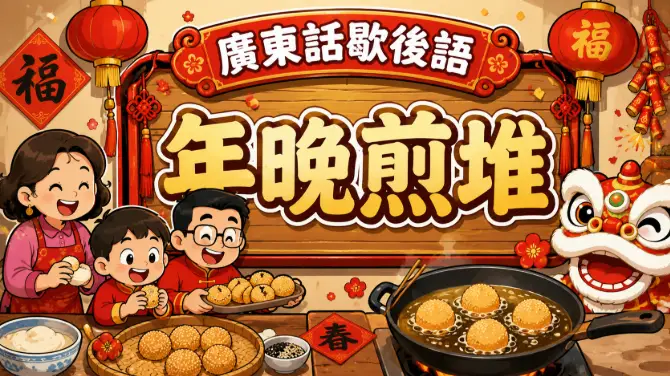
農曆新年前一家人炸煎堆的熱鬧場景,象徵見人有自己也要有的從眾心理。
Cantonese SayingsColumn

年晚煎堆-人有我有 | “New Year Fried Dumplings” — The Cantonese Saying About Following the Crowdt|廣東話歇後

2026-05-26

「年晚煎堆,人有我有」係一句充滿香港與嶺南過年氣氛嘅廣東話歇後語,意思係見到人人都有,自己都唔執輸,一定要跟住有一份。煎堆作為傳統賀年食品,喺農曆新年前夕幾乎家家戶戶都會準備,所以慢慢就變成一種「別人有,我都要有」嘅象徵。呢句說話表面講過年習俗,其實背後反映咗人類常見心理:怕落後、怕被比較、怕自己冇份。無論以前買賀年食品,定係現代人追潮流、買新手機、投資熱潮甚至網絡跟風文化,都可以見到「人有我有」呢種心態。

Introduction
“年晚煎堆,人有我有” is a traditional Cantonese saying that reflects the strong social instinct of following trends and keeping up with others. Fried sesame dumplings, known as “煎堆,” are a classic Lunar New Year snack commonly prepared in many Cantonese households before the festival. Because almost everyone had them during the festive season, they gradually became symbolic of a mindset that says, “If everyone else has it, I should have it too.” The phrase humorously captures the human tendency to follow the crowd, avoid feeling left behind, and participate simply because others are doing the same. Even in modern society, this mentality appears everywhere — from fashion and technology to investments and social media trends.

意思
「年晚煎堆,人有我有」主要係形容一種從眾心理,即係見到別人有某樣嘢,自己都想跟住擁有,即使未必真正需要。喺傳統廣東家庭入面,農曆新年前家家戶戶都會炸煎堆,象徵團圓、喜慶同「煎堆碌碌,金銀滿屋」。久而久之,如果某一家過年冇煎堆,反而會令人覺得好似欠缺咗節日氣氛,所以大家都會跟住做。呢句歇後語正正利用咗呢種文化背景,演變成形容人喜歡跟風、唔想輸畀人嘅性格。有時候,人並唔係因為真心鍾意某樣嘢,而係因為身邊人人都做,所以自己都跟住做。例如朋友全部換新電話,自己明明部機仲好用,但見到人人換咗,內心又開始心思思;又或者網絡突然流行某種投資、某種興趣、某種潮流食品,好多人未了解清楚就衝去跟風。廣東話文化對呢種現象通常帶少少幽默與諷刺,因為「人有我有」有時代表缺乏主見,只係單純唔想落後。不過另一方面,呢句話亦反映咗社會群體心理。人天生就容易受周圍環境影響,尤其喺節日文化或者集體氣氛之中,更加容易出現從眾行為。所以呢句歇後語雖然簡單,但其實好貼近現代社會。

English Version
The Cantonese saying “年晚煎堆,人有我有” describes the common human habit of following trends simply because others are doing the same. Traditionally, fried sesame dumplings were prepared in Cantonese households before Lunar New Year as symbols of prosperity and celebration. Since nearly every family had them during the festive season, not having them could feel socially awkward or incomplete. Over time, this cultural image evolved into a broader metaphor for conformity and crowd-following behavior. The phrase points to situations where people buy, join, or imitate something mainly because others already have it. In modern life, this mindset can be seen everywhere. People replace perfectly functional phones because their friends upgraded theirs. Investors rush into popular financial trends without understanding the risks. Social media users copy viral behaviors simply to avoid feeling excluded. The saying humorously criticizes this “everyone has it, so I want it too” mentality. However, it also reflects a deeper truth about human psychology. People naturally seek belonging and fear being left behind socially. Especially during festivals, major events, or trend-driven moments, individuals often make decisions based less on personal need and more on social influence. That is why this old Cantonese expression remains surprisingly relevant even in today’s digital age.

用法
「年晚煎堆,人有我有」通常用嚟形容人盲目跟風或者缺乏主見。當朋友見到別人買乜自己又跟住買,又或者某樣潮流一紅就衝去參與,旁人就可能用呢句說話笑佢。呢句歇後語好多時帶輕鬆幽默語氣,未必係惡意批評,反而似係朋友之間嘅調侃。喺香港日常生活入面,由消費文化到網絡熱潮,都經常可以聽到有人用呢句話評論跟風現象。

English Version
This expression is commonly used to describe people who follow trends blindly or imitate others without much personal thought. If someone buys things only because everyone else owns them, or joins every popular craze without understanding it, friends may jokingly say “年晚煎堆,人有我有.” The phrase is usually playful rather than harsh and is often used humorously in conversations about shopping habits, viral trends, social media culture, or popular investments.

小故事:
阿樂一直都唔算追潮流嘅人,部手機已經用咗四年,雖然電池開始差,但平時上網、睇片、覆訊息都仲好正常。不過某日開始,公司同事突然人人都換新機,茶水間日日都有人討論鏡頭幾清、速度幾快、AI 功能幾勁。阿樂本來冇乜感覺,但聽得多之後,開始覺得自己部舊手機好似特別殘。之後連食飯時,朋友都拎新機出嚟自拍,得佢仲用舊款。某晚返到屋企,阿樂終於忍唔住上網睇新手機介紹,睇住睇住就越睇越心動。其實佢根本唔需要換,但第二日放工,佢已經衝咗去電器舖分期買新機。返到公司後,大家圍住佢部新電話研究功能,阿樂一開始覺得好開心,好似終於「跟到大隊」。但幾日後,熱潮一過,佢發現自己每個月多咗一筆分期供款,而平時用手機做嘅事,其實同以前冇分別。有次食飯時,阿樂終於忍唔住自嘲:「我真係年晚煎堆,人有我有。」同事即刻笑到停唔到口。之後阿樂開始反思,原來自己根本唔係因為需要,而係因為怕同人唔同。自此之後,每逢再有新潮流出現,佢都會先問自己一句:「我真係想要,定只係見人有我又想有?」

English Version
Lok had never considered himself a trend-chaser. His phone was already four years old, but aside from a weaker battery, it still worked perfectly for messaging, browsing, and watching videos. One month, however, nearly everyone in his office suddenly upgraded to the newest smartphone model. Every day in the pantry, coworkers discussed camera quality, processing speed, and the latest AI features. At first Lok paid little attention, but after hearing these conversations repeatedly, he slowly began to feel embarrassed about his older device. During meals, friends placed their shiny new phones on the table while his outdated model looked increasingly worn out beside them. One evening, curiosity led him to browse online reviews of the latest release. The more videos he watched, the more he convinced himself he needed one too. The truth was he did not actually require an upgrade, but the pressure of seeing everyone else own one became difficult to ignore. The next day after work, he walked into an electronics store and signed up for an expensive installment plan. Back at the office, coworkers gathered around excitedly to examine his new phone. For a moment, Lok felt relieved, as though he had finally “caught up” with everyone else. Yet only a few days later, the excitement faded. He realized that despite the new device, his daily habits remained exactly the same, except now he had monthly payments to worry about. During lunch one afternoon, Lok laughed at himself and admitted, “I’m exactly like ‘年晚煎堆,人有我有.’” The entire table burst into laughter. From then on, whenever a new trend appeared, Lok learned to pause and ask himself one important question: “Do I really want this, or do I just want it because everyone else has it?”

結語
「年晚煎堆,人有我有」之所以歷久常新,因為佢準確講出人容易受群體影響嘅心理。適當跟上時代未必係壞事,但如果永遠只係盲目跟風,就可能失去自己真正想要嘅方向。學識分辨需要同從眾,往往比單純追潮流更加重要。

English Version
The lasting relevance of “年晚煎堆,人有我有” comes from its sharp observation of human behavior. Following trends is not always wrong, but blindly copying others can lead people away from their genuine needs and values. In a world full of influence and comparison, learning to think independently may be far more valuable than simply keeping up with the crowd.
Views: 27
延伸閱讀
石灰鋪路——白行|廣東話歇後語的生活智慧|Lime Spread on the Road—A Journey for Nothing|A Cantonese Xiehouyu About Wasted Effort
「石灰鋪路」係舊時生活中常見嘅情景。石灰鋪喺路面,本來似乎係為行路作準備,但石灰本身容易散開,亦唔能夠真正成為可以行走嘅道路。廣東話就借…
田雞過河——各有各跳|廣東話歇後語的生活智慧|The Frog Crossing the River—Everyone Jumps Their Own Way|A Cantonese Xiehouyu About Doing Things One’s Own Way
廣東話歇後語「田雞過河——各有各跳」,用田雞過河嘅有趣畫面,比喻人做事各有自己嘅方法。田雞要過河,唔會排隊行橋,亦唔會用同一個方式前進,…
單料銅煲——一滾就熟|廣東話歇後語的人情智慧|The Thin Copper Pot—Quick to Warm Up|A Cantonese Xiehouyu About Making Friends Easily
「單料銅煲」本身係一種較薄嘅銅煲,因為銅傳熱快,所以一煲水好快就滾。廣東人就借呢個生活現象,比喻有啲人好容易同陌生人熟絡,一講兩句已經可…
生蟲拐杖——靠唔住|廣東話歇後語的生活智慧|The Worm-Eaten Walking Stick—You Can’t Rely on It|A Cantonese Xiehouyu About Reliability
廣東話歇後語「生蟲拐杖——靠唔住」,用一根被蟲蛀過的拐杖作比喻。拐杖本來係畀人借力、扶持嘅工具,但如果木頭已經生蟲蛀壞,外表睇落似乎冇問…

Tags:

Cantonese languageCantonese sayingsChinese idiomsHong Kong slangsocial trends年晚煎堆人有我有廣東話俗語廣東話文化廣東話歇後語從眾心理粵語學習粵語歇後語跟風文化香港俗語香港文化
Other Articles
邊境之屋 Episode 18 太陽逐漸熄滅與黑海末日天空場景
Previous

邊境之屋 Episode 18 逐漸熄滅的太陽:黑暗降臨前的最後光芒| Border House Episode 18: The Sun That Slowly Died

《聊齋志異 犬姦》中的黑犬妖影於荒野月夜中徘徊的靈異場景
Next

聊齋志異《犬姦》|人性與慾念交纏的禁忌怪談 | Strange Desire and Moral Collapse in Liaozhai’s “Quan Jian”

No Comment! Be the first one.

Leave a Reply Cancel reply

You must be logged in to post a comment.

  • Patreon
  • Facebook
  • Instagram
  • YouTube
  • Bluesky
  • Tumblr
  • LinkedIn

Register|Lost your password?

  • Terms of Service
  • Privacy Policy
  • Contact
  • About Us
  • Register
  • Login
  • Password Reset
  • Advertising
  • Column Sponsorship
  • plus member

Content & Corrections

This website covers films, animation, games, cultural columns, and other related content and information. Our information is primarily based on publicly available sources, official announcements, and editorial research. Content may be revised or updated when new information becomes available.
If you notice any errors, believe that information needs to be corrected, or have updated official information that may be added, please contact us by email:
📧 [email protected]
We will review the information and make updates as soon as possible after verification.
Thank you for your help and understanding.

  • 《碧廬冤孽:旋緊之螺》第三集:塔樓上的黑影
  • 《莎拉有約》第十二集|讓看不見的人「看見」世界:認識口述影像與共融社會 主持 : 莎拉 訪問嘉賓 : 梁凱程博士
  • Myths of the Constellations | Episode 8 | The First Crossing | English Comic Edition
  • AI 自媒體學習筆記|第一季・第01篇 做自媒體,第一步不是拍片,而是找對主題
  • 《碧廬冤孽:旋緊之螺》第二集:天使與禁忌

ACG HK anime Chinese Mythology Dream of the Red Chamber Hong Kong History On This Day Romance of the Three Kingdoms Silent film world history 三國演義 世界歷史 中國古典小說 中國神話 今日歷史 劉備 動畫 動畫電影 古典文學 台灣旅遊 專欄 小說連載 山海經 廣東話歇後語 影評 恐怖電影 推薦 日本動畫 日本電影 曹操 林黛玉 歷史上的今天 澳門 紅樓夢 經典電影 美國電影 聊齋志異 賈寶玉 電影 電影劇情介紹 飲食 香港文化 香港旅遊 香港歷史 香港都市傳說 香港電影

Copyright 2021 - 2026 — 0studiohk.com | madefrom.hk. All rights reserved.