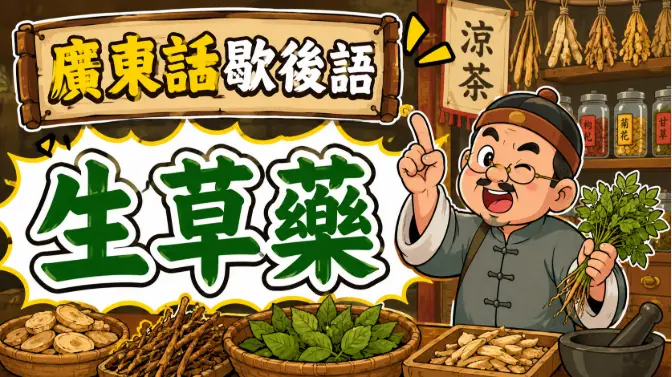
生草藥-噏得就噏 | “Herbal Medicine Talk” — The Cantonese Saying About Talking Nonsense Without Thinkingt|廣東話歇後
「生草藥,噏得就噏」係一句充滿香港草根味道嘅廣東話歇後語,專門形容一啲人講嘢冇根據、隨口亂噏、想到乜就講乜。以前街邊涼茶舖、草藥檔周圍經常聚集一班人吹水聊天,有啲人特別鍾意誇大其詞、亂講偏方,久而久之就演變成呢句生動又幽默嘅俗語。廣東話文化向來重視口才與氣氛,但同時亦好介意一個人講嘢有冇內容、有冇根據,所以「噏得就噏」通常帶有一種調侃意味,用來笑人講說話太隨便,甚至連自己都未必知道講緊乜。
“生草藥,噏得就噏” is a classic Cantonese saying used to describe people who speak carelessly, make things up on the spot, or talk endlessly without facts or logic. The phrase comes from the lively atmosphere of traditional herbal medicine stalls and street-side tea shops in old Hong Kong, where people gathered daily to chat, gossip, and exchange exaggerated stories. Over time, the image of casually discussing herbal remedies became associated with random, unreliable talk. Today, the saying remains a humorous way to criticize those who speak impulsively, bluff confidently, or simply enjoy talking without considering whether their words actually make sense.
「生草藥,噏得就噏」主要係形容一個人講說話冇經過思考,冇根據都照講,甚至有時會亂吹亂作。廣東話入面,「噏」即係隨口講、亂講,而「噏得就噏」更加強調一種毫無顧忌、停唔到口嘅感覺。至於「生草藥」,原本係指未經處理嘅草藥材料,以前民間流傳好多偏方與土法,當中有啲真假難分,所以慢慢演變成一種象徵:有人好似賣草藥咁,隨口就講一大堆聽落似好有道理但其實未必可信嘅內容。呢句歇後語喺日常生活非常常見,尤其用嚟形容「吹水王」、「亂講專家」或者網絡上成日發表未經證實消息嘅人。有時朋友之間互相開玩笑,亦會用呢句話輕鬆吐槽對方。例如有人對所有話題都扮專家,由醫學講到投資,由歷史講到感情,但問深少少就開始前言不對後語,旁邊自然有人會笑一句:「你真係生草藥,噏得就噏。」不過呢句說話未必一定帶惡意,更多時候係帶住一種香港人特有嘅幽默感,用輕鬆方式提醒別人講嘢之前最好諗清楚。
English Version
The saying “生草藥,噏得就噏” refers to people who speak without thinking, invent stories casually, or pretend to know things they actually do not understand. In Cantonese, the word “噏” means rambling, blurting things out, or talking nonsense casually. The phrase creates the image of someone standing at a herbal medicine stall confidently offering random advice whether it is true or not. Historically, herbal remedies and folk cures were often passed around through word of mouth, mixed with exaggeration, superstition, and personal opinion. Because of this cultural background, “生草藥” gradually became symbolic of unreliable talk that sounds convincing on the surface. In modern life, the expression is commonly used to describe gossipers, loud opinionated people, online rumor spreaders, or anyone who speaks too confidently without proper knowledge. Someone may comment on politics, health, finance, relationships, and science all in one conversation despite understanding very little about any of them. Friends often use the saying jokingly to tease each other when someone begins making dramatic claims or talking excessively. Although mildly critical, the phrase is usually delivered with humor rather than hostility. It reflects a common Cantonese social attitude that values practical wisdom and dislikes empty talk without substance.
用法
日常對話入面,「生草藥,噏得就噏」通常用嚟笑一啲講嘢誇張、冇根據或者不停吹水嘅人。例如朋友亂估新聞內容、胡亂分析感情問題,又或者明明唔熟悉某件事卻不停發表意見,就可能被人用呢句話調侃。喺香港文化入面,呢句說話好多時帶住幽默感,所以即使帶批評意味,都未必會令人太尷尬。熟人之間尤其常見,有時甚至變成朋友間互相開玩笑嘅口頭禪。
English Version
This expression is often used jokingly in casual conversations to criticize people who exaggerate, gossip, or pretend to know everything. If someone confidently spreads rumors, gives random advice, or talks endlessly about topics they barely understand, others may laugh and say “生草藥,噏得就噏.” In Cantonese culture, the phrase usually sounds playful rather than harsh, especially among friends and family members. It is commonly used to keep conversations grounded and to tease overly talkative personalities in a lighthearted way.
小故事:
阿明係公司出名嘅「消息王」,無論公司有乜風吹草動,佢永遠第一個話自己收到風。朝早返工,佢會同同事講老闆準備裁員;食晏時,又話公司可能搬去新辦公室;到下午茶時間,甚至連邊個同事拍拖、邊個準備辭職,佢都講到似層層。最搞笑係,阿明每次都講得非常肯定,仲會加句:「我朋友講㗎,百分百真。」起初大家都半信半疑,但時間耐咗之後發現,佢十句有九句都係流料。有次,公司突然傳出高層會大改革,阿明即刻喺茶水間大大聲宣布:「我知晒啦,下個月一定炒好多人!」結果幾日後,公司正式開會,只係宣布換咗新咖啡機同更新冷氣系統。同事阿芬忍唔住笑到拍枱:「阿明,你真係生草藥,噏得就噏!」全場即刻爆笑。阿明雖然有啲尷尬,但仍然死撐話:「我收到嘅消息原本真係咁。」後來大家已經習慣咗,每次阿明開始講「內幕消息」,其他人都會互相對望偷笑。直到有一次,阿明亂傳消息搞到新同事誤會自己被炒,事情鬧大之後,主管終於認真提醒佢:「講嘢要負責任,唔好成日靠估。」自此之後,阿明雖然仲係鍾意吹水,但至少學識咗一樣嘢:有啲說話,唔係諗到就應該講出口。
English Version
Ming was famous in the office for always claiming he had “inside information.” No matter what happened in the company, he acted as though he knew the full story before anyone else. In the morning, he would whisper that layoffs were coming. By lunchtime, he claimed the company was moving to a new office. Later in the afternoon, he would confidently discuss which coworkers were dating or planning to resign. The funniest part was how serious he sounded every time. He always added, “My friend told me — it’s definitely true.” At first, people listened carefully, but after a while they realized most of his stories were completely inaccurate. One week, rumors spread that upper management was planning major changes. Ming immediately stood in the pantry announcing dramatically, “I already know what’s happening. Next month a lot of people will be fired!” Days later, management finally held a meeting. Instead of layoffs, they simply announced a new coffee machine and upgraded air conditioning. Everyone burst into laughter. His coworker May slapped the table and joked, “You really are ‘生草藥,噏得就噏’!” Ming looked embarrassed but still tried defending himself by insisting his source had changed. After that, whenever Ming started talking about “secret information,” people exchanged amused looks instead of believing him. Eventually, however, one of his careless rumors caused a new employee to panic about losing their job. The situation became serious enough that his supervisor warned him directly about spreading irresponsible gossip. From then on, Ming still enjoyed chatting, but he finally understood that not every thought needed to be spoken aloud.
結語
「生草藥,噏得就噏」之所以令人印象深刻,正因為佢講中咗人性入面愛吹水、愛扮知識豐富嘅一面。廣東話文化向來幽默直接,用一句短短歇後語,就可以提醒人講說話之前最好諗清楚。真正有智慧嘅人,未必講得最多,但往往知道幾時應該開口、幾時應該收聲。
English Version
The lasting charm of “生草藥,噏得就噏” lies in how accurately it captures human behavior. People naturally enjoy talking, gossiping, and sounding knowledgeable, yet careless words can easily create misunderstanding or embarrassment. This Cantonese saying humorously reminds us that wisdom is not about talking the most, but about knowing when words truly carry value.