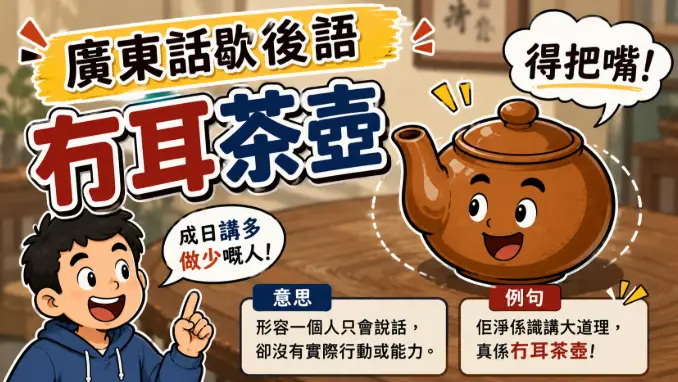
有些人說話滔滔不絕,真正行動時卻總是缺席。《冇耳茶壺:得把嘴》正好形容這種只懂說、不肯做的情況。
Some people speak with confidence and endless promises, yet rarely follow through with action. This Cantonese saying perfectly captures the contrast between empty words and real effort.
中文
「冇耳茶壺:得把嘴」這句廣東話歇後語,以一個缺少茶壺耳柄的茶壺作比喻。茶壺本應靠耳柄方便拿起,但若失去了耳柄,就只剩下壺嘴,看似完整卻失去實際用途。這個形象被引申為形容一個人只會說話、誇口或批評,卻缺乏真正行動力與實際能力。「得把嘴」帶有明顯的批評意味,指出某些人習慣用說話來營造形象,但當真正需要負責、實踐或付出時,卻往往退縮。在日常生活中,這種情況並不少見,例如有人經常提出偉大計劃,卻從不落實;又或者在團隊之中總愛評論別人,自己卻不願參與。這句歇後語提醒人們,真正的價值不在於說得多好,而在於是否能夠付諸行動。說話可以吸引注意,但只有實際成果才能贏得信任與尊重。它同時反映出一種務實文化,重視行動勝於空談。
English Version
This idiom compares a person to a teapot without handles. A teapot is meant to be held and used properly, but without its handles, only the spout remains—visibly intact, yet functionally incomplete. Figuratively, the phrase describes someone who talks a great deal but lacks the ability or willingness to take action. “Only having a mouth” points to people who rely on words, promises, or criticism while avoiding responsibility and real effort. It often carries a mocking or critical tone, especially toward those who present grand ideas without following through. In everyday life, such behavior appears in workplaces, friendships, and group settings, where certain individuals speak confidently but contribute little. The saying reflects a practical mindset that values execution over empty rhetoric. It reminds us that words alone may create impressions, but genuine respect comes from action, commitment, and results.
用法
中文
這句歇後語常用於批評只說不做的人,例如經常誇口卻沒有成果,或只懂批評卻不願參與。語氣可直接亦可帶點玩笑,例如:「佢成日講到天下無敵,其實係冇耳茶壺,得把嘴。」
English Version
This expression is commonly used to criticize people who talk more than they act. It may refer to empty promises, exaggerated confidence, or constant criticism without contribution, often delivered in a humorous or sarcastic tone.
小故事:
中文
阿傑在朋友之中一向口才了得,每次聚會都喜歡分享自己的「大計」。他常說自己準備創業、投資、甚至寫一本書,聽起來充滿理想與抱負。朋友們起初都十分佩服,但時間久了,卻發現他從未真正開始任何事情。有一次,大家一起籌備社區活動,阿傑又主動提出很多建議,講得頭頭是道。然而當真正需要分工與執行時,他卻總以忙碌為理由推辭。活動結束後,一位朋友忍不住笑說:「你真係冇耳茶壺,得把嘴。」阿傑聽後先是一愣,隨後沉默下來。那句話讓他開始反思,原來自己一直停留在說話層面,卻從未真正付出行動。之後,他慢慢改變習慣,少講空話,多做實事。朋友們也發現,他開始變得更可靠。
English Version
Kit was known among his friends for his eloquence. At every gathering, he loved talking about ambitious plans—starting businesses, making investments, even writing a book. His ideas sounded inspiring, and at first, everyone admired his confidence. But over time, they noticed he never actually followed through on any of them. One day, the group organized a community event, and Kit once again enthusiastically shared countless suggestions. Yet when it came time to divide responsibilities and carry out the work, he repeatedly avoided involvement, claiming to be too busy. After the event, a friend jokingly remarked, “You’re all talk and no action.” The comment struck Kit more deeply than expected. For the first time, he realized how often he stayed at the level of words without taking real steps forward. Gradually, he changed his habits—speaking less, doing more. In time, his friends began to see him as someone dependable rather than merely impressive in conversation.
結語
中文
說話容易,行動困難。真正令人信服的,不是聲音有多大,而是實際做了多少。
English Version
Words are easy, but action requires commitment. What truly earns respect is not what we say, but what we accomplish.