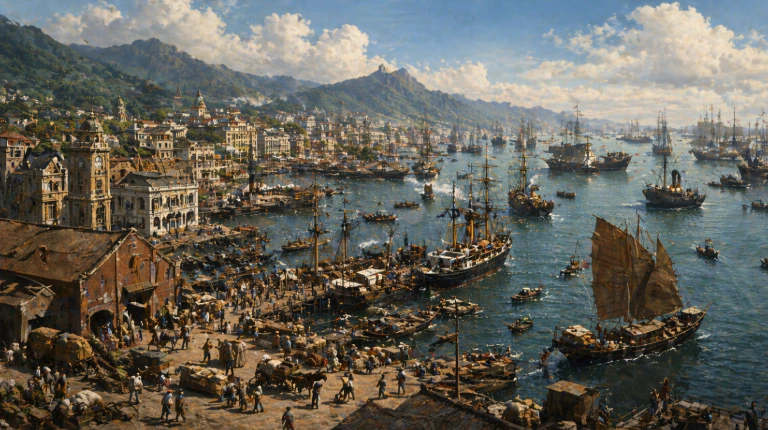
中文:19世紀中後期,香港憑藉自由港政策與地理優勢,迅速崛起為國際貿易與航運中心。
In the late 19th century, Hong Kong’s strategic location and open trade system propelled it into a leading hub of global commerce and shipping.
中文
隨著香港在19世紀中葉逐步完成由戰略據點向殖民地城市的轉型,其發展重心亦開始轉向經濟與貿易領域,最終奠定其作為國際港口的地位。香港能夠迅速崛起,關鍵在於其獨特的地理位置與制度安排。維多利亞港作為天然深水港,不僅水域寬廣且避風條件良好,適合大型遠洋船隻停泊與補給,使香港在航運網絡中佔據重要節點。英國政府在殖民初期即推行自由港政策,取消關稅與貿易限制,使貨物能夠自由進出,這一制度大大提升了香港的競爭力,吸引來自世界各地的商人與企業進駐。與此同時,隨著中國內地局勢動盪,包括戰亂與社會變遷,大量華人移民湧入香港,提供充足勞動力並促進市場需求,進一步推動經濟發展。航運業成為香港經濟的核心支柱之一,無數商船在此停靠、轉運貨物,使香港逐漸成為東西方貿易的重要中轉站。銀行、保險公司及洋行亦相繼設立,形成完善的商業與金融體系,支撐貿易活動的持續擴張。基礎設施建設亦在此期間快速推進,包括碼頭、倉庫、道路及通信設施,使港口運作更加高效。同時,香港在轉口貿易中扮演關鍵角色,將中國商品輸往世界各地,同時引入外國貨物進入中國市場,成為連接內地與國際市場的重要橋樑。這一過程不僅促進經濟繁榮,也塑造了香港多元文化的社會特徵,中西文化在此交匯融合,形成獨特的城市氣質。然而,這種快速發展亦伴隨著挑戰,包括人口過度集中、貧富差距及公共衛生問題,但整體而言,香港仍在全球貿易體系中不斷提升其地位。到了19世紀末至20世紀初,香港已經成為遠東最重要的港口之一,其影響力超越地區,逐步融入全球經濟網絡。香港成為國際港口並非偶然,而是地理優勢、制度設計與歷史機遇共同作用的結果,這一轉型不僅改變了香港的命運,也使其在世界舞台上佔據重要位置,成為理解全球貿易發展與東亞歷史的重要案例。
English Version
As Hong Kong transitioned from a military foothold into a structured colonial settlement during the mid-19th century, its trajectory increasingly shifted toward commerce, eventually establishing it as one of the most influential ports in the world. This transformation was driven by a combination of geographical advantage and deliberate economic policy. The natural harbour, known for its depth, shelter, and accessibility, provided ideal conditions for large ocean-going vessels, allowing Hong Kong to function as a key maritime hub within expanding global trade routes. Equally significant was the implementation of a free port system, which removed tariffs and minimized restrictions on trade, enabling goods to move freely and efficiently. This open environment attracted merchants, investors, and enterprises from across Europe, Asia, and beyond, fostering a dynamic and competitive commercial landscape. At the same time, instability and upheaval in mainland China encouraged waves of migration into Hong Kong, supplying a steady workforce and stimulating local markets. Shipping and logistics quickly became central to the colony’s economy, with countless vessels passing through its waters to load, unload, and redistribute goods across international networks. Financial institutions, including banks and insurance firms, were established to support this growing trade, creating an integrated economic system that linked maritime activity with capital flows. Infrastructure development kept pace with this expansion, as docks, warehouses, roads, and communication systems were constructed to enhance efficiency and accommodate increasing demand. Hong Kong also emerged as a crucial intermediary in re-export trade, channeling Chinese products to global markets while facilitating the import of foreign goods into China, thereby strengthening its role as a bridge between different economic spheres. This rapid rise not only brought prosperity but also contributed to the formation of a culturally diverse society where Eastern and Western influences interacted in complex ways. Challenges such as overcrowding, inequality, and public health concerns accompanied this growth, yet they did not halt the city’s upward trajectory. By the late 19th and early 20th centuries, Hong Kong had secured its place as a leading port in the Far East, deeply embedded within global trade networks. Its emergence as an international harbour was not accidental but the result of strategic positioning, institutional innovation, and historical circumstance, making it a compelling example of how cities can evolve into global economic centers through the interplay of geography and policy.