人生的際遇往往難以預料,得與失之間常常相互交織。「塞翁失馬」這個成語正是從這種變化無常中提煉而來,用簡潔的語言道出命運的轉折與人心的從容。
Life is full of unpredictable turns, where gain and loss often intertwine. The idiom “The old man lost his horse” captures this uncertainty, offering a calm perspective on how misfortune can unexpectedly lead to good fortune.
中文
「塞翁失馬」源自古代邊塞的一則故事,字面意思是邊境的老人失去了馬匹,卻未必是壞事。這個成語後來被用來形容壞事可能轉化為好事,禍與福之間並沒有絕對的界線。它強調的是一種對人生起伏的理解與接受——當事情看似不利時,不必過早下結論,因為未來可能出現意想不到的轉機。在現實生活中,人們常因短暫的失敗或挫折而感到沮喪,但「塞翁失馬」提醒我們,這些經歷或許正是另一種機會的開始。這種思維帶有哲學意味,鼓勵人們以長遠的眼光看待得失,不被一時的結果所左右。它同時也反映出東方文化中對命運與變化的包容態度,認為順境與逆境並非對立,而是相互轉化的過程。
English Version
The idiom “the old man lost his horse” originates from an ancient frontier tale, where what appears to be a misfortune turns out to be a hidden blessing. Over time, it has come to represent the idea that bad luck may lead to good outcomes, and that fortune and misfortune are often intertwined. Rather than reacting immediately to setbacks, the phrase encourages a broader perspective—one that allows time for events to unfold. In everyday life, people often feel discouraged by failure or unexpected loss, but this idiom suggests that such moments may carry unseen opportunities. It promotes patience, resilience, and a deeper understanding of change. Philosophically, it reflects a worldview that embraces uncertainty and transformation, recognizing that circumstances are rarely fixed. What seems negative today may reveal its value tomorrow, making this idiom a powerful reminder to remain open-minded and composed.
小故事:
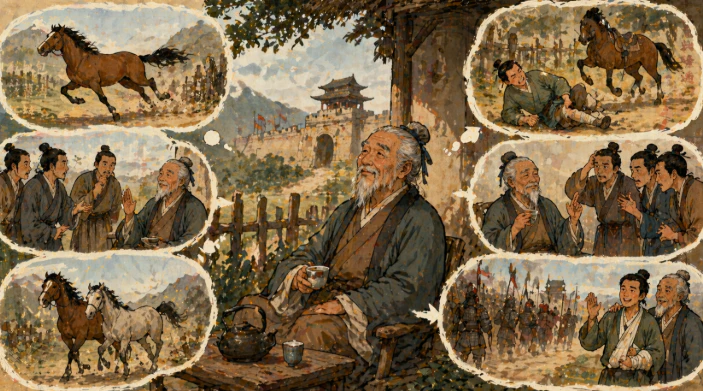
古時邊境有一位老人,家中養著一匹良馬。某天馬突然走失,鄰居們紛紛前來安慰,認為這是不幸之事。然而老人卻平靜地說:「這未必是壞事。」過了幾天,那匹馬竟帶著一匹野馬一起回來,家中反而多了一匹良駒。鄰居們又來祝賀,老人仍淡然回應:「這也未必是好事。」不久後,老人的兒子騎野馬時不慎摔傷,腿部受傷。大家再次感到惋惜,但老人依舊不以為然。後來戰事爆發,村中年輕人多被徵召上戰場,傷亡慘重,唯獨老人的兒子因傷未被徵召,反而保住性命。這一連串的轉折讓人們明白,事情的好壞並非一時可定,而是隨著時間不斷變化。這個故事流傳開來,「塞翁失馬」也成為形容禍福相依的經典成語。
English Version
In an ancient border region, an old man owned a fine horse that suddenly ran away. His neighbors came to console him, believing it to be a misfortune. The old man, however, remained calm and said, “It may not be a bad thing.” A few days later, the horse returned, bringing another wild horse with it. The neighbors congratulated him on his good luck, but he again replied, “It may not be a good thing.” Soon after, his son tried riding the new horse, fell, and injured his leg. Once more, the neighbors expressed sympathy, yet the old man stayed composed. Not long after, a war broke out, and many young men in the village were drafted and lost their lives. Because of his injury, the old man’s son was spared. Through these events, it became clear that fortune and misfortune are not fixed—they evolve over time. This story gave rise to the idiom, illustrating the ever-changing nature of life.
結語
「塞翁失馬」教會我們以平常心面對得失,因為命運的轉折,往往在不經意之間悄然發生。
English Version
“The old man lost his horse” teaches us to face gains and losses with calmness, as life’s turning points often arrive in unexpected ways.