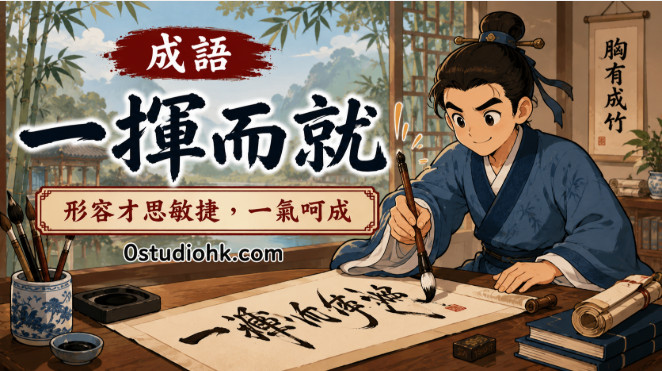
成語「一揮而就」意思與典故:形容才思敏捷,一氣呵成 | The Meaning of “Yi Hui Er Jiu”: Completing a Masterpiece in One Stroke
「一揮而就」是中國廣為流傳的經典成語,用來形容文章、書法、繪畫或作品在極短時間內一氣呵成,毫不拖泥帶水。它不僅讚揚創作者的才華,也反映長年累積實力後自然流露的境界。
English Version
“Yi Hui Er Jiu” is a classic Chinese idiom describing the ability to complete a work smoothly and effortlessly in one continuous attempt. It celebrates both exceptional talent and years of dedicated practice.
「一揮而就」字面意思是「揮筆一次便完成作品」,其中「揮」指揮動筆墨,「就」則表示完成,因此整個成語用來形容創作時文思泉湧、筆勢流暢,一口氣完成作品,毫無停頓。這個成語最初多用於書法和文章創作,後來逐漸延伸到繪畫、音樂、設計、演講等各種創作領域。許多人誤以為「一揮而就」代表輕而易舉,其實真正能夠一氣呵成的人,往往都經歷過長時間的學習與練習。正因為基礎深厚,才能在關鍵時刻自然發揮,展現看似毫不費力的成果。中國歷代不少書法家、文學家都被形容具有「一揮而就」的本領,他們在落筆之前早已胸有成竹,因此寫下的作品氣勢連貫、意境完整。現代社會中,這個成語也常用來形容程式設計、企劃案、藝術創作、音樂演奏等工作,只要經過充分準備,在正式執行時順利完成,都可稱為「一揮而就」。因此,這個成語真正傳達的不是偶然的靈感,而是實力累積與充分準備之後,自然而然展現出的成熟能力。
English Version
The idiom “Yi Hui Er Jiu” literally means “to complete something with a single stroke of the brush.” It describes the ability to finish a piece of writing, calligraphy, painting, or another creative work in one smooth, uninterrupted effort. Although the expression suggests effortless success, its deeper meaning emphasizes mastery achieved through years of preparation. Ancient Chinese scholars believed that true excellence comes from constant learning and disciplined practice. When knowledge and skill become second nature, creativity flows naturally without hesitation. For this reason, many famous calligraphers, poets, and painters were praised as being able to complete masterpieces “in one stroke.” Before touching the brush, they had already organized every idea in their minds. Today, the idiom extends beyond traditional arts. It can describe programmers completing elegant software, designers producing outstanding concepts, musicians delivering flawless performances, or speakers giving inspiring presentations with remarkable confidence. In every case, apparent ease is supported by countless hours of dedication behind the scenes. “Yi Hui Er Jiu” reminds us that smooth execution is rarely accidental. Instead, it is the visible result of invisible effort, careful preparation, and continuous improvement over many years.
小故事:
古時有一位年輕書法家,每天黎明便開始練字,無論酷暑寒冬,從未間斷。剛開始時,他一個字往往要寫上數十遍,仍不滿意,便反覆修改。多年後,城中舉辦大型書法比賽,各地名家齊聚一堂。輪到他時,只見他提起毛筆,凝神片刻,隨即揮毫落紙。整篇作品如行雲流水,字字有力,筆勢連貫,不到一刻鐘便完成。觀眾無不驚嘆,紛紛稱讚他能一揮而就。然而,一位小孩好奇地問:「你怎麼一下子就寫得這麼好?」書法家微笑回答:「你看到的是今天的一揮而就,卻沒有看到我十年的日日練習。」這句話深深打動了在場所有人。最終,他奪得比賽冠軍,但比起獎項,他更希望年輕人明白,真正的天賦來自持續努力,而不是偶然的幸運。後來,人們每當形容有人創作流暢、作品一氣呵成時,都會想起這位書法家的故事,以及「一揮而就」背後所代表的勤奮與實力。
English Version
Long ago, a young calligrapher dreamed of creating works worthy of the greatest masters. Every morning before sunrise, he practiced writing thousands of characters. While others rested during festivals, he quietly continued his training, filling sheet after sheet with careful brushstrokes. At first, even simple characters required endless corrections. Yet he never complained, believing that patience would eventually become skill. Years later, a prestigious calligraphy competition attracted renowned artists from across the country. When his turn arrived, he calmly dipped his brush into ink and paused briefly before beginning. Once the brush touched the paper, every stroke flowed naturally. The characters appeared graceful, balanced, and powerful, forming a magnificent scroll completed without interruption. Spectators applauded in amazement, convinced they had witnessed extraordinary talent. A young child asked how he could finish such a beautiful work so easily. Smiling kindly, the calligrapher answered, “You only saw these few minutes. You did not see the thousands of mornings that came before them.” His words became more memorable than the competition itself. The audience realized that what looked effortless was actually the reward for years of dedication. From then on, people remembered his story whenever they spoke of “Yi Hui Er Jiu,” understanding that true mastery allows preparation and inspiration to unite in a single remarkable moment.
結語
「一揮而就」真正讚揚的不是偶然的靈感,而是厚積薄發的成果。當努力累積到一定程度,創作便能自然流暢、一氣呵成。成功從來不是瞬間出現,而是長年堅持後最美麗的展現。
English Version
“Yi Hui Er Jiu” reminds us that effortless excellence is built upon years of disciplined practice. Behind every masterpiece completed with confidence lies dedication, perseverance, and a commitment to continuous improvement.