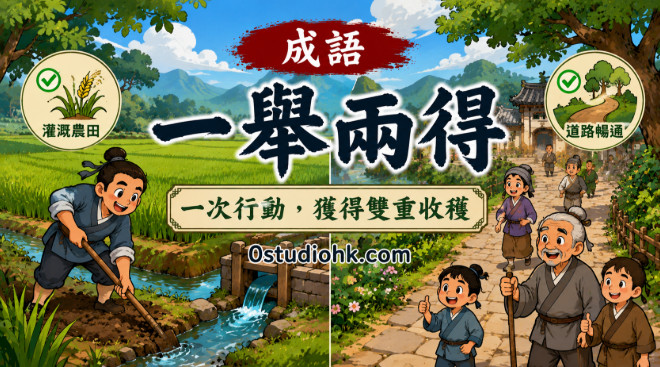
成語「一舉兩得」意思與典故:一次行動,獲得雙重收穫| The Meaning of “Yi Ju Liang De”: Achieving Two Benefits with One Action

「一舉兩得」是中國最常使用的成語之一,用來形容只需一次行動,便能同時獲得兩項好處或達成兩個目標。它展現了智慧、效率與善用資源的思維,因此無論在工作、生活或學習中,都具有重要的啟發意義。
English Version
“Yi Ju Liang De” is a popular Chinese idiom describing a situation where one action produces two valuable results. It highlights efficiency, smart planning, and the ability to maximize benefits through thoughtful decisions.
「一舉兩得」字面意思是「一次行動,得到兩種收穫」,其中「一舉」表示一次行動或一次努力,「兩得」則代表同時獲得兩項利益。因此,整個成語用來形容用最少的成本、最有效的方法,完成兩個甚至更多目標。這個成語自古以來便廣泛應用於軍事、政治、經商以及日常生活之中。例如古代將領若一次出兵便同時平定叛亂並擴大疆土,便可說是「一舉兩得」;現代社會中,一次出差順便拜訪客戶、一邊運動一邊欣賞自然風景、閱讀外語書籍同時提升語言能力與專業知識,都可以使用這個成語來形容。它所強調的不只是結果,更是一種善於規劃、提高效率的思考方式。不過,「一舉兩得」並非投機取巧,而是在充分考慮各種因素後,找到兼顧不同目標的最佳方案。因此,它經常被用來稱讚有遠見、善於安排的人。這個成語提醒我們,做事若能多思考一步、善用有限資源,就有機會創造更大的價值,也讓人生更加有效率。
English Version
The idiom “Yi Ju Liang De” literally means “one action brings two gains.” It describes situations where a single effort successfully achieves two worthwhile objectives. The expression has long been used in Chinese culture to praise intelligent planning, efficient execution, and thoughtful decision-making. Historically, it appeared in discussions of military strategy, diplomacy, and government, where one carefully planned action could solve multiple problems at once. Today, its application is much broader. A student may improve language skills while studying history through foreign books. A business traveler may strengthen client relationships while exploring new markets. Someone exercising outdoors may improve physical health while reducing stress. In each case, one activity creates multiple positive outcomes. The idiom does not encourage taking shortcuts or seeking effortless rewards. Instead, it values preparation, creativity, and the ability to recognize opportunities that benefit more than one goal simultaneously. Modern organizations often describe efficient management or innovative solutions as examples of “Yi Ju Liang De.” Whether in education, business, science, or everyday life, the expression reminds us that careful planning often produces results beyond our original expectations. By thinking strategically and making wise choices, people can achieve greater success while using fewer resources, making this idiom timeless and highly relevant.
小故事:
從前有一位年輕農夫,每天都要挑著沉重的水桶到河邊取水灌溉農田,既費力又耗費大量時間。有一天,他發現河流旁長滿了雜草,不但阻礙水流,也影響村民通行。於是,他想到一個方法,帶著村民一起清理河道,並順便挖掘一條引水小渠,把河水直接引到農田。幾天後,不但農田獲得穩定水源,村民出入也更加方便,河流變得乾淨整潔,大家都十分高興。村長稱讚年輕農夫說:「你這次真是一舉兩得,不,甚至是一舉多得。」農夫笑著回答:「只要多想一步,就可能讓更多人受益。」這句話很快在村裡流傳開來。後來,每當有人提出既節省時間又能同時解決多個問題的方法時,大家都會想起這位農夫的故事,也更加理解「一舉兩得」真正代表的不只是得到兩份成果,而是用智慧創造更大的價值。
English Version
Long ago, a young farmer spent hours every day carrying heavy buckets of water from a nearby river to his fields. The work was exhausting, leaving him little time for anything else. One morning, he noticed that the riverbank had become overgrown with weeds, making it difficult for villagers to walk along the path. Instead of simply clearing the path, he proposed a better idea. Working together with his neighbors, they removed the weeds and built a small irrigation channel that directed fresh river water toward the surrounding farmland. Within days, crops received a steady water supply, villagers enjoyed a cleaner and safer pathway, and the river flowed more smoothly than before. Everyone praised the young farmer’s clever thinking. The village elder smiled and said, “With one effort, you achieved two great benefits.” The farmer humbly replied, “When we think beyond the obvious solution, everyone can gain something.” His idea soon became a favorite example shared throughout the region. Future generations remembered that the best solutions often solve more than one problem at the same time. The story illustrates that wisdom lies not in working harder alone, but in working thoughtfully so that a single action creates lasting value for many people.
結語
「一舉兩得」提醒我們,成功不只是努力,更需要智慧與規劃。當我們願意多思考、多觀察,就有機會用一次行動創造更多成果,讓有限的資源發揮最大的價值,這正是這個成語歷久不衰的原因。
English Version
“Yi Ju Liang De” teaches that true efficiency comes from thoughtful planning rather than luck. By making wise decisions and recognizing opportunities, one meaningful action can create multiple lasting benefits for ourselves and those around us.