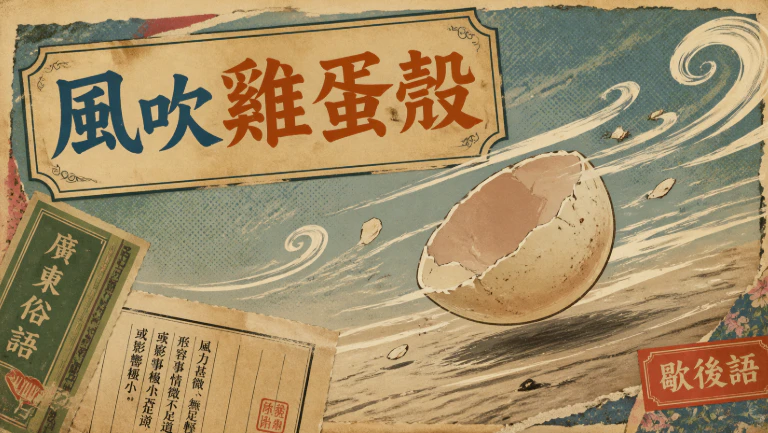
廣東話歇後語不只諷刺人性,也蘊含處世哲學。「風吹雞蛋殼」這句說話,看似輕描淡寫,卻帶出一種看淡得失的心境。雞蛋殼隨風而去,象徵失去,而背後一句「財散人安落」,更點出真正重要的價值所在。
Cantonese allegorical sayings are not only witty but often deeply philosophical. “Eggshells blown by the wind” evokes a gentle yet powerful image of loss. What follows—“wealth scattered, people at peace”—reveals a perspective that values well-being over material gain.
意思
「風吹雞蛋殼:財散人安落」這句歇後語,核心在於對得失的看法。雞蛋殼本來脆弱,一經風吹便四散無蹤,象徵財物的流失或意外的損失。而「財散人安落」則帶出一種豁達態度,指出只要人平安無事,金錢的得失其實可以看得較輕。這種思想在傳統文化中十分常見,強調「留得青山在,不怕沒柴燒」,亦提醒人們不要過分執著於物質。現實生活中,無論是投資失利、生意虧損,還是突如其來的開支,都可能讓人感到沮喪,但若能從這句歇後語中體會其精神,便會明白,真正重要的是人身安全與內心安穩,而不是短暫的財富。這句話同時也帶有安慰意味,常用於事情已經發生、無法挽回之時,用來勸人放下執念,重新出發。它不鼓勵消極,而是提倡一種面對現實後的釋然與堅強。
English Version
The saying “eggshells blown by the wind: wealth gone, people safe” centers on perspective in the face of loss. Eggshells are fragile and easily scattered, symbolizing how material possessions can disappear unexpectedly. The second part emphasizes a calm acceptance—if people remain safe and well, then financial loss is not the end of the world. This reflects a long-standing cultural value that prioritizes well-being over wealth. In real life, losses can come in many forms: failed investments, business setbacks, or sudden expenses. While these can be discouraging, the saying encourages a broader view. What truly matters is personal safety and peace of mind, not temporary financial status. It is often used as a form of comfort when something irreversible has occurred, helping people let go and move forward. Rather than promoting passivity, it advocates resilience and emotional balance after accepting reality.
用法
這句歇後語多用於安慰他人或自我開解。例如當有人因金錢損失而感到失落時,可以說「風吹雞蛋殼,財散人安落」。語氣溫和,帶有理解與釋懷的意味,適合用於朋友之間或生活對話中。
English Version
This saying is often used to comfort others or oneself. When someone feels upset about financial loss, one might say, “Eggshells blown by the wind—at least everyone is safe.” The tone is gentle and reassuring, making it suitable for everyday conversations and supportive moments among friends.
小故事:
阿玲經營小店多年,某天因突發事故導致店鋪損失慘重,存貨幾乎全毀。她一開始非常沮喪,覺得多年的努力付諸流水,甚至懷疑自己是否應該繼續下去。朋友前來探望,看到她情緒低落,便輕聲說:「風吹雞蛋殼,財散人安落。」阿玲一愣,隨後慢慢冷靜下來。她回想起事故當時,雖然損失巨大,但自己和員工都平安無事,這已經是不幸中的大幸。幾天後,她重新整理心情,開始計劃重開店鋪,並從中吸取教訓。經過一段時間努力,小店逐漸恢復生意,甚至比以往更加穩定。這次經歷讓她明白,財富可以再賺,但人若平安,才有機會重新開始。
English Version
Ling had run her small shop for years when a sudden accident caused severe damage, destroying most of her inventory. At first, she was devastated, feeling that all her hard work had been wasted. She even questioned whether she should continue. A friend visited her and, seeing her distress, gently said, “Eggshells blown by the wind—wealth gone, but people are safe.” Ling paused and slowly calmed down. She realized that despite the heavy losses, both she and her staff were unharmed. That alone was a blessing. In the days that followed, she regained her focus, reorganized her plans, and began rebuilding her business. Over time, the shop recovered and became even more stable than before. The experience taught her a valuable lesson: money can be earned again, but safety and life are what truly matter.
結語
「風吹雞蛋殼」提醒我們,看淡得失並非放棄,而是一種更成熟的選擇。當人平安,便仍有無限可能。
English Version
“Eggshells blown by the wind” reminds us that letting go of loss is not giving up—it is a wiser choice. As long as we are safe, there are always new possibilities ahead.