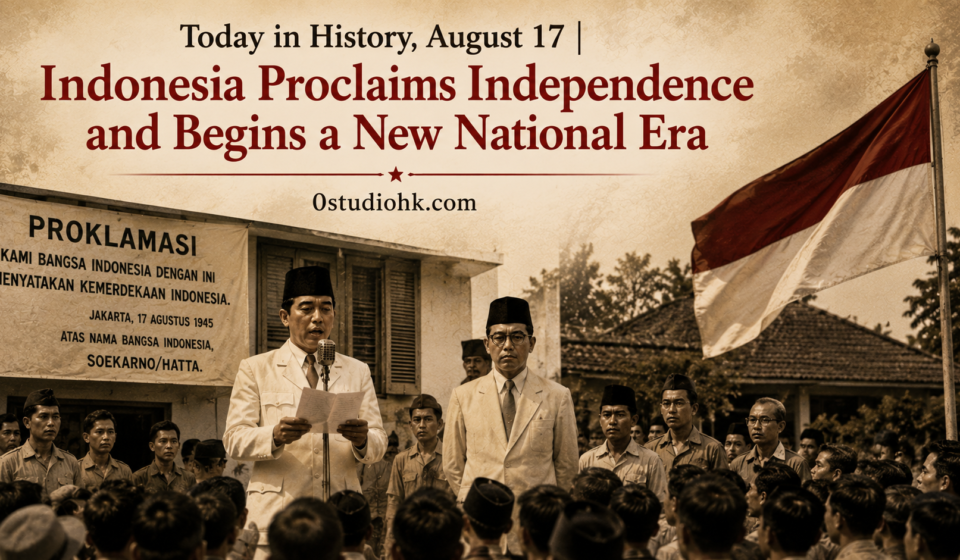
🎵 8月17日今日歷史|印尼宣布獨立,民族自由之路正式展開 | Today in History, August 17 | Indonesia Proclaims Independence and Begins a New National Era
1945年8月17日,蘇卡諾與穆罕默德・哈達在雅加達宣讀《印度尼西亞獨立宣言》,正式宣布印尼脫離殖民統治,建立獨立國家。這一天成為印尼現代史最重要的轉折點之一,也揭開戰後民族獨立運動的新篇章。
On August 17, 1945, Sukarno and Mohammad Hatta proclaimed Indonesia’s independence in Jakarta, declaring a new national future after years of colonial rule and wartime occupation. The announcement became a defining moment in Indonesian history and an important milestone in Asia’s wider movement toward national independence.
中文版本
1945年8月17日,印度尼西亞迎來改變國家命運的一天。蘇卡諾(Soekarno)與穆罕默德・哈達(Mohammad Hatta)在雅加達宣讀獨立宣言,宣布印度尼西亞成為一個獨立國家。這項宣告並不是突然出現的政治決定,而是長期民族主義運動、殖民統治、第二次世界大戰以及日本佔領等多重歷史力量交織後形成的結果。對印尼人民而言,8月17日代表的不只是政權更替,更象徵一個民族開始以自己的名義決定國家的未來。印度尼西亞群島在歐洲殖民時代長期受到荷蘭勢力控制,荷蘭東印度殖民地逐漸形成一套以殖民經濟為核心的政治與社會制度。20世紀初,印尼民族主義開始逐步發展,不同地區、宗教、社群與政治團體開始思考一個更廣泛的「印度尼西亞」共同身份。民族主義者逐漸提出自治、團結以及最終獨立的理想,而這種思想在年輕一代之間尤其具有影響力。第二次世界大戰改變了這個原有的殖民秩序。1942年,日本軍隊進入並佔領荷屬東印度,荷蘭殖民政府的統治迅速瓦解。日本佔領雖然同樣帶來嚴格控制、戰爭動員及人民生活困苦,但殖民統治的突然中斷也改變了印尼民族主義者所面對的政治環境。部分印尼領導人開始利用新的政治空間推動民族意識,同時也在戰爭年代累積組織與動員經驗。1945年,戰爭局勢急劇轉變。歐洲戰場已經結束,日本在太平洋戰場亦逐步陷入絕境。1945年8月15日,日本宣布接受盟軍提出的投降條件,第二次世界大戰在亞洲的最後階段開始走向終結。對印尼民族主義者而言,日本投降同時造成一個前所未有的政治真空:日本的統治即將消失,而荷蘭是否會重新返回殖民地則成為迫切問題。印尼年輕民族主義者認為,這正是宣布獨立的關鍵時刻,如果等待外來勢力重新建立統治,印尼爭取自主的機會可能再次消失。因此,1945年8月前後,印尼政治領袖與青年民族主義者之間出現緊張討論。青年一代希望立即宣布獨立,而部分年長政治領袖則希望更加審慎地處理局勢。這場政治角力最終促成8月17日的獨立宣言。8月16日前後,蘇卡諾與哈達曾被青年活動人士帶到雅加達以外的Rengasdengklok,希望迫使兩人盡快宣布獨立。這段事件反映出當時政治環境的緊張,也顯示青年一代已經不願再等待殖民或軍事勢力決定印尼的未來。經過協商後,蘇卡諾與哈達返回雅加達,獨立宣言的準備工作隨即加快。最終,1945年8月17日上午,蘇卡諾在雅加達Pengangsaan Timur 56號宣讀獨立宣言,哈達亦在場共同見證。印尼外交部資料指出,這項宣告由蘇卡諾與哈達代表印尼人民作出,並透過秘密廣播方式傳播,使全國不同地區的人民逐漸得知獨立消息。 獨立宣言本身文字並不冗長,但歷史意義極其重大。它以簡潔方式宣布印尼民族的獨立,並指出與獨立有關的權力移交及其他事項將以有秩序的方式處理。這種簡潔的文字背後,卻代表一個長期受到殖民統治的社會正式提出國家主權主張。獨立宣言之後,印尼並沒有立即得到所有國家的承認,也沒有因此馬上進入完全和平的狀態。相反,獨立之後的印尼仍然面對非常複雜的政治與軍事局勢。日本軍隊仍然存在,盟軍開始進入東南亞,而荷蘭亦希望恢復其在印尼的殖民利益。於是,宣布獨立只是第一步,真正建立一個可以運作的共和國以及爭取國際承認,才是接下來更艱巨的任務。1945年8月17日成立的獨立印尼,很快便開始建立政府機構、行政制度與國家象徵。蘇卡諾成為新共和國的重要領導人物,哈達則成為另一位核心政治人物。兩人的合作成為印尼建國早期的重要象徵,而獨立宣言也逐漸成為國家歷史與民族身份的重要核心。 從更大的亞洲歷史角度來看,印尼獨立宣言也具有超越印尼本身的重要意義。第二次世界大戰削弱了歐洲殖民列強的力量,亞洲各地的民族主義運動開始尋找新的政治道路。印尼的獨立宣告與越南、印度及其他亞洲地區的民族獨立運動一起,成為戰後亞洲政治秩序轉變的一部分。殖民地並不再只是由歐洲列強決定命運的土地,而開始出現越來越多要求自主、主權與民族國家地位的聲音。印尼後來經歷了漫長而艱苦的獨立戰爭與外交鬥爭,最終逐步取得國際上的主權承認。這說明1945年8月17日雖然是一個具有象徵性的宣告日,但真正的建國道路仍然充滿挑戰。獨立需要政治組織、軍事力量、外交努力以及人民的長期支持,而不是一份宣言便可以完成。今天回望8月17日,我們看到的不只是蘇卡諾站在雅加達宣讀獨立宣言的一個歷史畫面,而是一個民族在世界秩序劇烈改變之際抓住機會、提出自身政治主張的時刻。日本投降為印尼帶來了一個短暫而關鍵的政治窗口,而民族主義者則把握這個窗口,將長期存在的獨立理想轉化成國家宣言。對現代印度尼西亞而言,8月17日因此不只是歷史日期,更是國家身份的重要象徵。每年印尼在這一天舉行國慶活動、升旗儀式與各種紀念活動,都是對1945年那個決定性時刻的回望。 更重要的是,這段歷史提醒我們,國家的誕生往往不是單一人物或單一事件造成,而是由長期社會變化、民族意識、政治選擇以及國際局勢共同形成。1945年8月17日的印尼獨立宣言,正是這些力量在特殊歷史時刻交會後留下的結果。從殖民地到共和國,從戰爭佔領到民族自主,印尼在這一天踏出了屬於自己的新一步,而這一步也成為20世紀亞洲歷史的重要篇章。
[audiobook title=”8月17日今日歷史” src=”https://pub-0d950852c1b24118b76198710040037c.r2.dev/wp-content/uploads/2026/08/August_17_out.mp3″]
English Version
August 17, 1945, marked a decisive turning point in the history of Indonesia. On that morning in Jakarta, Sukarno and Mohammad Hatta proclaimed the independence of Indonesia, declaring that the people of the archipelago would no longer accept a future determined by foreign colonial powers. The proclamation was brief, but its political meaning was enormous. It represented the culmination of decades of growing nationalism and came at a moment when the international order was being dramatically reshaped by the end of the Second World War. Indonesia had been part of the Dutch colonial world for generations. Under Dutch rule, the territory was governed as the Dutch East Indies, with an economy and political system designed largely around colonial interests. During the early twentieth century, however, Indonesian nationalism began to develop more strongly. Political organisations, intellectuals, students and younger activists increasingly imagined a broader national identity that could unite the many peoples and islands of the archipelago. The idea of Indonesia as a nation gradually became more powerful, and independence became an increasingly important political goal. The Second World War transformed this situation. In 1942, Japanese forces invaded the Dutch East Indies, and Dutch colonial authority collapsed. Japanese occupation brought severe restrictions, wartime mobilisation and hardship, but it also disrupted the old colonial political structure. Indonesian nationalist leaders found themselves operating in a completely different environment, while many young activists gained organisational and political experience during the occupation. As the war moved toward its conclusion in 1945, the possibility of a major political transformation became increasingly obvious. Germany had surrendered in Europe, while Japan was facing overwhelming military pressure in the Pacific and Asia. On August 15, 1945, Japan announced its acceptance of the Allied surrender terms. For Indonesian nationalists, the Japanese surrender created both uncertainty and opportunity. The Japanese occupation was ending, but the future of the territory was unclear. Dutch forces might eventually return, potentially restoring colonial rule. For activists who had spent years advocating national independence, waiting for another foreign power to determine the next stage was unacceptable. The political situation therefore became increasingly tense during the middle of August. Younger Indonesian nationalists pushed Sukarno and Hatta to proclaim independence immediately. Some older leaders preferred a more cautious approach because the military and political situation remained extremely uncertain. The disagreement reflected a larger question: should independence be declared at once by Indonesian leaders, or should they wait for a more controlled political transition? On August 16, a group of young activists took Sukarno and Hatta to Rengasdengklok outside Jakarta in an attempt to pressure them into declaring independence. The episode demonstrated how strongly the younger generation believed that the moment had arrived. After negotiations, Sukarno and Hatta returned to Jakarta, and preparations for the proclamation moved forward. During the night, Indonesian leaders worked on the text that would become the declaration. The following morning, August 17, Sukarno read the proclamation at 56 Pengangsaan Timur Street in Jakarta, with Mohammad Hatta beside him. The event was relatively simple compared with the enormous historical consequences that followed. There was no grand international ceremony and no established independent state apparatus waiting to take over. Instead, the declaration was a direct assertion that Indonesia was now an independent nation. Indonesian government sources record that Sukarno and Hatta proclaimed independence on behalf of the Indonesian people, and that the news was spread through a secret broadcast from a captured Japanese radio station in Jakarta, allowing the message to reach people in different parts of the country. The declaration itself was short and practical in tone. It announced Indonesian independence and stated that matters concerning the transfer of power would be handled in an orderly manner. Yet the simplicity of the text concealed the enormous political challenge ahead. Declaring independence was one thing; creating a functioning sovereign state was another. The Japanese military was still present in Indonesia, Allied forces were entering the region, and the Dutch intended to restore their colonial influence. The proclamation therefore represented the beginning of a difficult process rather than the immediate end of conflict. In the days and weeks that followed, Indonesian nationalists began building the institutions of the new republic. Government structures had to be organised, political authority had to be established, and the idea of a unified Indonesian state had to be transformed from a nationalist aspiration into a functioning reality. Sukarno and Hatta became the central figures of the new republic, and their partnership became one of the defining symbols of Indonesia’s early national history. The struggle for independence did not end on August 17. Indonesia faced military confrontations, political uncertainty and a major diplomatic challenge as it sought international recognition. Dutch attempts to return and restore colonial control led to further conflict. Indonesian leaders therefore had to combine political organisation, armed resistance and international diplomacy. Independence was ultimately a process that required years of effort after the original proclamation. This distinction is important when remembering August 17. The date represents the declaration of independence, but the achievement of internationally recognised sovereignty involved a much longer struggle. The Indonesian experience was also part of a much wider transformation taking place across Asia after the Second World War. European colonial powers had been weakened by years of global conflict, while nationalist movements throughout Asia were demanding greater political independence. Indonesia’s proclamation belonged to the same broad historical movement that would reshape countries across the region. The end of the war created opportunities for new political states to emerge, while older colonial systems increasingly faced challenges from organised nationalist movements. Indonesia’s declaration therefore became significant not only for its own people but also as part of the wider history of decolonisation. The symbolism of August 17 has remained central to Indonesian national identity. Every year, Indonesia celebrates Independence Day with flag-raising ceremonies, public events and national commemorations. These traditions connect modern Indonesians with the moment in 1945 when their leaders publicly declared a new national future. Official Indonesian diplomatic materials continue to describe August 17, 1945, as the date when the country proclaimed its independence, while historical collections maintained by Indonesia’s Ministry of Foreign Affairs preserve accounts and firsthand writings concerning the events surrounding the proclamation. Looking back at the proclamation today, it is tempting to see August 17 as a single dramatic moment when independence suddenly appeared. In reality, it was the product of a much longer historical process. National identity had developed over decades, colonial rule had created resistance, the Japanese occupation had transformed the political environment, and the final days of the Second World War created an extraordinary opening. Indonesian leaders and activists recognised that opening and acted before another colonial power could determine the country’s future. The story of August 17 is therefore also a story about timing. Political opportunities can appear suddenly, but recognising and using them often depends on years of preparation. The Indonesian proclamation demonstrated how a national movement could transform a moment of international crisis into a declaration of sovereignty. It also showed that independence requires more than words. Once the declaration had been made, Indonesians still had to defend their political achievement, establish institutions and persuade the wider world to recognise the new republic. That difficult work formed the next chapter of the nation’s history. August 17, 1945, nevertheless remains the symbolic foundation of modern Indonesia. It marks the moment when the country’s independence was publicly declared and when the idea of Indonesia as a sovereign nation entered a new stage. From the perspective of world history, it stands as one of the major milestones in the post-war transformation of Asia and the decline of European colonial rule. From the perspective of the Indonesian people, it represents something even more fundamental: the moment when a long-held aspiration was turned into a national declaration. More than eight decades later, the proclamation continues to shape how Indonesia remembers its past and understands its national identity. The simple act of reading a short declaration in Jakarta became the beginning of a much larger historical journey. August 17 is therefore remembered not simply as the day Indonesia announced independence, but as the moment when a people claimed the right to determine their own future.
總結
1945年8月17日,蘇卡諾與哈達在雅加達宣布印尼獨立。這份簡短宣言開啟建國與爭取主權的新階段,也成為戰後亞洲民族獨立的重要歷史象徵。
English
On August 17, 1945, Sukarno and Hatta proclaimed Indonesia’s independence in Jakarta. Their declaration began a difficult journey toward sovereignty and became a lasting symbol of Asia’s post-war struggle for national independence.