三國演義第一百零五回:姜維承遺志北伐,蜀漢孤軍續國運 | Romance of the Three Kingdoms Chapter 105: Jiang Wei Inherits Zhuge Liang’s Dream and Continues Shu’s Northern Campaigns
諸葛亮殞落五丈原後,蜀漢失去了最重要的支柱。然而,北伐的理想並未隨著孔明離去而熄滅。年輕將領姜維肩負恩師遺志,接過復興漢室的重任,帶領孤立於西南的蜀漢,繼續踏上漫長而艱辛的北伐之路。
The death of Zhuge Liang marked the end of an extraordinary era, but not the end of Shu Han’s ambitions. Inspired by his mentor’s lifelong devotion, Jiang Wei accepted the responsibility of continuing the Northern Expeditions. Standing against the far larger state of Wei, he carried both the hopes of Shu and the unfinished dream of restoring the Han dynasty.
中文
五丈原的大軍,終於回到了漢中。
然而回來的,不再是昔日意氣風發的北伐軍。
每一面旌旗,都低垂無聲。
每一名將士,都神情沉重。
軍隊雖然平安撤回。
但所有人都知道。
真正失去的,是無法取代的人。
成都朝廷收到噩耗。
後主劉禪久久沒有說話。
滿朝文武皆低頭落淚。
一代名相,就此離開人世。
蜀漢失去了最重要的支柱。
然而國家不能停止運轉。
北方魏國依舊虎視眈眈。
朝廷開始重新安排軍政。
費禕主持朝政。
蔣琬統籌國務。
而軍中,所有人的目光,都落在一位年輕將領身上。
姜維。
這位曾經追隨諸葛亮多年的弟子,如今已成為蜀軍最重要的將領。
他靜靜站在孔明靈前。
久久沒有說話。
眼前浮現的,是恩師昔日教導兵法的情景。
從第一次請教軍略,到一次次隨軍北伐。
孔明不僅教會他如何用兵。
更教會他何謂忠義。
姜維緩緩跪下。
向靈位深深叩首。
「丞相未竟之志。」
「末將願繼續完成。」
一句誓言。
沒有豪言壯語。
卻重若千鈞。
自此之後。
姜維每日巡視軍營。
重新整理軍紀。
訓練士兵。
研究地形。
檢視糧草。
他幾乎按照孔明留下的方法,一步一步延續北伐準備。
不少老將望著姜維。
都看見了昔日孔明的影子。
然而他們也知道。
姜維所面對的局勢,比孔明更加艱難。
蜀漢國力逐漸衰弱。
人口有限。
糧草不足。
朝廷內部,也開始出現不同聲音。
有人主張固守蜀地。
有人認為不應再耗費國力北伐。
姜維卻始終沒有改變信念。
他明白。
若停止北伐。
魏國終有一天會南下。
蜀漢將失去最後的主動。
因此。
即使孤軍奮戰。
即使前路艱險。
他依然選擇向北。
另一邊。
洛陽。
司馬懿也收到消息。
「姜維已接掌蜀軍。」
有人輕視地說:
「不過一介年輕將領。」
司馬懿卻輕輕搖頭。
「孔明所選之人。」
「不可小覷。」
這句話。
既是對姜維的提醒。
也是對孔明眼光的敬佩。
多年後。
蜀軍再次整裝。
戰鼓再次響起。
站在軍陣最前方的人。
已不再是羽扇綸巾的諸葛亮。
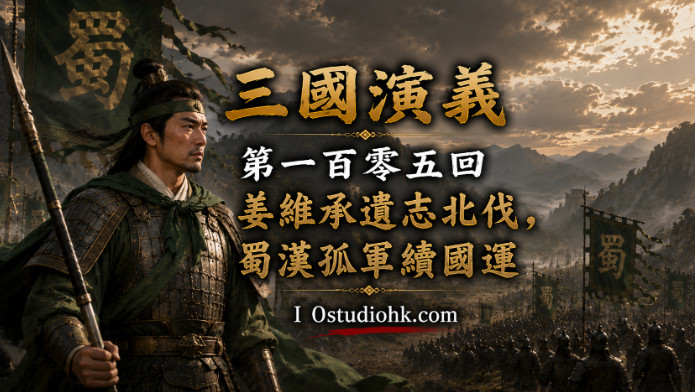
而是手握長槍、目光堅毅的姜維。
他知道。
自己或許永遠無法超越恩師。
但他願意走完恩師沒有走完的路。
秦嶺依舊高聳。
漢水依舊奔流。
北伐的道路依舊漫長。
然而。
只要蜀漢仍然存在。
復興漢室的理想,便不會停止。
姜維望向北方。
緩緩舉起長劍。
蜀軍全軍齊聲高呼。
新的時代。
正式開始。
English Version
The army that returned from Wuzhang Plains was no longer the same.
Though the soldiers had survived, the heart of the army had been left behind.
Every banner hung lower than before.
Every officer carried silent grief.
The news of Zhuge Liang’s death soon reached Chengdu.
The imperial court fell into mourning.
Emperor Liu Shan remained speechless as ministers lowered their heads in sorrow.
The kingdom had lost not only its Chancellor but also the man who had guided Shu Han for decades.
Yet the affairs of the state could not stop.
Wei still stood beyond the northern mountains.
The government quickly reorganized its leadership.
Fei Yi continued managing state affairs.
Jiang Wan supervised administration.
Within the army, however, everyone’s attention turned toward one man.
Jiang Wei.
For years he had served beside Zhuge Liang, learning strategy, leadership, and discipline from his mentor.
Standing before Zhuge Liang’s memorial, Jiang Wei remained silent for a long time.
Memories flooded his mind.
Lessons beside campaign maps.
Long marches through mountain passes.
Conversations deep into the night.
His teacher had taught him far more than military tactics.
He had taught him loyalty.
Kneeling before the memorial, Jiang Wei bowed deeply.
“My Lord Chancellor…”
“I shall continue the work you could not finish.”
It was not a dramatic declaration.
It was a lifelong promise.
From that day forward, Jiang Wei devoted himself completely to rebuilding the army.
He inspected the camps every morning.
He strengthened military discipline.
He reviewed supplies.
He trained younger officers.
Whenever possible, he followed the principles Zhuge Liang had established during the Northern Expeditions.
Veteran commanders often saw traces of their late Chancellor in Jiang Wei’s dedication.
Yet they also understood the difficulties before him.
Shu Han had grown weaker.
Its population was limited.
Its resources were stretched thin.
Even within the court, disagreement increased.
Some ministers argued that Shu should abandon offensive campaigns and defend its borders instead.
Jiang Wei respectfully listened.
But his conviction never changed.
He believed that once Shu abandoned the initiative, Wei would eventually launch its own invasion.
For him, continuing the Northern Expeditions was not merely an ambition.
It was the only path left.
Far away in Luoyang, Sima Yi also learned that Jiang Wei had assumed military leadership.
Some Wei officers dismissed the young general.
Sima Yi did not.
“Zhuge Liang chose him.”
“That alone deserves respect.”
His words reflected both caution and admiration.
Time moved forward.
Eventually, the Shu army marched north once again.
At its head no longer stood the familiar figure with a feather fan.
Instead, Jiang Wei led the soldiers with spear in hand and unwavering determination.
He knew he could never replace his teacher.
But he could continue walking the road Zhuge Liang had begun.
The Qin Mountains still divided the kingdoms.
The Han River continued to flow.
The road north remained long and uncertain.
Yet as long as Shu Han endured, so too would the dream of restoring the Han dynasty.
Raising his sword toward the northern horizon, Jiang Wei led the army forward.
A new chapter had begun.