
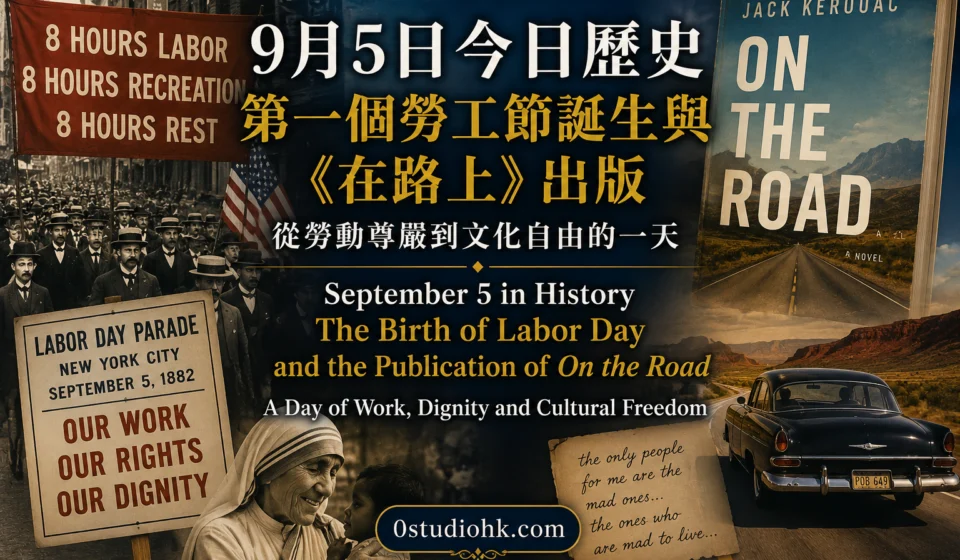
9月5日今日歷史|第一個勞工節誕生與《在路上》出版|從勞動尊嚴到文化自由的一天|September 5 in History|The Birth of Labor Day and the Publication of On the Road|A Day of Work, Dignity and Cultural Freedom

中文:9月5日見證勞工爭取尊嚴、文學改變世代,以及慈善精神影響世界的不同歷史足跡。
English:September 5 brings together the history of workers’ rights, influential literature and a life devoted to helping people in need.
中文版本
9月5日是一個能夠從日常生活角度重新理解歷史的日子,當中最值得注意的事件之一,是1882年美國第一次勞工節慶祝活動在紐約舉行。當時美國正處於工業快速發展時期,大量工人每天長時間工作,而工資、工作環境及勞工保障仍然存在許多問題。1882年9月5日,紐約中央勞工聯盟(Central Labor Union)組織了美國第一次有記錄的勞工節遊行,工人聚集在曼哈頓街頭,以遊行、演講及聚會的方式表達對勞動者的重視。美國勞工部指出,第一個勞工節假日在1882年9月5日於紐約市舉行,而這一天後來逐漸發展成為每年9月第一個星期一的全國性假日。 當年的活動其實並不是一場完全輕鬆的節慶。清晨已有大量市民聚集觀看,警方亦擔心人群可能出現騷亂而加強戒備。遊行開始時,參與者人數並不如預期,甚至一度令人擔心活動會失敗,但最終仍然完成了遊行。這場活動的重要性並不在於規模有多大,而在於它公開肯定了工人的價值,也讓改善工作條件、合理工資及勞工權益逐漸成為公共討論的一部分。美國國家公園管理局亦指出,1882年9月5日的紐約聯合廣場是美國第一次有記錄的勞工節遊行地點,而當時勞工聚會與爭取更好的工作條件、工資及就業保障已經成為紐約城市生活的一部分。 今天很多人把勞工節理解為一個休息日,但它背後其實是一段關於普通勞動者如何逐漸獲得社會認同的歷史。無論是工廠工人、建築工人、運輸從業員、店員還是辦公室職員,現代社會每天運作所依靠的,都是無數人的勞動。9月5日因此不只是勞工節的歷史日期,也提醒我們,一個城市的繁榮並不是由少數人單獨創造,而是由大量不同工作崗位共同支撐。到了1957年9月5日,歷史的焦點由勞動轉向文學。美國作家傑克・凱魯亞克(Jack Kerouac)的小說《在路上》(On the Road)正式出版。這本小說以公路旅程、友情、自由及尋找人生方向為核心,描寫年輕人離開熟悉環境、踏上旅途並尋找自己位置的故事。作品出版後,很快成為美國文學及文化史上一部具有代表性的作品,並與Beat Generation(垮掉的一代)文化緊密聯繫。 《在路上》的重要性並不只是它寫了一群人旅行,而是它捕捉了戰後一代年輕人的精神狀態:他們對傳統生活方式感到疑問,希望尋找更自由、更真實的人生經驗。小說的旅行場景橫跨美國不同城市與道路,公路不只是交通路線,也成為人物探索自我、友情及人生意義的象徵。出版後,作品對文學、音樂、藝術及後來的青年文化產生長遠影響。 9月5日還與一位非常具代表性的慈善人物聯繫在一起。1997年9月5日,德蕾莎修女(Mother Teresa)在印度加爾各答去世,享年87歲。她創立的仁愛傳教修女會長期為貧困、患病及被社會忽略的人提供援助,並因其慈善工作而在世界各地受到關注。她於1979年獲得諾貝爾和平獎,成為20世紀最具知名度的慈善人物之一。她的一生亦提醒人們,改變社會不一定需要掌握政治權力或創造大型科技,有時候只是長期照顧那些最容易被忽略的人,也能產生深遠影響。她的工作同時受到不同角度的討論與評價,但無可否認的是,她已成為現代慈善與人道關懷歷史中一個重要名字。 從1882年的勞工遊行,到1957年的文學作品,再到1997年的慈善人物,9月5日其實呈現了三種不同形式的「改變」。第一種是社會制度上的改變,工人透過集體行動讓工作與生活條件成為公共議題;第二種是文化上的改變,一本小說讓一代年輕人的思想與生活方式被更多人看見;第三種則是個人行動所帶來的改變,一個人長期投入弱勢群體服務,可以影響世界對慈善與人的尊嚴的理解。歷史往往容易讓人注意到君王、政治家或重大事件,但9月5日提醒我們,普通人的生活同樣值得被記錄。工人每天工作、作家寫下一個故事、志願者照顧陌生人,這些看似平凡的事情,都可能慢慢改變社會。勞工節之所以能夠延續到今天,是因為人們逐漸認識到工作不只是賺取收入,也涉及尊嚴、安全、公平與生活質素。《在路上》之所以仍然有人閱讀,是因為年輕人對自由、方向與自我尋找的問題一直沒有消失。而德蕾莎修女的故事則提醒我們,在一個快速發展的世界裡,仍然有人需要被看見、被照顧。9月5日沒有必要依靠戰爭或太空探索來成為值得記住的一天,它本身已經包含了非常豐富的人類故事:有人為工作尊嚴發聲,有人用文字探索自由,有人用一生服務他人。這些故事共同構成另一種歷史——不是關於征服,而是關於人如何改善生活、表達自己,以及讓世界多一點尊重與關懷。
English Version
September 5 offers a different way of looking at history. Rather than focusing on war or space exploration, the date brings together three powerful themes: the dignity of work, the search for personal freedom through literature and the importance of compassion. One of the most significant events associated with September 5 occurred in New York City in 1882, when workers held the first recorded Labor Day parade in the United States. America was undergoing rapid industrial growth, but many workers faced long hours, difficult working conditions and limited protection. On September 5, the Central Labor Union organised a public parade in Manhattan, giving workers an opportunity to gather, march and demonstrate the importance of organised labour. The U.S. Department of Labor identifies September 5, 1882, as the date of the first Labor Day holiday, while later Labor Day observances developed into the national holiday celebrated on the first Monday of September. The first parade was not an effortless celebration. Large crowds gathered along the streets, while police were present because officials feared that the gathering could become disorderly. When the parade was supposed to begin, the number of participants was smaller than expected, and there were concerns that the event might fail. Nevertheless, the march went ahead and became an important symbolic moment in American labour history. The significance of the event was not simply the size of the parade. It helped make the concerns of working people visible in public life and contributed to a wider conversation about wages, working conditions and the social value of labour. The National Park Service notes that Union Square was the location of the first recorded Labor Day parade in America and that labour demonstrations in New York were already connected with demands for better working conditions, higher wages and relief from unemployment. Today, Labor Day is often associated with a long weekend and a break from work, but its origins are rooted in a much deeper social history. Modern cities depend on millions of people performing different jobs every day. Factory workers, builders, transport workers, shop employees, office staff, cleaners and countless others all contribute to the systems that keep society operating. The story of September 5, 1882, therefore reminds us that economic development is not created by businesses or institutions alone. It depends on human labour, and the recognition of that contribution has been an important part of modern social development. Seventy-five years later, September 5 became associated with a very different kind of change: the publication of Jack Kerouac’s On the Road in 1957. The novel follows journeys across the United States and explores friendship, movement, freedom and the desire to find a meaningful way to live. It became one of the defining literary works associated with the Beat Generation and had a lasting influence on American cultural life. On the Road is more than a travel story. The road becomes a symbol of uncertainty and possibility, while its characters search for experiences beyond the routines and expectations of conventional life. The novel captured the restless spirit of a generation that questioned established social values and looked for new forms of personal expression. Its influence extended beyond literature into music, art and youth culture. The importance of the book lies partly in the fact that its central questions remain familiar. Why do people want to leave familiar surroundings? How do they decide what kind of life they want? Can travel provide a new understanding of oneself? These questions have continued to appear in literature and popular culture long after Kerouac’s generation. September 5 also marks the death of Mother Teresa in 1997. She died in Kolkata at the age of 87 after a lifetime devoted to helping people living in poverty and those who were often ignored by society. Her Missionaries of Charity organisation became internationally known for its work with vulnerable people, and she received the Nobel Peace Prize in 1979. Her legacy remains complex and has been discussed from different perspectives, but her influence on the public understanding of charity and service is undeniable. Her work demonstrated that social change does not always begin with political authority, scientific invention or economic power. Sometimes it begins with a person choosing to spend years caring for people whom others overlook. When these three stories are considered together, September 5 reveals three different forms of change. The first is social change: workers organised to demand recognition and better conditions. The second is cultural change: a novel gave expression to a generation searching for freedom and meaning. The third is personal and humanitarian change: a woman devoted her life to serving people living in poverty and became an international symbol of compassion. History is often taught through governments, leaders and major political events, but September 5 reminds us that ordinary human experiences can be equally significant. Work, literature and compassion may seem unrelated, yet all three are connected by the question of how people can create a better life. Labor Day reflects the idea that workers deserve dignity and fair treatment. On the Road reflects the desire to choose one’s own direction and search for meaning. Mother Teresa’s life reflects the responsibility to notice people who might otherwise be forgotten. None of these stories requires a battlefield or a spacecraft to become historically important. They are about everyday human concerns: how we work, how we live, what we value and how we treat other people. That is what makes September 5 particularly meaningful. It is a day that allows us to remember history through people rather than simply through events. Workers demanded recognition, a writer transformed personal journeys into literature, and a humanitarian devoted herself to those in need. Together, these stories show that history is not only about conquering territory or reaching distant worlds. It is also about improving working life, expressing new ideas and extending compassion to others. Those quieter changes can shape society just as profoundly, and sometimes their influence lasts for generations.
總評
中文版本:9月5日由勞工尊嚴、文學自由到慈善精神,展現歷史另一面:真正改變世界的力量,也可以來自普通人的工作、文字與關懷。
English Version:September 5 highlights another side of history, showing how dignity at work, freedom through literature and compassion can influence society without the need for dramatic events.