
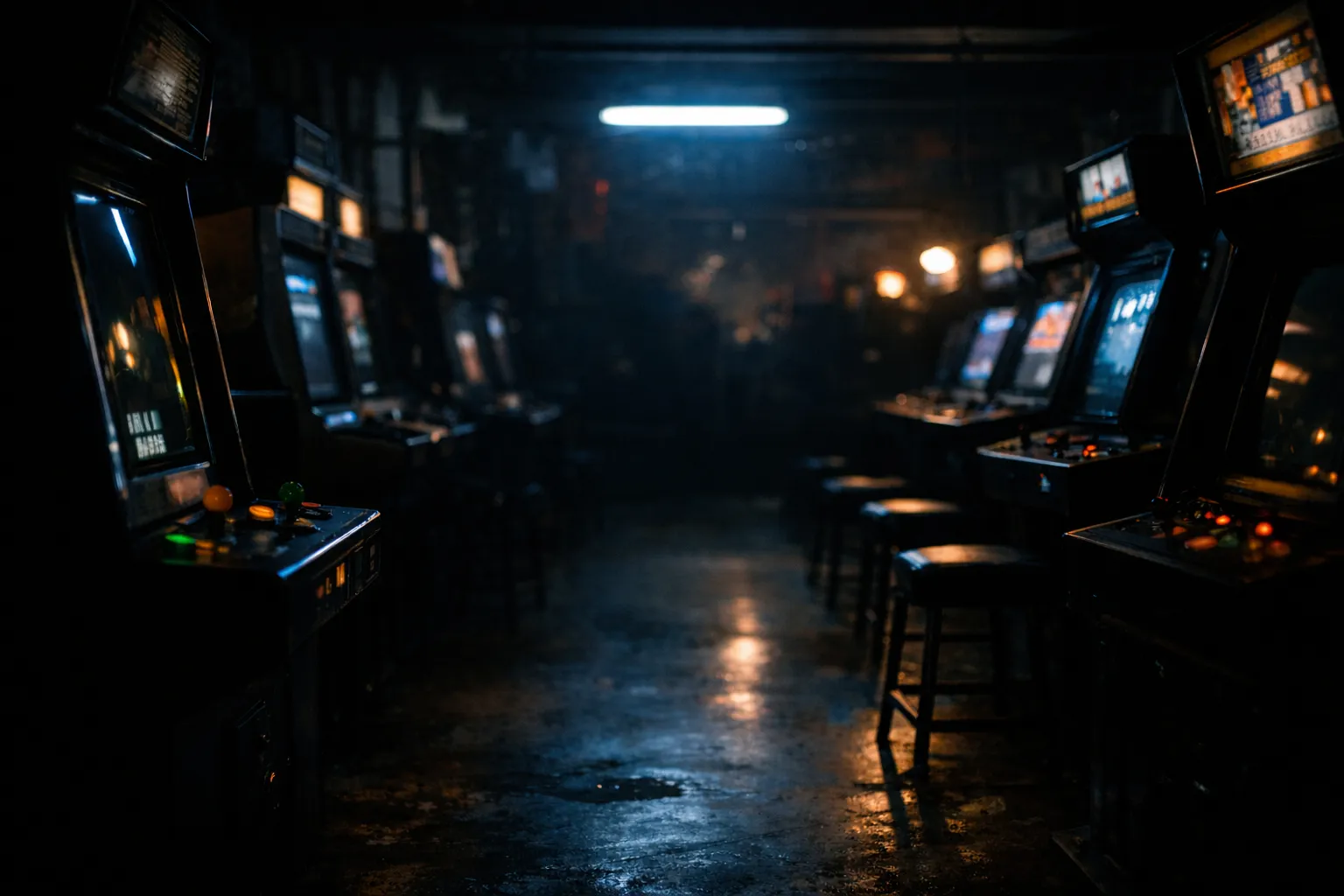
遊戲誌 | LV3 | 遊戲機中心為何會消失?當投幣聲成為回憶 | Why Arcades Disappeared: When the Sound of Coins Became a Memory | Game Journal
遊戲機中心的消失,無疑是城市文化變遷的一部分,亦是科技進步與社會需求轉變的結果。回顧過去,遊戲機中心曾經是許多人的青春回憶,也是城市中具有標誌性的娛樂場所之一。然而,隨著時代的演進,這些燈光閃爍、電子音效此起彼伏的場所逐漸退出主流,背後的原因牽涉到多方面的因素。
There was a time when the clinking of coins signaled entry into a shared world of challenge and excitement, where arcades stood as vibrant centers of urban life. Today, that sound lingers only in memory, echoing a shift in how people play and connect. The disappearance of game centers is not simply about technological change, but about evolving habits, economies, and the quiet transformation of public spaces into something more private and fragmented.
首先,家用遊戲機的普及無疑對遊戲機中心造成了直接衝擊。從上世紀八十年代開始,家用遊戲機逐漸走入家庭,玩家只需一次性購買設備與遊戲,就能在家中享受高品質的遊戲體驗。特別是進入二十一世紀後,遊戲主機的性能不斷提升,畫質更為精美,遊戲內容也更加豐富,這使得傳統遊戲機中心提供的體驗逐漸失去吸引力。家用遊戲機不僅節省了玩家前往遊戲機中心的時間與費用,也讓他們可以根據自己的時間安排來進行遊戲,這種便利性成為吸引玩家的重要因素。
其次,網絡遊戲和手機遊戲的崛起進一步改變了人們的娛樂方式。隨著互聯網技術的發展,線上遊戲不僅提供了多樣化的遊戲選擇,還讓玩家能夠與全球其他玩家即時互動。這種跨地域的連結性和便利性,使得傳統遊戲機中心的社交功能逐漸被取代。此外,智能手機的普及讓遊戲隨時隨地都可以進行,不再需要專門前往某個場所。這些新型態的娛樂方式,無疑對以實體空間為基礎的遊戲機中心帶來了巨大挑戰。
然而,僅僅將遊戲機中心的沒落歸因於技術進步與競爭並不足以全面解釋這一現象。事實上,社會文化與經濟環境的變遷也扮演了重要角色。隨著城市化進程的加速,都市空間變得愈加稀缺,而租金成本的不斷攀升,使得許多小型商業空間難以維持生計。對於需要大面積空間且收益模式較為單一的遊戲機中心而言,高昂的租金成為難以承受的負擔。此外,現代社會對效率與生產力的重視,也使得這種看似「低效」的娛樂形式逐漸被邊緣化。
同時,我們也不得不承認,人們對於娛樂的需求與期待正在發生深刻變化。過去,人們或許更注重實體空間中與他人共同參與活動所帶來的快樂,而現今則更傾向於個人化、隱私性強的娛樂方式。這種轉變反映了當代社會中個體生活方式的改變,也與數位化時代下人際互動模式的轉型密切相關。
然而,遊戲機中心不僅僅是一個提供娛樂服務的場所,它更是一種文化符號,一種社會記憶。在那些燈光閃爍、音效轟鳴的空間裡,人們曾經共享同一份興奮與緊張。勝利時的歡呼、失敗時的懊惱、旁觀者的喝采與建議,這些都是當時獨特而不可替代的體驗。在那樣一個公共空間中,人與人之間的連結被自然地建立起來,即便是陌生人,也能因為共同參與同一款遊戲而產生共鳴。
如今,這種「共同在場」的感覺已經稀少。技術雖然讓遊戲變得更加精緻,但也讓它變得更加孤立。戴上耳機、關上房門,人們進入了一個個屬於自己的數位世界。在這樣的環境中,即便有著網絡連線功能,即便能與他人進行語音交流,但那種面對面的真實互動,那種被他人注視與認可的感覺,卻難以被完全取代。
值得注意的是,儘管大部分傳統遊戲機中心已經消失,但仍有少數地方保留了這樣的空間。它們成為舊時代的一種象徵,也成為某些人懷舊情感的重要寄託。然而,即使這些場所仍然存在,它們所承載的意義已經發生了變化。它們不再是城市中熙來攘往的一部分,而更像是博物館中的展品,用來提醒我們曾經擁有過怎樣的一段時光。
總結而言,遊戲機中心的消失是一個多方面因素共同作用的結果,包括技術進步、社會文化變遷以及經濟壓力等。然而,它所代表的不僅僅是一種娛樂形式,更是一段關於人類互動與集體記憶的重要歷史。儘管我們無法挽回這段已逝去的時光,但我們可以從中反思,在當今高度數位化、個人化的世界中,我們是否仍然需要尋找某些能夠重新連結彼此、共享快樂與情感的方式?或許,這才是遊戲機中心消失後留給我們最重要的一課。
English Version
The fading of arcades from everyday life is often explained through the rise of home consoles and mobile gaming, yet this explanation alone fails to capture the deeper transformation that reshaped the meaning of play, because arcades were never just collections of machines but environments structured around rhythm, presence, and shared attention, where the act of inserting a coin marked a small but meaningful commitment, a decision to participate in a temporary space governed by rules, competition, and spectacle, and within that space players were not isolated users but visible participants in a public performance of skill and persistence, where every success or failure unfolded before others, creating a subtle but powerful social dynamic that extended beyond the game itself, yet this dynamic depended heavily on physical proximity, on the necessity of being there, of occupying the same space as others, and as technology progressed this requirement began to erode, replaced by systems that allowed play to occur anywhere and at any time, removing the need for dedicated venues and gradually redefining gaming as a private rather than public activity, and while this shift brought undeniable convenience and accessibility it also altered the structure of interaction, transforming what was once immediate and embodied into something mediated and often asynchronous, where players could connect across distances but without the same shared atmosphere that defined arcade culture, and this change was reinforced by economic factors, as maintaining arcade spaces became increasingly difficult in urban environments where rent, maintenance, and operational costs continued to rise, forcing operators to balance nostalgia with financial sustainability, often unsuccessfully, leading to closures that further reduced the visibility of arcades within the city, and as these spaces disappeared so too did the routines associated with them, the casual visits after school, the spontaneous competitions among strangers, the unspoken hierarchies established through repeated encounters, all of which contributed to a sense of community that was both fragile and vibrant, and without these routines gaming began to integrate more seamlessly into individual lifestyles, becoming something that could be accessed on demand without requiring coordination or travel, and in this sense the disappearance of arcades reflects a broader cultural movement toward personalization and efficiency, where experiences are tailored to individual preferences and optimized for convenience, often at the expense of shared physical experiences, yet it would be misleading to frame this transition purely as a loss, because the new forms of gaming that emerged have created their own kinds of communities, expanding participation and enabling connections that were previously impossible, allowing players from different regions, backgrounds, and circumstances to interact in ways that transcend physical boundaries, but these interactions are structured differently, relying on interfaces and communication tools that filter and reshape how presence is experienced, and while they can be meaningful they rarely replicate the immediacy of standing side by side, hearing the same sounds, reacting to the same moments in real time, and it is this immediacy that made arcades distinctive, that gave them a sense of energy and unpredictability that is difficult to reproduce in digital spaces, and as a result arcades occupy a unique position in cultural memory, often remembered not only for the games themselves but for the atmosphere they created, an atmosphere defined by noise, light, and the constant flow of people moving through the space, each bringing their own intentions and leaving behind traces of their experience, and this memory is frequently romanticized, framed as a simpler time when interaction was more direct and engagement more tangible, yet it is important to recognize that arcades were also spaces of tension, where competition could be intense, where access was not always equal, and where social dynamics could be both inclusive and exclusionary, reflecting the complexities of the urban environments in which they existed, and in this way arcades can be understood as microcosms of city life, condensed spaces where broader social patterns were played out through the medium of games, and their disappearance therefore represents not only a change in entertainment but a shift in how public spaces are used and valued, as cities evolve to accommodate new priorities and technologies, often at the expense of spaces dedicated to informal, communal activity, and yet despite their decline arcades have not vanished entirely, instead they have been recontextualized, appearing as retro attractions, curated experiences, or niche communities that seek to preserve aspects of their original character while adapting to contemporary expectations, and these new forms highlight both the resilience and the transformation of arcade culture, demonstrating that while the conditions that once supported their widespread presence may no longer exist, the desire for shared, physical experiences of play persists, even if it must find new expressions, and ultimately the story of why arcades disappeared is not a simple narrative of replacement but a layered process involving technological innovation, economic pressure, and cultural change, all of which contributed to a gradual redefinition of what gaming is and where it belongs, and in tracing this process we gain insight not only into the history of games but into the evolving relationship between people, technology, and the spaces they inhabit, a relationship that continues to shift as new forms of play emerge and old ones fade into memory, leaving behind echoes of coins that once marked the beginning of countless small adventures.