
身份證早已成為現代社會的重要憑證,但其出現源於對身份確認與社會管理的需求。從最初的簡單記錄,到今日高度制度化的證件系統,身份證反映了國家運作與個人身份之間的緊密關係。
Identity cards are now essential in everyday life, yet they originated from the need to verify individuals and manage growing societies. From simple records to structured systems, identity cards reflect the evolving relationship between individuals and the state.
中文
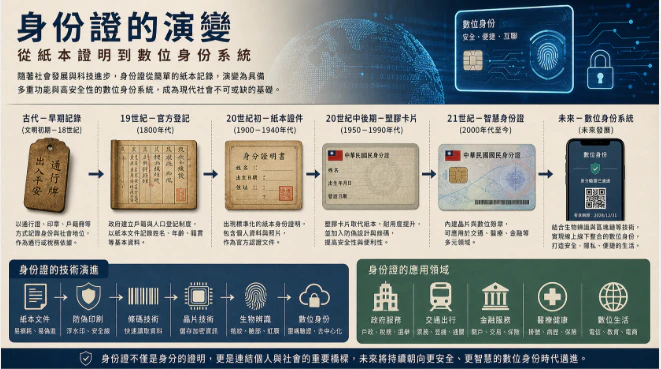
身份證的概念源於人類對身份識別與社會秩序的需求,在古代社會中,雖然沒有現代形式的身份證,但已有類似的證明方式,例如通行證、戶籍記錄與印章,這些工具用於證明個人身份與社會地位,隨著國家規模擴大與人口流動增加,單純依靠人際辨識已無法滿足管理需求,於是更系統化的身份認證方式逐漸出現,到了近代,政府開始建立正式的身份登記制度,以確保稅收、徵兵與社會管理的有效運作,19世紀末至20世紀初,隨著現代國家的形成,身份證制度逐步成形,特別是在戰爭時期,各國為了加強安全與控制人口流動,開始推行強制性的身份證明文件,這些證件通常包含姓名、出生資料與照片,成為個人與國家之間的重要連結,隨著科技發展,身份證的形式與功能不斷演變,從紙本證件轉變為塑膠卡片,並加入防偽設計,例如晶片、條碼與生物識別資訊,大幅提升安全性與可靠性,身份證的用途也從單純識別擴展至金融、醫療與公共服務領域,成為進入各種系統的關鍵憑證,在數位時代,電子身份與數位證書逐漸興起,讓身份驗證不再局限於實體卡片,而是延伸至網絡空間,形成虛實整合的身份管理模式,然而,身份證制度的發展亦引發隱私與監控的討論,如何在便利與安全之間取得平衡,成為現代社會的重要議題,無論形式如何改變,身份證的核心始終在於確認「你是誰」,它不僅是個人存在的證明,也是社會運作的基礎,從簡單的記錄工具到高度整合的數位系統,身份證的演變見證了人類社會從分散走向有序的歷程
English Version:
The concept of identity cards stems from humanity’s need to verify individuals and maintain social order. In ancient societies, although modern identity cards did not exist, similar methods were used, such as travel permits, household registries, and official seals to confirm identity and status. As populations grew and mobility increased, personal recognition alone became insufficient, prompting the development of more structured identification systems. In the modern era, governments began implementing formal registration systems to support taxation, military conscription, and administrative control. By the late nineteenth and early twentieth centuries, identity card systems began to take shape, particularly during periods of conflict when nations required stricter control over population movement. These documents typically included personal details such as name, date of birth, and photographs, establishing a direct link between individuals and the state. With technological advancement, identity cards evolved from paper documents into durable plastic cards embedded with security features such as chips, barcodes, and biometric data, significantly enhancing reliability and protection against fraud. Their function also expanded beyond identification, becoming essential for accessing financial services, healthcare, and public systems. In the digital age, electronic identities and digital certificates are emerging, allowing identity verification to extend into online environments and creating integrated systems that bridge physical and virtual spaces. At the same time, the expansion of identity systems has raised concerns about privacy and surveillance, highlighting the challenge of balancing convenience with personal freedom. Regardless of form, the fundamental purpose of identity cards remains the same: to answer the question of who a person is. From simple records to advanced digital infrastructures, the evolution of identity cards reflects the broader transformation of human societies toward greater organization and connectivity.