當我們習慣隨時提款、轉帳與查詢餘額,很少會想起這一切始於一台看似簡單的機器。第一部自動提款機的出現,不只是銀行服務的升級,更是金融科技邁向自動化的重要起點,改寫了人與金錢之間的互動方式。
Today, withdrawing cash anytime feels effortless, yet this convenience traces back to a groundbreaking invention. The first ATM was more than a machine—it marked a turning point in financial technology, reshaping how people interact with money and redefining modern banking services.
中文
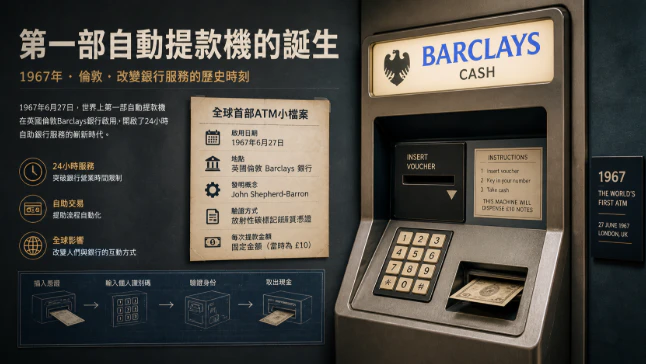
1967年,全球第一部自動提款機正式投入使用,地點位於英國倫敦的Barclays銀行分行,這台機器的誕生象徵著銀行服務從櫃檯走向全天候自助的關鍵轉變,其背後的靈感來自發明家John Shepherd-Barron的一次生活經驗,當時他因錯過銀行營業時間而無法提款,從而萌生出讓人隨時取現的想法,最初的ATM並不像今日般使用塑膠卡,而是依靠一種特殊的紙質憑證,內含放射性碳標記來進行身份驗證,每次可提取固定金額,這種設計雖然原始,但已經具備現代ATM的核心概念,即自動化與即時服務,早期使用者需要輸入一組個人識別碼,這也是今日PIN碼系統的雛形,隨著技術進步,ATM逐步演變,從單一提款功能發展為具備查詢餘額、轉帳、繳費甚至存款的多功能終端,銀行業也因此大幅降低人力成本並延長服務時間,ATM的普及不僅提升了便利性,也改變了人們對金錢流動的習慣,使金融服務從「受時間限制」轉為「隨時可得」,進一步推動全球金融網絡的建立,在1970至1980年代,隨著磁條卡與電子網絡技術成熟,ATM開始連接不同銀行系統,形成跨行提款與國際使用的基礎,這種互通性讓旅行者與商務人士能在世界各地取得現金,成為全球化的重要配套設施之一,而在數位時代來臨後,ATM並未被淘汰,反而與網上銀行及行動支付形成互補關係,特別是在現金仍具重要性的地區,ATM依然是金融基礎設施的重要一環,從最初一台簡單的機器,到遍布全球數百萬台的網絡,自動提款機不僅是一項發明,更是一種改變生活節奏的工具,它讓金融變得更貼近人類需求,也為後來的金融科技發展奠定了基礎
English Version:
In 1967, the world’s first automated teller machine was introduced in London at a branch of Barclays, marking a pivotal shift in how banking services were delivered. The idea originated from John Shepherd-Barron, who was inspired after missing a bank’s closing hours and realizing the need for round-the-clock access to cash. Unlike modern machines, the earliest ATM did not rely on plastic cards but instead used specially coded paper vouchers embedded with radioactive markers for identification. Although primitive by today’s standards, it already embodied the essential principle of self-service banking. Users were required to enter a personal identification number, laying the foundation for the PIN system still in use today. As technology evolved, ATMs expanded beyond simple withdrawals to include balance inquiries, transfers, bill payments, and deposits. This transformation significantly reduced operational costs for banks while extending service availability far beyond traditional hours. The widespread adoption of ATMs changed how people interacted with money, shifting from time-restricted banking to instant accessibility. During the 1970s and 1980s, advancements in magnetic stripe cards and electronic networks enabled ATMs to connect across institutions, allowing customers to access funds from different banks and even internationally. This interoperability became crucial for travelers and global commerce, reinforcing the infrastructure of an increasingly interconnected world. In the digital age, ATMs have not disappeared; instead, they coexist with online banking and mobile payment systems, particularly in regions where cash remains essential. From a single machine in London to millions worldwide, the ATM has evolved into a cornerstone of financial infrastructure. It represents not just a technological innovation but a shift in lifestyle—bringing financial services closer to human needs and paving the way for the broader development of fintech.