
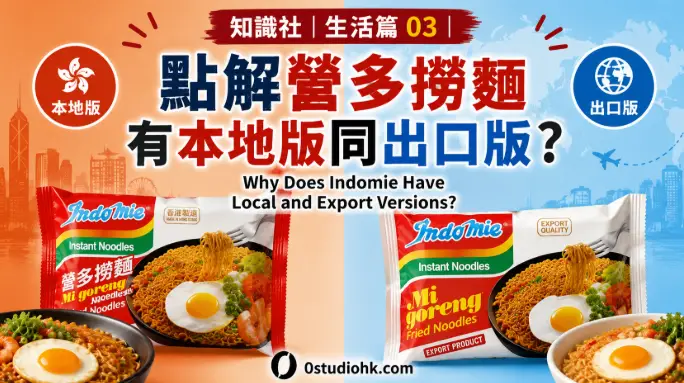
知識社|生活篇 03|點解營多撈麵有本地版同出口版? Why Does Indomie Have Local and Export Versions?
不少人在超市購買營多撈麵時,會發現有些採用白色包裝,有些則使用透明或半透明包裝,甚至標示有所不同。很多人以為是假貨或不同品質,其實背後反映的是全球食品品牌的市場策略。
When shopping for Indomie Mi Goreng, you may notice different packaging styles, including white wrappers and transparent versions. Some people assume they’re different products, but the real reason lies in how global food brands serve different markets.
中文版本
營多撈麵(Indomie Mi Goreng)是全球最受歡迎的即食麵品牌之一,除了印尼本土市場,更出口到世界一百多個國家和地區,因此不少消費者都曾發現,同一款撈麵竟然會出現不同包裝,甚至包裝顏色、文字及標示都有所不同。最常見的分別,就是印尼本地版與出口版。印尼本地版主要供應當地市場,包裝設計會以印尼消費者習慣為主;出口版則需要符合不同國家的法規要求,因此會加入英文、不同語言的產品資料、營養標示、進口商資料及食品認證等內容。至於不少人留意到的白色包裝與透明或半透明包裝,其實大多只是不同生產批次、市場版本或包裝更新的安排,目的包括方便消費者直接看到產品、配合零售市場需要,以及符合不同國家的包裝規範,並不代表產品品質較高或較低。真正影響產品差異的,反而是不同市場對食品法規及口味的要求。部分出口版本可能會因應當地規定調整鈉含量、食品添加物標示、過敏原資訊或包裝內容,但整體配方及經典撈麵風味通常保持一致。由於營多撈麵出口全球,不同工廠亦會按照授權安排生產,例如印尼本地工廠主要供應亞洲及部分海外市場,而出口產品則需要符合目的地國家的食品安全標準。這也是為什麼有些包裝印有「Export Product」或不同認證標誌。事實上,不只是營多撈麵,可樂、朱古力、餅乾、薯片甚至汽水,都會因應不同國家調整甜度、鹹度、包裝設計及標示內容。這種做法稱為市場本地化(Localization),目的就是讓產品既符合當地法規,又更符合消費者的飲食習慣。因此,下次看到不同版本的營多撈麵時,不必急於認為是假貨或品質不同,大部分情況只是因應不同市場推出的正式版本而已。
English Version
Indomie Mi Goreng has become one of the world’s most recognizable instant noodle brands, selling in more than one hundred countries. Because it serves so many markets, consumers often notice differences in packaging, labeling, and even the appearance of the outer wrapper. These differences can create the impression that multiple recipes exist, but in most cases they reflect market-specific packaging rather than major changes to the product itself. The most important distinction is between products intended for Indonesia and those manufactured for export. Domestic products are packaged according to Indonesian consumer preferences and regulations, while export versions must comply with the legal requirements of the destination country. This often means additional languages, nutritional information, importer details, allergen declarations, and certification marks appear on the packaging. Some export markets also use different wrapper materials, including white opaque packages or transparent designs that allow customers to see the noodle block inside. These packaging choices are usually related to marketing, manufacturing batches, or regional retail preferences rather than differences in quality. In certain countries, manufacturers may also adjust sodium levels, labeling standards, or ingredient declarations to satisfy local food regulations. However, the signature Mi Goreng flavor remains largely consistent across markets because maintaining brand identity is important for international consumers. Global food companies routinely localize their products in this way. Soft drinks, snacks, chocolate, and biscuits are often packaged and labeled differently depending on where they are sold. This strategy helps companies meet national regulations while making products more appealing to local shoppers. So when you notice two different Indomie packages on the supermarket shelf, you’re usually looking at products designed for different markets—not counterfeit goods or lower-quality versions. The packaging may change, but the goal remains the same: delivering the familiar Indomie experience to customers around the world.
總評
營多撈麵的本地版與出口版,最大的分別通常不是味道,而是包裝、標示及法規要求。不同版本反映的是全球品牌如何因應各地市場作出調整,而不是產品品質高低。
Summary
The differences between local and export versions of Indomie are mostly about packaging and regulatory requirements rather than flavor. They illustrate how international food brands successfully adapt to markets around the world.