橋上倒涼茶-何苦 Bridge Tea Spill: Why Suffer Needlessly

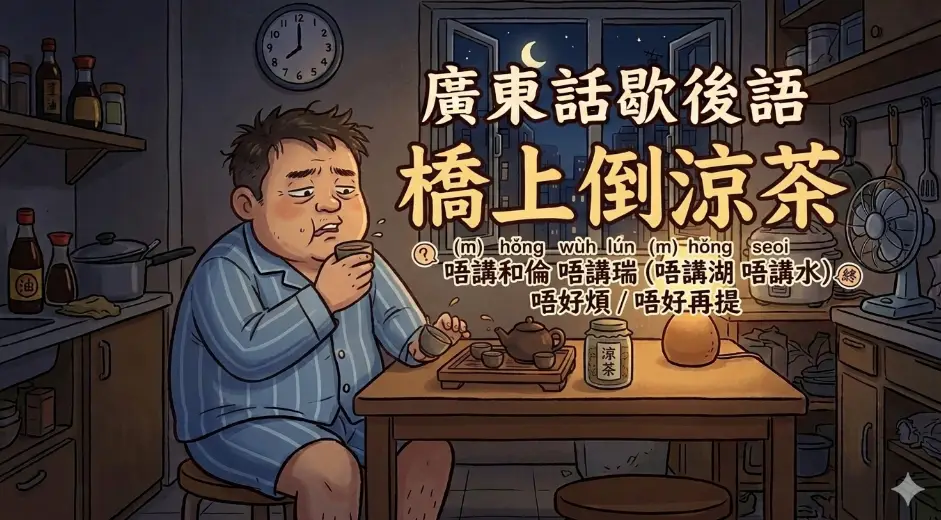
廣東話歇後語往往利用生活中的場景,巧妙地表達人生道理。「橋上倒涼茶-何苦」便是一句充滿幽默與智慧的歇後語。表面上看,是把清涼解渴的涼茶從橋上倒進河裡,白白浪費了一番心血;而「何苦」與「河」字諧音,更令這句歇後語增添了廣東話特有的趣味。這句話常用來勸人不要自找麻煩,也不要做徒勞無功的事情,至今仍是不少廣東人日常對話中的經典俗語。
Cantonese sayings often combine wordplay with everyday experiences to express practical life lessons. “Pouring herbal tea from a bridge into the river—why suffer for nothing?” is a classic example. The humor comes from the similarity in pronunciation between the words for “river” and “why,” creating a clever pun that turns a simple image into a meaningful proverb. The saying is commonly used to question unnecessary effort, pointless sacrifice, or actions that bring trouble without any worthwhile result.
中文
「橋上倒涼茶-何苦」的字面意思是在橋上把原本可以飲用的涼茶倒進河裡。涼茶在廣東地區向來被視為消暑解熱的飲品,需要花時間和材料煲製,如果辛苦準備好之後卻故意倒掉,自然令人覺得可惜。而歇後語中的「何苦」既有疑問語氣,也借用了「河」字的讀音形成雙關。引申起來,這句話用來形容一個人明明有更簡單、更合理的方法,卻偏偏選擇令自己辛苦、浪費時間或承受不必要的損失。有時亦用來勸人放下執著,不必為了小事耿耿於懷,更不必鑽牛角尖。當一個人明知事情沒有結果,卻仍然不斷投入精力;或者明明可以和平解決,卻非要把事情鬧大,都可以用這句歇後語來形容。它反映出廣東民間重視實際和效率的處世智慧,提醒人們不要因情緒、固執或一時衝動而讓自己陷入不必要的困境。很多時候,放過別人,其實也是放過自己;看開一點,往往比苦苦堅持更能獲得內心的平靜。
English Version
The literal image behind this saying is someone standing on a bridge and pouring valuable herbal tea into a river. Since herbal tea takes time, effort, and ingredients to prepare, throwing it away serves no useful purpose. The expression gains extra humor through a Cantonese wordplay involving the pronunciation of “river” and “why,” creating a memorable pun. Figuratively, the proverb describes situations where people create unnecessary hardship for themselves or waste effort on actions that bring little benefit. It may refer to someone who refuses an easy solution, holds onto resentment, continues a hopeless argument, or sacrifices too much for something that is no longer worthwhile. Rather than encouraging laziness, the saying promotes practical wisdom. It reminds people to evaluate whether their actions are truly productive and whether the struggle is worth the outcome. In many cases, letting go of stubbornness, pride, or needless conflict can save time, energy, and emotional stress. The expression reflects a common Cantonese belief that life is difficult enough already, so there is little value in making it harder than necessary.
用法
當看見別人明知事情沒有太大意義,卻仍然執意去做時,便可以說他是「橋上倒涼茶-何苦」。例如朋友因一句無心說話而多年不與親人來往;同事為了一件小事與人爭論不休;又或者有人明知投資騙局已經失敗,卻繼續投入金錢,希望翻本,這些情況都適合用這句歇後語來勸導。語氣通常帶有關心和提醒,而非刻意嘲笑。
English Version
This saying is often used when someone is making life harder than it needs to be. It may apply to a person who continues an argument that could easily end, refuses to forgive a minor mistake, or keeps investing effort into a clearly hopeless situation. The phrase usually carries a sympathetic tone rather than criticism, expressing concern that the person is creating unnecessary suffering for themselves.
小故事:
阿文和好友志強原本感情很好,兩人一起長大,也經常互相幫助。某天聚會時,志強開玩笑說阿文最近胖了不少。其實大家都知道只是玩笑話,但阿文卻一直放在心上。之後幾個月,他不再接聽志強電話,也拒絕參加朋友聚會。其他朋友多次勸他放下這件小事,但他始終覺得自己受了委屈。有一天,阿文的伯父知道這件事後,邀請他一起飲茶。聊天期間,伯父問:「你哋識咗幾多年?」阿文回答說二十多年。伯父又問:「就因為一句玩笑說話,放棄二十幾年友情,值得嗎?」阿文沉默不語。伯父笑了笑,說:「你而家真係橋上倒涼茶-何苦呀。」這句話讓阿文愣了一下。他開始反思,自己這幾個月一直生悶氣,不但影響心情,也失去和朋友相聚的快樂。第二天,他主動聯絡志強,兩人見面後很快便把誤會說開。原來志強根本不知道阿文介意那句說話。多年友情因為一次坦誠對話而恢復如初。阿文後來經常提起這件事,並笑著說自己當初確實太執著。從那時起,每當遇到不開心的事情,他都會先問自己一句:「何苦呢?」
English Version
Man had been close friends with Chi Keung since childhood. They shared countless memories and had always supported one another. During a gathering one evening, Chi Keung jokingly commented that Man seemed to have gained some weight. Everyone laughed, thinking it was harmless humor, but Man took the remark personally. Instead of talking about it, he gradually distanced himself from the group. He ignored phone calls, skipped gatherings, and spent months carrying resentment. Friends tried to encourage him to move on, but he remained stubborn. Eventually, his uncle invited him for tea and listened to the story. After hearing everything, the uncle asked how long the friendship had lasted. “More than twenty years,” Man replied. His uncle nodded and said, “So you’re willing to throw away two decades of friendship because of one joke?” Man had no answer. Then the uncle smiled and shared the saying, “Pouring herbal tea from a bridge into a river—why suffer needlessly?” The words stayed with him. He realized that his pride had caused far more pain than the original joke. The next day, he contacted Chi Keung and agreed to meet. To his surprise, Chi Keung had no idea that the comment had caused offense and immediately apologized. The misunderstanding disappeared within minutes. Looking back, Man understood how much energy he had wasted on anger. Since then, whenever he feels tempted to hold onto resentment, he remembers the saying and asks himself a simple question: “Why make life harder than it needs to be?”
結語
「橋上倒涼茶-何苦」以簡單而生動的畫面,道出人生中常見的盲點。很多煩惱並非來自外界,而是源於自己的執著與不肯放下。學會適時放手、理性看待問題,往往能讓生活變得更加輕鬆自在。
English Version
“Pouring herbal tea from a bridge into a river—why suffer needlessly?” reminds us that many struggles are self-created. By letting go of unnecessary burdens and focusing on what truly matters, we can save ourselves considerable stress and enjoy a more balanced and peaceful life.