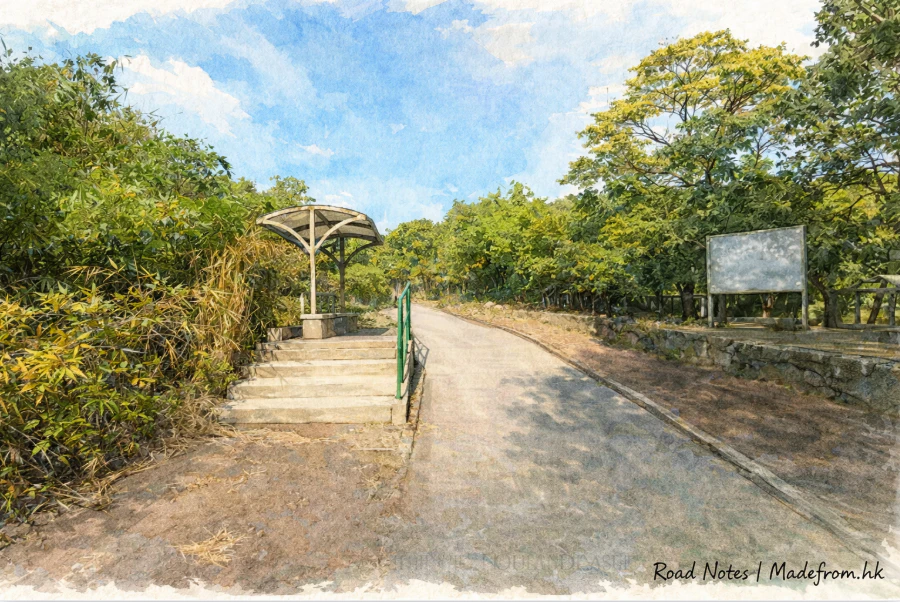
在香港港島山林之中,金督馳馬徑靜靜延伸,名字帶着一種過去的節奏,彷彿仍能看見殖民時代的身影在林間騎行而過。
Hidden within the wooded slopes of Hong Kong Island, Sir Cecil’s Ride carries a name that echoes a slower era, where colonial figures once traversed these paths on horseback.
中文
金督馳馬徑(Sir Cecil’s Ride)位於香港島山區,是一條結合自然景觀與歷史背景的步道,其名稱中的「Sir Cecil」一般被認為與香港殖民時期重要人物金文泰爵士有關,而「Ride」則帶有騎馬路徑的含義,反映出該路徑在早期可能與騎馬活動相關。這種命名方式與一般城市街道不同,更接近英國鄉村或林地路徑的傳統,亦顯示出香港在殖民時期,部分山區曾被視為休閒與私人活動空間。金督馳馬徑的形成與香港山地地形及殖民生活方式密切相關,在19世紀末至20世紀初,隨著香港逐漸發展,部分山區開始被開發為避暑或休閒用途,歐洲人常在較高地勢活動,以避開炎熱與潮濕的市區環境,而騎馬成為當時常見的休閒方式之一,這條路徑正是在這樣的背景下出現。與市區道路相比,金督馳馬徑並非為交通或商業而設,而是屬於較為私人與低密度使用的空間,這亦反映出當時社會結構與生活方式的差異。隨著時間推移,香港城市化程度不斷提高,騎馬活動逐漸消失,相關設施亦不再使用,但這條路徑被保留下來,並逐漸轉變為行山徑或休閒步道,向公眾開放。從城市變化角度來看,金督馳馬徑見證了香港由殖民地精英休閒空間轉變為公共自然資源的過程,昔日專屬於少數人的活動場地,今天成為市民共享的自然空間,體現社會結構與公共空間概念的轉變。街道特色方面,金督馳馬徑具有明顯的自然環境特徵,道路較窄,兩旁被樹木與灌木包圍,部分路段設有簡單設施如休息位置或指示牌,整體氛圍安靜而開放,與城市中心的繁忙形成強烈對比,亦讓人感受到一種與時間稍微脫離的空間感。步行於此,更多是一種與自然對話的體驗,而非單純的移動。今日的金督馳馬徑,不僅是一條步道,更是一段歷史與自然交織的軌跡,它提醒人們,香港的城市發展並非只有高樓與街道,亦包括這些隱藏於山林之中的路徑,這些地方保留着另一種節奏,讓人能在現代生活之中短暫抽離,重新感受空間與時間的流動。
English Version
Sir Cecil’s Ride, located within the wooded areas of Hong Kong Island, is a unique pathway that blends natural scenery with traces of colonial heritage. The name “Sir Cecil” is commonly associated with Sir Cecil Clementi, a former Governor of Hong Kong, while the term “Ride” suggests a path originally intended for horseback travel. Unlike typical urban streets, this naming reflects a tradition more closely aligned with British countryside trails, indicating that parts of Hong Kong’s hilly terrain were once used for leisure rather than commerce or transportation. During the late 19th and early 20th centuries, as Hong Kong developed under British rule, higher elevation areas were often favored by Europeans seeking cooler climates and respite from the dense and humid city below. Horseback riding became a popular activity, and paths like Sir Cecil’s Ride were likely established to support such pursuits. These routes were not designed for heavy traffic but rather for a slower, more private form of movement, reflecting the social structures and lifestyle distinctions of the time. As the city evolved and urbanization intensified, many of these practices faded, and horseback riding ceased to be a common activity. However, the path itself endured, gradually transforming into a public walking trail accessible to all. This transition illustrates a broader shift in Hong Kong’s development, where spaces once reserved for a privileged few have become shared resources within the urban landscape. Architecturally, or rather spatially, Sir Cecil’s Ride is defined by its simplicity and integration with nature. The path is narrow, often bordered by dense vegetation, with occasional resting points or signage, creating an atmosphere of quiet retreat. The absence of commercial activity or heavy infrastructure allows visitors to experience a different rhythm of the city—one that is slower, more reflective, and closely tied to the natural environment. Today, Sir Cecil’s Ride stands as a reminder that Hong Kong’s identity extends beyond its skyline. It represents a continuity of landscape and memory, where traces of colonial leisure and modern public access coexist, offering a space for both historical reflection and personal escape.