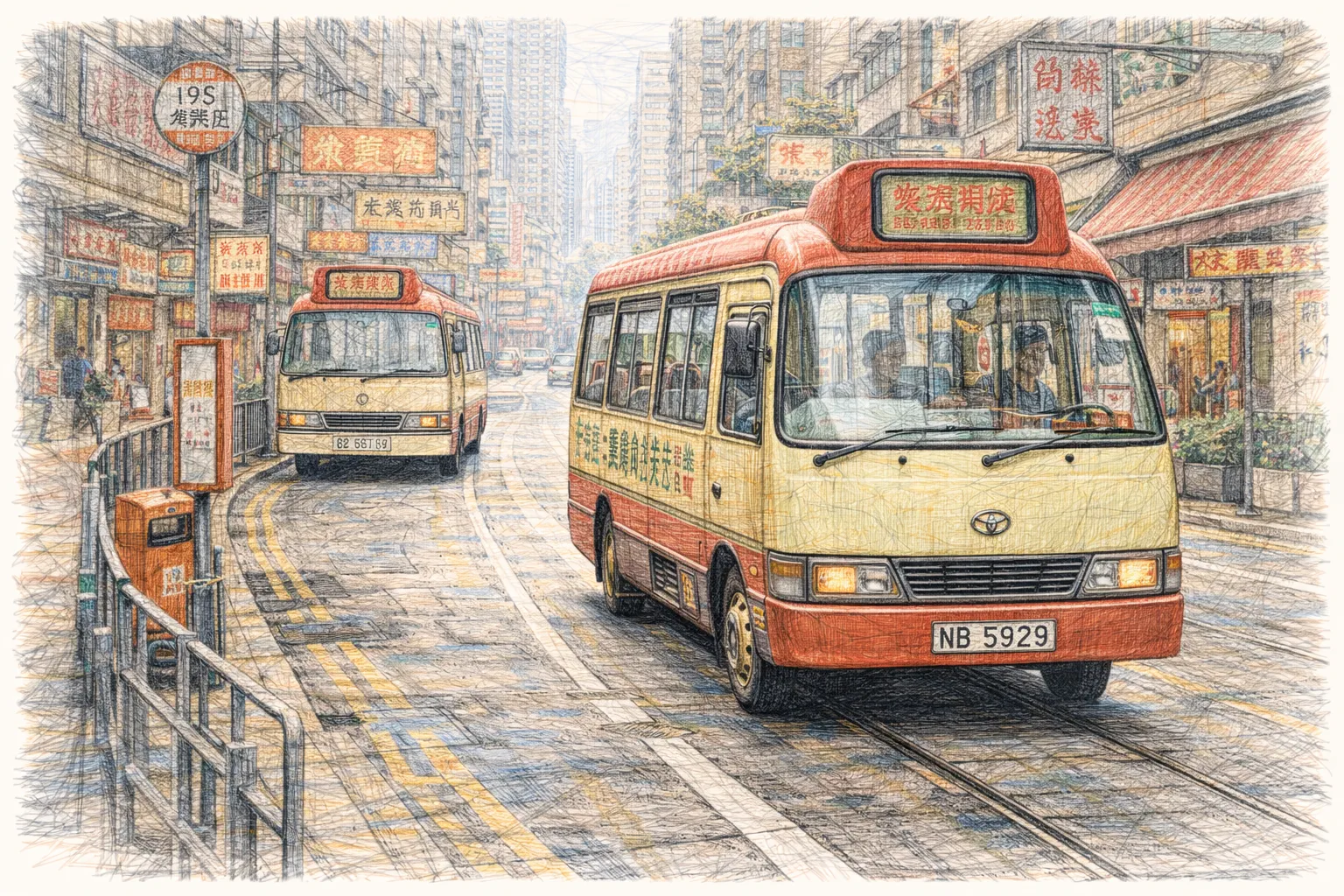
小巴作為一種城市交通工具,展現了高度的靈活性與即時性,與現代都市中常見的標準化交通系統形成鮮明對比。它的運作方式並非依賴於明確的規則或科技的輔助,而是建立在人與人之間的默契與互動之上。在小巴內部,乘客與司機之間的溝通主要通過簡單的語言、眼神交流及肢體動作進行,這種非正式的互動模式展現了人類直覺與即時反應的重要性。
小巴的行駛路線雖然有一定的固定性,但司機通常會根據當下的交通狀況進行靈活調整,例如避開擁堵路段或根據乘客需求短暫改變路線。這種即時性的決策過程,不僅反映了司機對城市交通環境的熟悉程度,也展現了其快速判斷與應變能力。在這樣的系統中,效率並非完全依賴於制度化的規範,而更多地來自於人際合作與相互理解。
此外,小巴內部雖然空間有限,但乘客之間仍能自覺遵守一些不成文的規範,例如保持安靜、避免干擾他人等。這種基於默契的互動模式,既維持了車廂內的秩序,也體現了對彼此的尊重。小巴並非一個鼓勵社交的場域,但它卻在無形中強化了人際間的合作與包容。
作為一種特殊的城市交通模式,小巴不僅提供了便利,還具有深刻的社會意義。在高度制度化與科技化的現代社會中,小巴提醒我們,人類的直覺、靈活性以及即時協調能力仍然不可或缺。它是一種對城市多樣性與彈性的包容,也是一種對人類智慧與合作能力的信任。
總體而言,小巴不僅是城市交通的一部分,更是一種文化象徵。它啟發我們重新思考都市生活中的秩序與自由、規範與靈活性,以及人類在快速變遷中的角色與價值。透過小巴,我們得以看到一個基於信任和協調運作的微型社會,這種模式或許正是未來城市發展的重要啟示。
English Version
Within the complex and highly structured transportation network of Hong Kong, where systems such as railways and franchised buses operate with precision and predictability, the minibus occupies a distinctive position as a flexible and adaptive mode of movement that responds to the gaps and nuances of urban geography, functioning as an essential yet often understated component of the city’s daily mobility. Unlike larger systems designed around fixed routes, schedules, and high-capacity flow, minibuses operate with a degree of responsiveness that allows them to navigate narrower streets, steeper terrain, and less densely served areas, creating connections that might otherwise remain inefficient or inaccessible. This flexibility enables the minibus to function as a bridge between formal infrastructure and localized needs, linking residential neighborhoods, transport hubs, and peripheral zones in ways that complement rather than compete with larger systems. The experience of traveling by minibus is shaped by its immediacy and proximity, where boarding often occurs quickly, seating is limited, and the relationship between driver and passengers is more direct, creating a sense of shared awareness that differs from more anonymous forms of transport. The call-and-stop nature of many routes introduces an element of interaction, where passengers actively participate in the journey, signaling their intent to disembark and engaging with the rhythm of movement in a more personal way. This participatory aspect reflects a broader characteristic of informal systems, where structure exists but is less rigid, allowing for a balance between order and adaptability. The routes themselves often reflect practical knowledge of the city, following paths that respond to demand, geography, and habit, forming patterns that may not always be immediately visible but are deeply embedded within local experience. In this sense, the minibus network represents a layer of urban intelligence, where efficiency is achieved not through scale alone but through responsiveness and localized understanding. The visual and sensory experience of a minibus journey differs significantly from other modes of transport, as the smaller interior space, the closeness of passengers, and the direct connection to the road create an environment that is both immediate and dynamic, where movement is felt more acutely and where the boundaries between vehicle and surroundings are less pronounced. Time within this context is experienced as fluid rather than strictly scheduled, shaped by traffic, demand, and the interactions of those on board, creating a rhythm that reflects the variability of urban life. Historically, minibuses emerged as a response to the limitations of existing transport systems, filling gaps and adapting to the city’s evolving needs, and their continued presence highlights the importance of systems that can operate alongside formal infrastructure while maintaining their own distinct identity. In a rapidly changing urban environment, where efficiency and scale often dominate planning, the persistence of the minibus underscores the value of flexibility, demonstrating how smaller, more adaptive systems can coexist with larger, more rigid ones to create a more resilient and comprehensive network. The relationship between minibuses and the broader transportation system illustrates a layered approach to mobility, where different modes serve different functions, collectively enabling the city to operate with both structure and adaptability. In a broader sense, the minibus represents the capacity of a city to respond to its own complexity, finding ways to move people through spaces that are not always easily defined or standardized, and reflecting a form of urban logic that is both practical and intuitive. Ultimately, the Hong Kong minibus is not just a means of transport, but a reflection of how a city negotiates between order and flexibility, using smaller, responsive systems to complement larger frameworks, and ensuring that movement remains possible even in the most intricate and constrained environments.