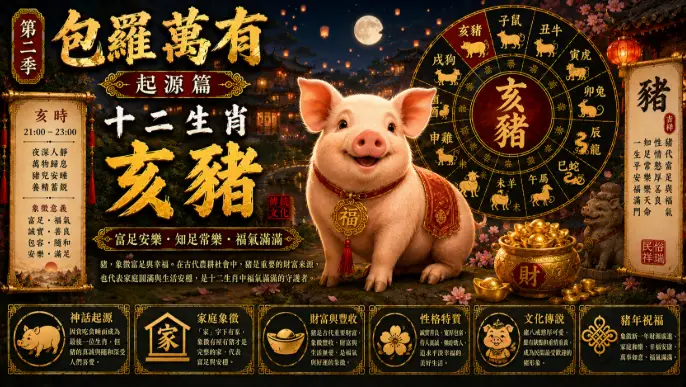
包羅萬有 第二季 起源篇|十二生肖 亥豬的富足文化與福氣象徵 | Origins Series Season 2 | The Pig in the Chinese Zodiac and the Symbol of Prosperity
亥豬在十二生肖中象徵富足、幸福與真誠。從古代農耕生活到民間吉祥文化,豬一直代表豐收與安穩,也反映東方文化對平凡幸福的珍視。
The Pig symbolizes abundance, honesty, and contentment in the Chinese Zodiac. From ancient farming traditions to festive folk culture, the Pig became a beloved symbol of prosperity, comfort, and joyful living in Chinese society.
中文版本
亥豬是十二生肖中的最後一位,在中國文化中象徵富裕、福氣與安樂生活。雖然豬在現代社會有時被誤解為懶惰象徵,但在古代農耕文明裡,豬其實是財富與生活穩定的重要代表。由於豬繁殖力強,而且能提供穩定食物來源,因此古人普遍認為家中養豬代表家庭富足、糧食充裕與生活安穩。這種觀念讓亥豬逐漸成為中國民間文化中最具福氣意味的生肖之一。關於生肖豬的起源,民間流傳玉皇大帝舉辦生肖競賽的故事。傳說中,豬原本在比賽途中走得不慢,但因途中貪吃與睡覺而延誤,最終成為最後一位生肖。雖然名次排在最後,但豬隨和、真誠與樂天知命的性格,反而深受人們喜愛,也讓亥豬成為知足常樂與平安幸福的象徵。在中國古代社會裡,豬與百姓生活關係密不可分。農村家庭往往會飼養豬隻作為重要資產,而豬肉亦是中國飲食文化中的主要肉類之一。因此在古代,「家」字上方是屋頂,下方則是豬,反映古人認為有屋有豬才算完整家庭。這種文字文化,也進一步強化了豬與家庭、財富之間的密切關聯。十二地支中的「亥」,對應晚上九時至十一時。古人認為這段時間萬物逐漸進入休息狀態,而豬亦習慣在夜晚安靜休息,因此將豬與亥時結合。亥時同時象徵一年與一天即將結束,帶有圓滿與休養生息的含義,因此亥豬也象徵安穩、滿足與生命循環的終點。這種安排反映古代中國人對自然節奏與生活規律的觀察智慧。隨着生肖文化發展,亥豬逐漸形成鮮明性格象徵。民間普遍認為屬豬的人善良誠實、心地寬厚,而且樂於助人。他們通常性格開朗、不喜計較,同時擁有享受生活與追求平靜幸福的傾向。雖然有時顯得過於單純或缺乏戒心,但也因此更容易獲得別人喜愛與信任。這些生肖性格觀念雖然源自傳統民俗,但多年來已深深融入華人文化與日常生活。豬在中國藝術與民間信仰中的形象亦十分普遍。古代陶豬、金豬擺設與剪紙藝術經常出現在節慶與祭典中,象徵財富與豐收。尤其在農曆新年期間,金豬圖案常被視為招財與納福的重要象徵。在部分民俗故事裡,豬亦帶有幽默與親切形象,例如《西遊記》中的豬八戒,雖然貪吃懶散,但同時重情重義,因此深受民間喜愛。除了中國之外,豬文化在東亞與世界各地同樣具有重要地位。每逢豬年,各地都會推出大量與豬相關的新年裝飾、藝術創作與文創商品,象徵財富、幸福與好運。今天的亥豬,早已超越普通生肖動物本身。牠代表人類對安穩生活、家庭溫暖與富足未來的追求,也象徵東方文化中重視知足與平凡幸福的人生觀。從古代農村文明到現代流行文化,豬依然是華人世界中最親切而最充滿福氣的傳統象徵之一。
English Version
The Pig is the twelfth and final animal in the Chinese Zodiac and has long symbolized prosperity, comfort, honesty, and joyful living in Chinese culture. Although pigs are sometimes misunderstood in modern society as symbols of laziness, ancient agricultural communities viewed them very differently. In traditional farming life, pigs represented wealth, food security, and family stability because they reproduced quickly and provided an important source of nourishment. As a result, the Pig gradually became one of the most fortunate and beloved symbols in Chinese folk culture. According to the famous zodiac legend, the Jade Emperor organized a race to determine the order of the zodiac animals. The Pig started the journey reasonably well, but along the way became distracted by food and eventually stopped to rest and sleep. Because of this relaxed attitude, the Pig arrived last and became the final zodiac sign. Rather than being seen negatively, however, the Pig’s carefree and honest personality made it admired as a symbol of happiness, sincerity, and contentment. In ancient Chinese society, pigs were deeply connected to everyday life and survival. Rural households often raised pigs as one of their most valuable possessions, while pork became one of the most important foods in Chinese cuisine. This close relationship is even reflected in the Chinese written character for “home,” which historically combines the image of a roof with a pig underneath, symbolizing that a true household was one that possessed both shelter and livestock. Such cultural symbolism strengthened the Pig’s association with prosperity, warmth, and domestic happiness. Within the traditional Earthly Branch system, the Pig corresponds to the branch “Hai,” representing the hours between 9 p.m. and 11 p.m. Ancient observers associated this period with the quiet transition into rest and sleep, naturally matching the peaceful habits of pigs at night. Philosophically, this time symbolized completion, restoration, and preparation for renewal, making the Pig a symbol of fulfillment and life’s natural cycle. This symbolic pairing demonstrates how Chinese civilization connected animal behavior, daily rhythms, and spiritual philosophy. Over centuries, the Pig also developed strong personality symbolism within zodiac traditions. People born in the Year of the Pig are commonly believed to be generous, sincere, compassionate, and easygoing. They are often admired for their honesty, patience, and enjoyment of life’s simple pleasures. Pig personalities are generally associated with warmth and kindness, although they may sometimes appear overly trusting or naïve. While these beliefs belong to traditional folklore rather than science, they continue to influence cultural identity and social traditions across many Chinese communities today. The Pig also occupies an important place in Chinese art, festival culture, and storytelling traditions. Decorative pig sculptures, paper cuttings, and golden pig ornaments are commonly used during celebrations to symbolize wealth and good fortune. During Lunar New Year festivities, pig imagery is especially popular because it represents abundance and prosperity for the coming year. In literature and folklore, pig characters often appear humorous yet lovable. One of the most famous examples is Zhu Bajie from Journey to the West, whose lazy but loyal personality made him one of the most memorable figures in Chinese storytelling. Beyond China, pig symbolism spread throughout East Asia and many other parts of the world. During the Year of the Pig, festive decorations, artwork, and cultural products featuring pigs appear widely, symbolizing happiness, fortune, and family prosperity. Today, the Pig represents far more than a zodiac animal. It embodies humanity’s desire for comfort, emotional warmth, abundance, and peaceful living. From ancient farming villages to modern popular culture, the Pig continues to stand as one of the most heartwarming and fortunate symbols in Chinese civilization.