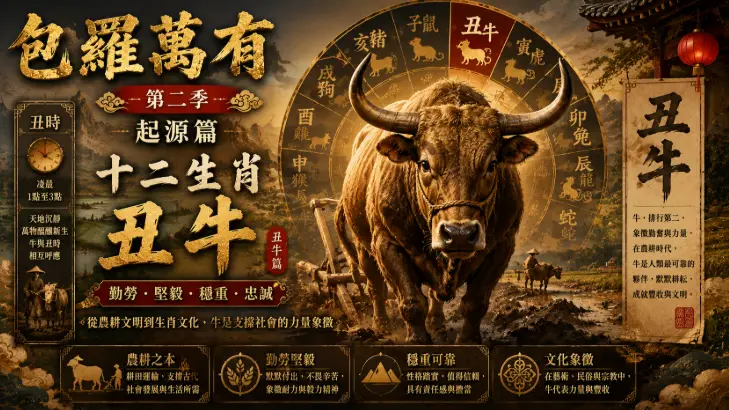
包羅萬有 第二季 起源篇|十二生肖 酉雞的晨曦傳說與守時象徵 | Origins Series Season 2 | The Rooster in the Chinese Zodiac and the Symbol of Vigilance
酉雞在十二生肖中象徵光明、勤奮與守時精神。從古代農村生活到民間吉祥文化,雞一直代表黎明與希望,也反映東方文化對秩序與勤勞的重視。
The Rooster symbolizes vigilance, confidence, and discipline in the Chinese Zodiac. From ancient farming villages to traditional folklore, the Rooster became a symbol of dawn, order, and the arrival of hope across Chinese culture.
中文版本
酉雞是十二生肖中的第十位,在中國文化中象徵勤奮、光明與守時精神。自古以來,雞與人類生活有密切關係,尤其在農耕社會裡,雞鳴代表新一天開始,因此被視為帶來晨曦與希望的重要動物。雞不但能提醒人們作息時間,也象徵驅散黑暗與迎接光明,因此在中國民間文化中一直擁有吉祥與積極意義。關於生肖雞的起源,民間流傳玉皇大帝舉辦生肖競賽的故事。傳說中,雞與猴、羊合作渡河,在旅途中展現機智與團結精神,最終成功成為十二生肖之一。雞雖然不像虎龍般強大,但牠勤奮可靠,而且願意與其他動物互相合作,因此讓酉雞成為努力與誠信的象徵。在中國古代文化裡,雞更被稱為具有「五德」的動物。古人認為雞冠象徵文德、雞距象徵武德、敢於鬥敵象徵勇德、發現食物呼喚同伴象徵仁德,而每天準時報曉則象徵信德。這種五德觀念,讓雞不只是普通家禽,更成為道德與品格的重要文化象徵。許多古代文人亦經常以雞作為勤奮、自律與忠誠精神的代表。十二地支中的「酉」,對應下午五時至七時。古人認為這段時間太陽逐漸西沉,而雞群開始回巢,因此將雞與酉時結合。酉時同時象徵白天與黑夜交替的時刻,帶有收穫與整理一天成果的含義。這種安排反映古代中國人對自然節奏與生活秩序的觀察智慧。隨着生肖文化發展,酉雞逐漸形成鮮明性格象徵。民間普遍認為屬雞的人自信開朗、觀察力強,而且重視外表與形象。他們通常做事認真、有責任感,同時具備良好表達能力與社交技巧。雖然有時顯得過於直接或愛表現,但也因此充滿活力與行動力。這些生肖性格觀念雖然源自民俗文化,但多年來已深深影響華人社會。雞在中國藝術與民間信仰中的地位亦十分重要。古代年畫與剪紙經常出現公雞圖案,象徵吉祥與驅邪。由於「雞」與「吉」同音,因此雞亦被視為好運象徵。在部分地方民俗裡,人們甚至相信公雞鳴叫能驅趕妖邪與不祥之氣。紅色公雞形象更經常出現在節慶裝飾與傳統婚禮中,代表幸福與平安。除了中國以外,雞文化在日本、韓國與東南亞地區同樣具有重要地位。每逢雞年,各地都會推出大量與雞相關的新年裝飾、藝術作品與賀年商品,象徵勤奮、成功與好運。今天的酉雞,早已超越普通生肖動物本身。牠代表人類對秩序、責任與光明未來的追求,也象徵東方文化中重視誠信與勤勞的精神。從古代農村文明到現代流行文化,雞依然是華人世界中最充滿朝氣與正能量的傳統象徵之一。
English Version
The Rooster is the tenth animal in the Chinese Zodiac and has long symbolized discipline, confidence, punctuality, and vitality in Chinese culture. For thousands of years, roosters played an essential role in agricultural communities by announcing the arrival of dawn and helping people organize daily life. Their crowing at sunrise made them natural symbols of awakening, hope, and the victory of light over darkness. As a result, the Rooster became deeply connected to ideas of responsibility, order, and positive energy in traditional Chinese society. According to the famous zodiac legend, the Jade Emperor organized a race to determine the order of the zodiac animals. In some versions of the story, the Rooster worked together with the Monkey and the Goat to overcome obstacles and cross a river safely. Although the Rooster lacked the physical strength of more powerful animals, it demonstrated intelligence, reliability, and teamwork, earning its place as the tenth zodiac sign. This legend reinforced the Rooster’s association with diligence, honesty, and cooperation. In ancient Chinese philosophy, the rooster was admired as an animal possessing the “Five Virtues.” Its comb symbolized literary refinement, its sharp spurs represented martial courage, its willingness to fight danger reflected bravery, its habit of calling other chickens to food demonstrated kindness, and its daily crowing symbolized trustworthiness and punctuality. These qualities elevated the Rooster far beyond an ordinary farm animal and transformed it into a moral and cultural symbol admired by scholars and common people alike. Within the traditional Earthly Branch system, the Rooster corresponds to the branch “You,” representing the hours between 5 p.m. and 7 p.m. Ancient observers noticed that chickens naturally returned to their nests during the evening as daylight faded. This period symbolized transition, completion, and preparation for rest, matching the orderly nature associated with the Rooster. Such symbolic connections demonstrate how Chinese civilization integrated natural observation with philosophy and timekeeping traditions. Over time, the Rooster also developed strong personality symbolism within zodiac culture. People born in the Year of the Rooster are commonly believed to be confident, observant, hardworking, expressive, and socially active. They are often admired for their discipline, honesty, and attention to detail. Rooster personalities are frequently described as energetic and charismatic, although they may sometimes appear overly proud or outspoken. While these interpretations belong to traditional folklore rather than science, they remain influential across many Chinese communities today. The Rooster also occupies an important place in Chinese folk art and spiritual traditions. Traditional New Year paintings and paper cuttings often feature brightly colored roosters symbolizing luck, protection, and prosperity. Because the Chinese word for “rooster” sounds similar to the word for “good fortune,” rooster imagery became closely associated with happiness and success. In some regional beliefs, the crowing of a rooster was thought to frighten away evil spirits and negative energy, further strengthening its role as a guardian symbol. Beyond China, rooster symbolism also spread throughout East Asia and Southeast Asia, influencing local folklore and festive traditions. During the Year of the Rooster, communities celebrate with rooster-themed decorations, artwork, and cultural performances representing prosperity, discipline, and new beginnings. Today, the Rooster represents far more than a zodiac animal. It embodies humanity’s admiration for hard work, honesty, structure, and the promise of a brighter tomorrow. From ancient farming villages to modern popular culture, the Rooster continues to shine as one of the most energetic and optimistic symbols in Chinese civilization.