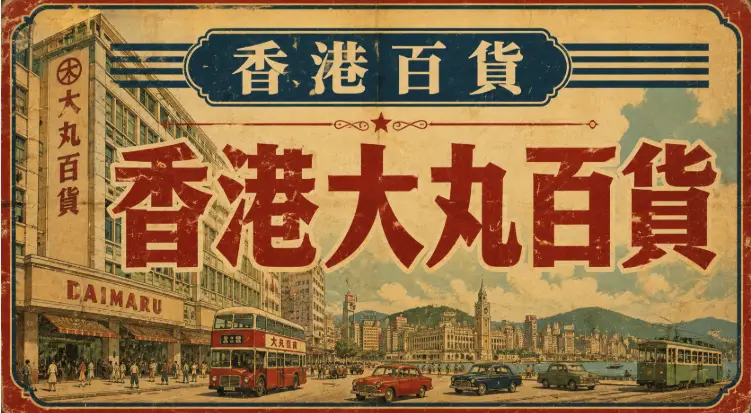
香港大丸百貨是香港零售史上最具影響力的日資百貨公司之一,它不但改變了香港人的購物習慣,更成為銅鑼灣繁華文化的重要象徵。「大丸有落!」這句話,至今仍深深留在香港人的城市記憶之中。
Daimaru Hong Kong was more than a department store — it was a cultural phenomenon that reshaped shopping habits, urban lifestyle, and the identity of Causeway Bay itself. Even decades after its closure, the name Daimaru continues to live on in Hong Kong’s collective memory.
中文
香港大丸百貨(Daimaru)於 1960 年 11 月 3 日正式開幕,由日本著名百貨企業大丸與香港商人張玉麟合資經營,總店位於銅鑼灣記利佐治街與百德新街交界,即今日名店坊與翡翠明珠廣場一帶。當時香港仍以華資百貨及傳統商號為主,大丸的出現不但成為香港第一間日資百貨公司,更徹底改變了香港零售業的經營模式與消費文化。1960 年代的香港經濟開始起飛,市民收入逐漸提升,日本產品則以高品質與現代化形象深受歡迎,而大丸百貨正是在這個背景下迅速成為香港最時尚、最先進的百貨地標之一。與當年傳統百貨公司相比,大丸最震撼香港人的,是其充滿日本式服務文化的經營方式。每天營業開始前,全體店員會整齊站於大門兩旁,以日式鞠躬禮歡迎顧客進場,這種服務態度在當時香港極為罕見,令不少市民首次感受到日本企業重視禮儀與服務品質的文化。化妝品部門更特別聘請日籍美容顧問,身穿傳統和服為顧客示範化妝技巧,轟動整個香港社會。許多香港女性正是透過大丸首次接觸日本美容文化與現代化妝品。除了服務文化外,大丸亦帶來多項香港零售業的革命性改變。當年香港商店普遍仍保留討價還價文化,但大丸率先推行「不二價」制度,所有商品均明碼實價,顧客毋須講價即可購物,這種透明化銷售方式後來逐漸成為香港主流零售模式。大丸亦率先引入禮券制度、免費送貨服務及分期付款概念,讓百貨購物變得更加便利。旗下超級市場更開創「免費試食」文化,顧客可在店內品嚐食品後再決定購買,對當年香港人而言十分新鮮。每逢聖誕節,大丸亦會在商場外牆設置大型燈飾與節日裝置,吸引大量市民前往拍照及觀賞,逐漸形成香港聖誕燈飾文化的重要傳統。隨著香港進入經濟繁榮年代,大丸成為銅鑼灣最重要的城市地標之一。大量市民與遊客習慣以「大丸」作為地理定位,因此出現了極具代表性的香港潮語「大丸有落!」。即使大丸於 1998 年已經結業,直到今天仍有不少市民搭乘紅色公共小巴前往銅鑼灣時,會下意識向司機說出這句經典用語。大丸不只是百貨公司名稱,更已經融入香港人的日常語言與集體文化記憶。香港流行文化亦深受其影響,女子組合 Twins 的名曲《下一站天后》開首歌詞「站在大丸前,細心看看我的路」,更成為描寫香港青春與都市生活的經典畫面。除了主店外,大丸亦於 1980 年代在附近京士頓街增設「家居廣場」,進一步拓展業務版圖,售賣日本家品、家具與生活用品,反映當時日本生活美學在香港日益流行。然而,大丸歷史中亦曾發生一宗震驚全港的重大事故。1972 年 10 月 14 日,大丸百貨地庫因工程期間煤氣管意外爆炸,引發猛烈火災,事件造成 2 人死亡、超過 200 人受傷,大樓亦受到嚴重損毀。這宗「大丸爆炸案」成為香港戰後其中一宗著名商業災難,並促使政府其後大幅收緊商業大廈的煤氣管及消防安全法例,對香港城市安全制度帶來深遠影響。進入 1990 年代後,日本泡沫經濟爆破,加上香港零售租金持續高企,以及亞洲金融風暴衝擊消費市場,大丸的經營壓力日益增加。最終,大丸百貨於 1998 年 12 月 31 日正式全線結業,結束長達 38 年的香港業務。消息傳出後,不少香港市民專程到銅鑼灣大丸拍照留念,懷念這個陪伴自己成長的重要城市地標。雖然今日的大丸早已消失,但它對香港零售文化與都市生活的影響卻從未真正離開。從「不二價」購物文化,到日式服務精神,再到「大丸有落!」這句深入民心的城市語言,大丸百貨早已成為香港黃金年代不可分割的一部分。
English Version
When Daimaru opened in Causeway Bay on November 3, 1960, it introduced a completely new style of retail culture to Hong Kong. As the city’s very first Japanese department store, Daimaru quickly became a symbol of modernization, sophistication, and urban transformation during Hong Kong’s post-war economic rise. Located at the busy intersection of Great George Street and Paterson Street, the store occupied one of the most prominent corners in Causeway Bay and soon evolved into one of the district’s defining landmarks. At the time, Hong Kong’s retail environment was still dominated by traditional Chinese shops and locally operated department stores where bargaining was common practice. Daimaru disrupted this system by bringing Japanese-style management, customer service, and merchandising into the city. For many Hong Kong residents in the 1960s, walking into Daimaru felt like stepping into a modern international shopping experience unlike anything they had encountered before. One of the store’s most memorable features was its customer service culture. Every morning before opening, employees lined both sides of the entrance and bowed to arriving customers in traditional Japanese fashion. This level of politeness and discipline amazed local shoppers and quickly became one of Daimaru’s defining characteristics. The cosmetics department further strengthened the store’s glamorous reputation by hiring Japanese beauty consultants dressed in elegant kimono to demonstrate skincare and makeup techniques. For many Hong Kong women, Daimaru was their first introduction to Japanese beauty culture and premium cosmetics. Daimaru also pioneered several retail practices that later became standard throughout Hong Kong. It introduced fixed pricing at a time when bargaining remained deeply rooted in local shopping culture. Customers no longer needed to negotiate prices, creating a more transparent and comfortable shopping environment. The store also popularized gift certificates, installment payment plans, and free delivery services, innovations that significantly modernized the local retail industry. Its supermarket was among the first in Hong Kong to offer free food tasting sessions, encouraging customers to sample products before purchasing. During the Christmas season, Daimaru became famous for decorating its building exterior with elaborate festive lighting displays, helping establish the city’s tradition of large-scale holiday illuminations. Over time, Daimaru became so closely associated with Causeway Bay that its name effectively turned into a geographic landmark. Passengers riding Hong Kong’s iconic red minibuses would simply shout “Daimaru, stop please!” when approaching the district. Even decades after the department store closed, many residents still instinctively use the phrase “Daimaru yau lok” when referring to Causeway Bay. The store’s cultural influence extended into music and entertainment as well. The Cantopop duo Twins immortalized Daimaru in their hit song “Next Station Tin Hau,” with lyrics describing the famous intersection outside the store, capturing the youthful energy of Hong Kong city life. In the 1980s, Daimaru expanded further by opening a home and lifestyle annex on Kingston Street, reflecting growing interest in Japanese interior design and household products among Hong Kong consumers. However, one of the darkest moments in the company’s history occurred on October 14, 1972, when a gas explosion in the basement triggered a major fire. The disaster killed two people and injured more than two hundred others, shocking the entire city. The incident, later known as the Daimaru explosion, led the Hong Kong government to tighten regulations surrounding gas pipelines, construction safety, and fire protection standards in commercial buildings. Despite recovering from the tragedy, Daimaru eventually faced mounting economic pressures during the 1990s. The collapse of Japan’s bubble economy, soaring retail rents in Hong Kong, and the Asian financial crisis all contributed to declining profitability. On December 31, 1998, Daimaru officially closed after 38 years of operation in Hong Kong. Crowds gathered outside the store during its final days, taking photographs and saying farewell to a landmark that had shaped several generations of urban life. Although the physical building has long disappeared, Daimaru’s legacy remains deeply embedded in Hong Kong culture. From Japanese customer service traditions and modern retail concepts to the unforgettable phrase “Daimaru yau lok,” the department store continues to represent a nostalgic chapter in the city’s golden era.
總結
香港大丸百貨不只是全港第一間日資百貨公司,更是香港現代零售文化的重要起點。它改變了香港人的消費方式,也塑造了銅鑼灣最繁華年代的城市面貌與集體記憶。
Daimaru Hong Kong transformed the city’s shopping culture and became one of Causeway Bay’s most iconic landmarks. Even after its closure, its influence continues to echo through Hong Kong’s language, memories, and urban identity.