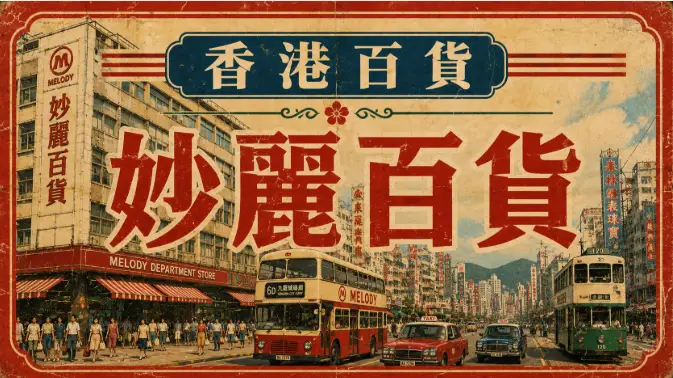
《香港百貨 003》香港妙麗百貨的黃金年代|佐敦孔雀霓虹下的百貨傳奇 |The Golden Era of Millie’s Centre Hong Kong | The Legendary Department Store Beneath Jordan’s Peacock Neon Lights
香港在 1970 至 1980 年代經濟高速起飛,霓虹燈照亮整條彌敦道,而妙麗百貨正是那個年代最具代表性的高級百貨商場之一。華麗的孔雀霓虹招牌、時尚精品與嶄新的購物模式,成為無數香港人的集體回憶。
During Hong Kong’s economic boom in the late 1970s and early 1980s, Nathan Road became a glowing symbol of prosperity and modern city life. Among the most unforgettable landmarks of that golden era was Millie’s Centre, a stylish department store that blended fashion, luxury, and urban glamour into one iconic destination remembered by generations.
中文
妙麗百貨正式名稱為「妙麗中心(Millie’s Centre)」,由香港著名華資商人劉天就創辦,總店位於九龍佐敦彌敦道與佐敦道交界,即現時新寶廣場所在地。妙麗中心於 1977 年 5 月 25 日正式開幕,在當年屬於極具話題性的商業大事,不少電視藝員及社會名流親自出席剪綵儀式,吸引大量市民圍觀。當時香港正值經濟高速增長年代,市民消費力提升,時尚文化開始普及,而妙麗百貨正好代表了香港由傳統零售模式走向現代化商場經營的重要轉變。妙麗百貨的母公司原本為「妙麗皮鞋(Millie’s)」,品牌於 1950 年代創立,是香港最早從意大利引入高級皮鞋的連鎖店之一。由於當時香港市場仍以本地鞋履為主,妙麗率先引進歐洲設計概念與高級真皮鞋款,很快便成功建立中高端形象,深受都市女性歡迎。隨著品牌發展迅速,劉天就開始進一步擴展商業版圖,最終打造出妙麗中心這座大型百貨商場。妙麗中心最特別之處,在於它並非傳統百貨公司模式,而是採用了當時極為前衛的「商場式百貨」概念。商場樓高四層並設有地庫,自營百貨部門以外,同時引入大量精品店、牛仔服飾店、時裝品牌及化妝品專櫃,形成一種集合式時尚消費空間。這種模式在今日看似普通,但在 1970 年代香港卻屬於非常新穎的經營方式,因此吸引大批年輕人與潮流人士前往消費及打卡。當年不少香港市民專程到佐敦,只為參觀妙麗百貨內最新潮的時裝與進口商品。除了時尚產品外,妙麗百貨的裝修設計亦極具時代感,大量採用鏡面、玻璃與閃亮金屬元素,營造出豪華而現代的都市氛圍。商場內燈光明亮,櫥窗展示充滿國際風格,讓不少市民第一次感受到接近歐美大型商場的購物體驗。當時香港電視文化開始興起,藝人穿搭與流行文化亦深深影響年輕一代,而妙麗百貨正好成為當時潮流文化的重要聚集地。不過,真正令妙麗百貨成為香港集體回憶的,還是其極具代表性的「孔雀開屏」霓虹招牌。這個巨型霓虹燈牌安裝於大廈外牆,孔雀羽毛以多層彩色光管組成,每晚不停閃爍發光,在彌敦道上形成極具震撼力的夜景。當時香港仍被譽為「東方之珠」,而繁華璀璨的霓虹燈海正是城市象徵之一。妙麗中心的孔雀霓虹招牌與對面裕華國貨遙遙相對,成為 1970 至 1980 年代佐敦夜景最經典的畫面之一。許多老香港人回憶起昔日九龍夜景時,都會想起妙麗孔雀霓虹燈所帶來的視覺震撼。可惜隨著集團過度擴張,加上市場競爭日益激烈,妙麗百貨最終於 1984 年因資金鏈問題宣告倒閉。雖然商場消失,但它在香港零售歷史中的地位卻始終無法被取代。多年後,不少電影與影視作品仍然以妙麗百貨作為香港黃金年代的重要象徵。2021 年上映的香港電影《梅艷芳》更透過電腦特效技術重新還原妙麗中心的孔雀霓虹招牌,成功喚起無數香港觀眾對舊香港的懷念與情感。至於妙麗品牌本身則未有完全消失,其核心業務「Millie’s」女鞋品牌在後來經歷股權轉讓,並於 2007 年由百麗國際以約 6 億港元收購。現時 Millie’s 已轉型為時尚女鞋品牌,主打型格與都市風格,在香港及中國內地多個大型商場仍可見其分店。從昔日佐敦霓虹燈下的百貨傳奇,到今日延續品牌精神的時尚鞋履,妙麗這個名字依然承載著一段屬於香港黃金年代的集體回憶。
English Version
Long before luxury mega malls dominated Hong Kong, Millie’s Centre stood proudly in Jordan as one of the city’s boldest symbols of modern retail culture. Opened on May 25, 1977, at the busy intersection of Nathan Road and Jordan Road, the department store quickly became a landmark during Hong Kong’s era of rapid economic growth. The founder, Lau Tin-kau, had already built a strong reputation through the Millie’s shoe business, a company that introduced stylish Italian leather footwear to local consumers during the 1950s. At a time when imported European fashion was still considered exclusive and aspirational, Millie’s successfully captured the attention of middle-class shoppers seeking elegance and sophistication. The success of the footwear business encouraged the company to expand into a much larger retail vision, leading to the creation of Millie’s Centre. Unlike traditional department stores of the period, Millie’s Centre embraced a revolutionary shopping concept inspired by overseas retail culture. Instead of operating as a single-brand department store, the building combined fashion boutiques, cosmetics counters, denim stores, lifestyle retailers, and in-house departments under one roof. The multi-level complex created a vibrant shopping environment that appealed especially to younger consumers eager to explore modern trends and international fashion influences. In many ways, the store represented Hong Kong’s transition from a manufacturing city into a cosmopolitan consumer society. During the late 1970s, Hong Kong’s entertainment industry was also booming. Television stars, Cantopop culture, and modern fashion trends heavily shaped urban lifestyles, and Millie’s Centre positioned itself at the center of this transformation. The grand opening itself attracted celebrities and media attention, making the store instantly fashionable and culturally relevant. Inside, the interior design reflected the glamour of the era, with mirrored surfaces, bright lighting, polished metal finishes, and eye-catching display windows that created an atmosphere comparable to contemporary shopping centers in Europe and North America. For many local residents, visiting Millie’s Centre was not simply about shopping but about experiencing a new lifestyle associated with prosperity and international sophistication. Yet the feature that made Millie’s Centre truly unforgettable was its enormous peacock neon sign mounted on the building exterior. The colorful neon artwork portrayed a peacock spreading its feathers across the skyline of Nathan Road, illuminating the streets with dazzling animated lights every night. During Hong Kong’s neon era, illuminated billboards were more than advertisements — they were part of the city’s identity. The peacock sign of Millie’s Centre became one of the most recognizable night scenes in Kowloon, standing opposite the famous Yue Hwa Department Store and contributing to the electric atmosphere that defined Jordan during the late twentieth century. Countless residents and tourists remembered the glowing display as a symbol of Hong Kong’s energy and ambition. However, like many rapidly expanding businesses of the period, Millie’s Centre eventually faced financial difficulties. Aggressive expansion and increasing competition placed heavy pressure on the company, and in 1984 the department store officially closed. Although the building disappeared, its legacy remained deeply embedded in Hong Kong’s cultural memory. Over the decades, nostalgic references to the store continued to appear in documentaries, historical discussions, and films celebrating old Hong Kong. One of the most notable revivals came in the 2021 biographical film about Anita Mui, where filmmakers digitally recreated the iconic peacock neon sign to restore the atmosphere of 1980s Nathan Road. The recreation sparked emotional reactions among audiences who remembered the city’s neon-filled golden age. While the department store itself no longer exists, the Millie’s brand survived through its footwear business. The company later changed ownership and was eventually acquired by Belle International in 2007. Today, Millie’s continues as a fashionable women’s shoe brand operating across Hong Kong and mainland China. Though modern shopping malls have transformed the retail landscape, the story of Millie’s Centre continues to symbolize a unique chapter in Hong Kong history — a time when neon lights, fashion culture, and economic optimism shaped the dreams of an entire generation.
總結
妙麗百貨不只是昔日的購物商場,更是香港黃金年代的重要城市象徵。從孔雀霓虹燈到時尚百貨文化,它見證了香港由工業城市走向國際都會的繁華歲月。
Millie’s Centre was more than a department store — it represented the confidence, glamour, and rapid transformation of Hong Kong during its golden economic era. Its legendary neon peacock continues to shine brightly in the collective memory of the city.