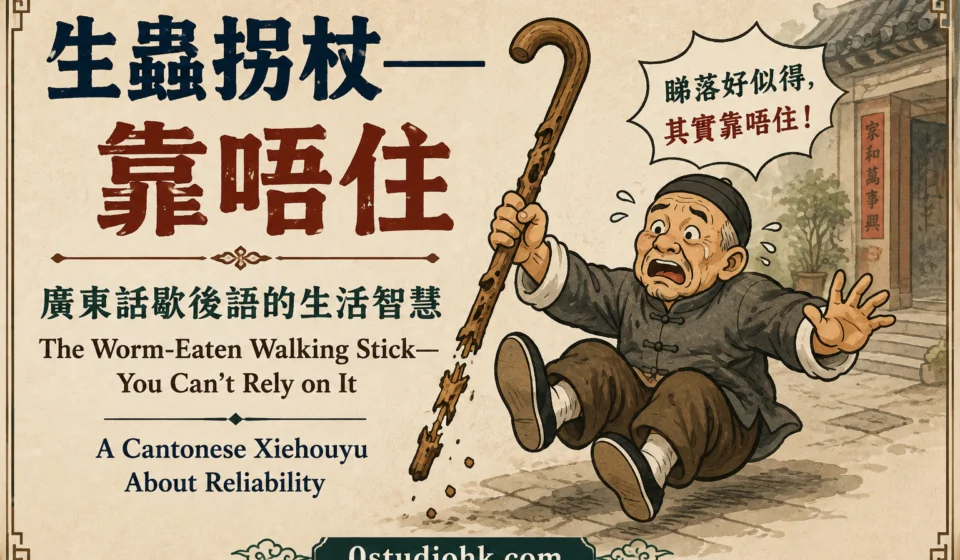
生蟲拐杖——靠唔住|廣東話歇後語的生活智慧|The Worm-Eaten Walking Stick—You Can’t Rely on It|A Cantonese Xiehouyu About Reliability
廣東話歇後語「生蟲拐杖——靠唔住」,用一根被蟲蛀過的拐杖作比喻。拐杖本來係畀人借力、扶持嘅工具,但如果木頭已經生蟲蛀壞,外表睇落似乎冇問題,真正用嗰陣卻可能突然斷裂。呢句歇後語就係借呢個情景,形容一個人、一件事或者一種安排唔可靠,關鍵時刻未必靠得住。香港警方刊載的廣東話歇後語資料亦列出「生蟲拐杖——靠唔住」,而香港中文大學粵語資料庫則將「生蟲拐杖」解作不可靠的人。
中文
「生蟲拐杖——靠唔住」意思係指一個人或者一件事表面上好似可以依靠,但實際上並不可靠,尤其去到真正需要佢發揮作用嘅時候,可能突然出問題。就好似一根被蟲蛀壞嘅拐杖,平時擺喺度睇唔出有乜異樣,但一有人將重量交畀佢,隨時就會斷。呢句歇後語亦可以形容一個唔可靠嘅人,例如有人答應幫你處理事情,但經常失約、做事冇交帶,甚至去到最後關頭先話做唔到,就可以話佢「生蟲拐杖——靠唔住」。當然,呢句唔一定只係講人,工作安排、設備、計劃甚至合作關係,都可以用呢個比喻。廣東話講歇後語嘅特色,就係將一件日常生活中好具體嘅事情,變成一個簡單而生動嘅人生道理。
English Version
“生蟲拐杖——靠唔住” describes something or someone that appears dependable but cannot truly be trusted when support is actually needed. The image is simple: a walking stick is supposed to help a person keep their balance, but if the wood has been weakened by insects, it may break precisely when someone puts their weight on it. The expression therefore carries a strong sense of disappointment and warning. It can describe a person who repeatedly makes promises but fails to follow through, a colleague who disappears when responsibility arrives, or a plan that looks fine on paper but falls apart under pressure. It may even be used for equipment or systems that seem functional until they are genuinely needed. The humour comes from turning an ordinary household object into a memorable picture of unreliability. Rather than directly saying that someone cannot be trusted, Cantonese speakers can use this colourful expression to make the criticism sharper, lighter and more memorable.
用法
中文
日常講「生蟲拐杖——靠唔住」,通常係帶住少少笑意或者諷刺。例如朋友成日話「放心啦,我一定幫你搞掂」,但每一次去到最後都冇影,大家就可以笑佢:「你真係生蟲拐杖,靠唔住!」如果用嚟形容工作,就可以話一個計劃表面安排得好完整,但真正執行時處處出問題,亦可以講「呢個安排似生蟲拐杖咁,唔可以靠晒佢」。重點係「靠」呢個概念——本來應該提供支援嘅東西,偏偏最需要佢嘅時候失效。
English Version
This expression is useful when something is expected to provide support but repeatedly proves unreliable. For example, if a friend keeps promising to help but always disappears when the job actually needs to be done, you might jokingly call him a “worm-eaten walking stick.” It can also describe a workplace arrangement, a piece of equipment or a plan that looks dependable but cannot withstand real pressure. The phrase is particularly effective because it does not simply say “unreliable.” It creates a vivid picture of someone leaning on a damaged walking stick, only to discover too late that the support cannot hold. Depending on the relationship and tone, it can sound humorous among friends or become a sharper criticism in a serious situation.
小故事:
阿強同朋友約好星期六一齊搬屋,朋友阿偉拍心口話:「你放心,我朝早九點一定到,仲會帶埋架車。」阿強聽完好放心,仲特登將最重嗰幾箱留低,諗住等阿偉嚟幫手。點知星期六九點,阿偉冇出現;九點半,電話冇人聽;十點先收到一個訊息:「唔好意思,我尋晚瞓得太夜,而家先起身。」阿強唯有自己搬,搬到一半,阿偉又打電話嚟話:「不如你自己搞住先,我遲啲睇下過唔過到嚟。」阿強聽完又好氣又好笑,對住其他朋友講:「我真係信錯人,呢個真係生蟲拐杖——靠唔住!」大家即刻笑晒。其實阿偉未必係壞人,只係做事冇交帶,承諾容易講出口,真正需要佢嗰陣卻未必出現。呢句歇後語用喺呢個情況,就非常貼切。
English Version
Cheung arranged to move house on Saturday with his friend Wai, who confidently promised, “Don’t worry. I’ll be there at nine in the morning, and I’ll bring my van.” Cheung trusted him and deliberately left the heaviest boxes for the next day. But nine o’clock came and Wai was nowhere to be seen. At half past nine, there was still no answer to the phone. At ten, a message finally arrived: “Sorry, I stayed up too late last night and just woke up.” Cheung had no choice but to carry the boxes himself. Later, Wai called again and said, “You carry on for now. I’ll see if I can come over later.” Cheung was annoyed but could not help laughing. Turning to the others, he said, “I really trusted the wrong person. He’s a worm-eaten walking stick—you just can’t rely on him!” Everyone burst out laughing. Wai was not necessarily a bad person, but he had a habit of making promises without following through. That was exactly what made the expression so fitting.
總結
「生蟲拐杖——靠唔住」用一件好簡單嘅生活物件,講出一個非常實際嘅道理:真正嘅可靠,唔係平時講得幾好聽,而係關鍵時刻頂唔頂得住。做人做事都一樣,承諾容易,真正做到先最重要。
English Version
“生蟲拐杖——靠唔住” reminds us that reliability is not measured by promises but by what happens when support is genuinely needed. A damaged walking stick may look useful until someone leans on it. In the same way, people and plans should be judged by their actions, especially when circumstances become difficult. It is a simple Cantonese expression with a very practical lesson.